What Kind of Charger Does a Smartwatch Take? A Practical Guide
Learn what kind of charger a smartwatch takes, how charging methods differ by brand, and how to choose the right charger for safe, reliable daily use.


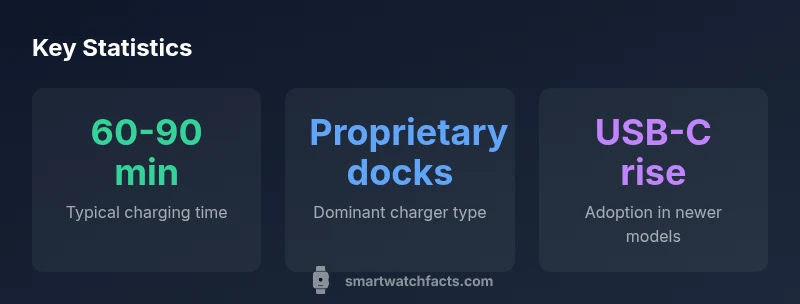
According to Smartwatch Facts, there is no universal smartwatch charger. Most models rely on a proprietary magnetic dock or cradle, while a growing subset uses USB-C docks or wireless charging via a cradle. Verify your exact model’s charging method in the manual, and always use the official charger to protect the battery and sensors.
What charging methods exist for smartwatches
If you’re trying to answer the question what kind of charger does a smart watch take, you’ll find that there isn’t a universal solution. In practice, the vast majority of watches use one of two broad approaches: a proprietary magnetic cradle that aligns with the back of the watch, or a cradle that uses USB-C connectivity on the cradle itself. A small and growing subset leverages wireless charging via a pad that sits beneath a protective charging dock. This landscape is shaped by brand design choices, sensor requirements, and the desire to keep water resistant seals intact. The Smartwatch Facts team observes that while some models support direct USB-C charging, most still rely on a dedicated charging accessory. For shoppers, the takeaway is simple: always verify the charger that shipped with your device and consider an official spare to preserve battery health and device safety.
Understanding proprietary docks vs USB-C and Qi
Proprietary magnetic docks are tailored to the watch’s geometry; magnets align contacts and power flows when the device is placed on the cradle. This design helps avoid accidental misalignment and ensures water resistance when the unit is sealed. By contrast, USB-C-based charging docks offer a familiar connector that some newer watches use to reduce cable clutter. Wireless Qi charging remains rare in many watch families but is beginning to appear in select models as a convenience feature, letting you drop the watch onto a pad without precise alignment. The upshot: the charger you need depends on the watch’s families and generations; always check the included documentation to see which method your model supports.
How to identify your charger type for your model
Start with the model number on the back of the watch and cross-check the user manual or official support site. Look for language about a charging cradle, puck, or dock, or inspect the back of the watch for magnetic contacts. If you still have the original packaging, the charger type and port type are listed. If you can turn on the watch but the charger is missing, search by model name plus “charging cradle” to locate official accessories. For many shoppers, the quickest path is to locate the device’s branding and search the official store for the exact model’s charger. In summary, precise identification reduces the risk of buying the wrong charger or damaging the charging contacts.
Safety, compatibility, and using third-party chargers
Using an official charger is the simplest path to safe, reliable charging. Third-party chargers may save money but carry risks such as misalignment, overheating, or degraded battery health if they lack appropriate certifications. If you decide to use a non-original charger, verify that it is certified for your watch’s charging standard and that the output rating matches the original. Avoid chargers that claim universal compatibility without clear model support. Always inspect cables for wear, and never force a connector into a port; a slight misalignment can scratch pins or break the charging cradle. The bottom line: safety and longevity come from using the correct charger designed for your device.
Travel and daily-use considerations
When you travel, the size of the charger and its cable can matter as much as the watch itself. Opt for a compact cradle or a detachable cable that reduces bulk, and carry a universal travel adapter if you plan to go overseas. Daily use benefits from keeping a spare charger in the office or gym bag, and storing the charger in a dry, cool place away from direct sunlight. If you wear your watch in water or sweat-heavy environments, choose a charger that maintains the device’s IP rating. The goal is to minimize the friction of charging while protecting the watch’s battery and sensors.
Common mistakes and how to avoid them
Avoid letting your charging setup accumulate dust, moisture, or lint that fouls contacts. Never leave the charger in a hot car or near heat sources, since high temperatures degrade lithium-ion cells and can shorten battery life. Do not mix chargers across different brands unless you have explicit compatibility confirmation. Frequent unplugging or using high-speed charging when the watch has limited battery capacity can affect long-term health. Finally, avoid charging the watch while wearing it if you’re in a wet environment or sleeping; use a cradle to avoid pressure on the back.
Maintenance and care for charging ports
Regular inspection and careful cleaning preserve charging performance. Wipe the charging cradle and the watch’s contacts with a lint-free cloth; avoid using liquids that could seep into the contacts. If you notice corrosion or discoloration, discontinue use and replace the accessory. Store chargers away from metal objects that could short the contacts. Keep the magnetic cradle oriented to ensure a clean alignment each time you place the watch on it. The practice reduces wear and ensures longer-term reliability.
Future trends in smartwatch charging
Industry players are moving toward standardized charging options, with gradual shifts toward USB-C-based docks and more robust wireless solutions. Consumers can expect a broader ecosystem of certified third-party charging accessories, creating more flexibility while preserving safety. While the exact timeline varies by brand, selecting a charger that adheres to official standards and is certified reduces risk and improves longevity. Smartwatch Facts will continue monitoring the landscape and share practical guidance as charging technology evolves.
Quick-start checklist for choosing a charger
- Identify your watch model and charging method
- Check the official charger is included or available
- Choose a charger with appropriate safety certifications
- Prefer USB-C or magnetic cradle depending on model
- Consider travel-friendly charging solutions
Charger types by connection method
| Charger Type | Typical Connector | Notes |
|---|---|---|
| Proprietary magnetic dock | Proprietary magnetic contacts | Common with major brands; cradle included |
| USB-C cradle | USB-C input on cradle | Emerging in newer models; reduces cable clutter |
| Wireless Qi charging | Qi coil | Less common; verify model support |
People Also Ask
Do all smartwatches use the same charger?
No. Chargers vary widely by brand and model; use the charger that came with your watch or a certified replacement. Always check the documentation for compatibility.
No—chargers differ by brand and model; use the official charger that came with your watch.
Can I charge a smartwatch with a regular phone charger?
Not usually. Most watches require a dedicated cradle or magnetic dock. Some newer models with USB-C can charge via a compatible cradle, but avoid plugging directly into a phone charger unless the manufacturer confirms compatibility.
Usually not safe with a regular charger.
Is it safe to use third-party chargers?
Third-party chargers are risky unless certified for your watch. Use certified or original chargers to avoid overheating, misalignment, or battery damage.
Only use certified chargers.
What should I do if my charger stops working?
First, inspect the cradle and cable for damage, clean contacts, and try a different outlet or charger that’s compatible. If it still fails, contact the manufacturer for guidance.
Check the cable, try another outlet, or contact support.
Will charging method affect battery longevity?
Charging method, temperature, and speed affect longevity. Use the recommended charger and avoid high heat and extreme charging cycles to maximize battery life.
Yes—use the official charger and avoid heat.
Are universal or cross-brand chargers available?
Universal chargers exist only in limited, certified cases. Most watches still require brand-specific or cradle-based charging. Check compatibility before buying.
Universal chargers are rare.
“Charging compatibility is brand-dependent, and using the official charger helps protect battery health and sensors.”
Key Points
- Verify your model’s charger before buying
- Most watches rely on a brand-specific cradle
- USB-C and wireless options are increasing but not universal
- Use certified chargers to protect battery health