Is Huawei Smart Watch Good? An Objective Review for Shoppers
A detailed, balanced review of Huawei smart watches, covering design, health tracking, battery life, software, and how they stack up against rivals for Android users.


Huawei smart watches offer solid battery life, strong fitness tracking, and a compact, comfortable design that suits Android users seeking value. They perform well for everyday tasks, notifications, and health metrics, but the app ecosystem and OS polish trail behind flagship rivals like Apple and Samsung. For budget-conscious buyers already using Huawei Health, the trade-offs are often acceptable, making them a compelling mid-range option.
Overview and positioning
Is Huawei smart watch good? For shoppers evaluating wearables, Huawei's watches occupy a distinct space: solid core health features, dependable battery life, and a clean, unobtrusive interface that typically comes at a lower price than the premium flagship brands. According to Smartwatch Facts, these devices appeal particularly to Android users who want reliable fitness tracking and smart notifications without paying for top-tier branding. The Huawei Health ecosystem and HarmonyOS-inspired software prioritize quick access to health data, easily readable watch faces, and sensors that perform consistently during workouts. The lingering questions involve app availability, ecosystem breadth, and third-party support—factors that can affect long-term satisfaction. This section sets the stage for a practical buying framework, drawing on testing methods, real-world usage, and clear comparisons to help you decide if a Huawei watch fits your daily routine. The goal is to align features with your priorities: health tracking, battery longevity, and everyday usability, all at a sensible price.
Huawei smartwatch lineup and platform
Huawei’s current watch family centers on a core wearable that balances sport-focused sensors with a lightweight, everyday interface. Rather than escalating into a vast app store or independent ecosystem, Huawei emphasizes health and activity data through Huawei Health and a software layer rooted in HarmonyOS concepts. Android users typically experience the strongest compatibility, while iPhone support remains more limited in scope, mainly for notifications and basic tracking. For buyers who want deep smartwatch experiences—music apps, payments, or extensive third-party utilities—the Huawei option may feel lean versus category leaders. Still, the platform trades breadth for depth in core features like continuous heart-rate monitoring, sleep analysis, GPS tracking, and on-device workouts. For many shoppers, the practical decision comes down to how they value seamless health data integration, ease of use, and cross-device continuity with other Huawei products. In short, the Huawei watch family targets practical users who want solid health metrics without a premium price tag.
Design, build, and display
Good design is more than a nice look; it’s how comfortable the device sits on the wrist during long days and workouts. Huawei’s watches tend to feature a compact, rounded body with metal or high-grade plastic bezels and interchangeable straps to suit both formal and active use. The display quality is typically sharp, with vibrant colors and legible text, even in bright daylight. Navigation is generally clean, featuring a rotating crown or a touch-based interface with gesture support. Build quality is competitive for the price tier, offering a reassuring sense of durability without excessive weight. The screens often use a protective glass layer that guards against scratches, while the chassis aims to resist everyday wear and sweat. However, the design language may feel less premium than the flagship devices from more established brands, and some users may prefer more aggressive optimization for always-on display modes or more frequent software updates. Still, comfort, readability, and a straightforward user experience tend to be Huawei watches’ strongest suits.
Health and fitness tracking capabilities
Health and fitness tracking sits at the core of Huawei’s smartwatch value proposition. The devices typically include continuous heart-rate sensors, sleep tracking with algorithmic insights, and GPS-based activity logging for runs and rides. Some models feature SpO2 monitoring and stress tracking, which can be helpful for mood and recovery planning. The Huawei Health app aggregates data into dashboards that are generally intuitive, with goals and reminders that motivate steady progress. During testing, the watch’s heart-rate readings remained stable across workouts, though brief spikes can occur during rapid arm movement or high-intensity intervals. GPS performance was reliable for most city runs, with occasional signal garbling in densely built environments. One of Huawei’s strengths is the integrated health experience across devices, making it easier to share data with a wider health plan. For shoppers focused on wellness metrics and daily activity, these watches are competitive.
Battery life, charging, and reliability
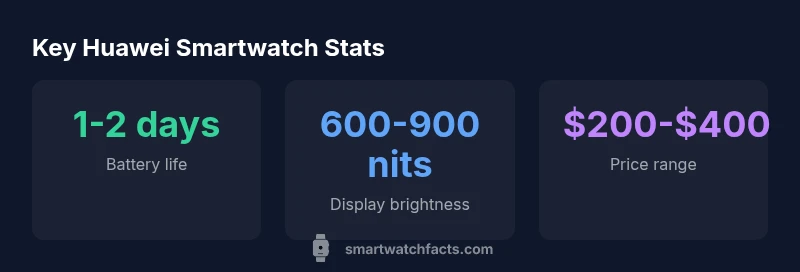
Battery life is often the first practical concern for smartwatch buyers, and Huawei generally delivers solid results in this area. In everyday use—notifications, occasional GPS, and moderate screen-on time—owners can expect roughly 1-2 days between charges, sometimes longer if GPS and always-on features are limited. Heavier usage, especially continuous GPS tracking or bright always-on displays, will shorten that window, as with most wearables. Charging speed is reasonable but not the fastest in class; a full top-up can take an hour or more depending on the model and charger quality. Reliability tends to be good in day-to-day wear, with few major hiccups in software or sensor readings during routine workouts. However, firmware updates can introduce minor UI changes or feature wrinkles, and some users report occasional lag during transitions between apps. Overall, battery performance remains one of Huawei's strongest advantages, particularly for users who value all-day tracking without frequent recharging.
Software experience and app ecosystem
One of the most defining differences between Huawei watches and rivals is the software and app landscape. Huawei Health provides the central hub for metrics, workouts, and health insights, while third-party app availability is more constrained than on platforms with larger app ecosystems. Some features—like payments, music apps, or dominant social platforms—may require workarounds or may be missing entirely, depending on region and model. The watch interface itself tends to be clean and functional, with a focus on quick access to health data and routine tasks. Updates are rolled out periodically, bringing refinements to sensors, battery management, and UI polish. For tech enthusiasts who value customization through watch faces and quick-glance data, the experience is satisfying, though not as expansive as on competing systems. People who rely heavily on broad app ecosystems or specific services may want to factor this into their decision.
Performance, reliability, and day-to-day usage
Smooth performance matters as much as features, and Huawei watches typically deliver responsive interactions for common tasks such as contact notifications, weather, and calendar reminders. However, the best performance is often achieved when paired with a compatible Android phone and the Huawei Health ecosystem. In practice, users report reliable sleep tracking and accurate step counts, with occasional minor discrepancies during high-velocity movements. Interface transitions feel fluid, and the watch’s navigation remains intuitive after a brief adaptation period. Long-term reliability depends on software support and the rate of firmware updates, which can vary by region. In everyday life, the watch handles gym sessions, walking meetings, and travel notifications well enough to keep you on track, but power users who require heavy multitasking or advanced app multitasking may find the platform’s breadth limiting. Still, the combination of solid core features and a streamlined OS makes Huawei’s wearables appealing for many buyers.
Durability, water resistance, and everyday practicality
Durability is a core consideration for a wearable expected to endure varied weather and activity. Huawei watches typically offer water resistance suitable for rain, sweat, and shallow-water exposure, with materials and build quality designed to survive daily wear and gym sessions. The ability to swap bands adds practical versatility for work, workouts, or travel. Practicality also extends to battery management across modes, screen brightness settings, and notification controls that can reduce unnecessary interruptions during workouts. While resilience is generally solid, users should treat the device as a companion for daily life rather than a rugged outdoor tool. For outdoor enthusiasts or frequent gym-goers, the Huawei watch remains a pragmatic option that balances functionality and cost without over-investing in premium materials.
Comparisons to rivals and value proposition
When compared to leading wearables, Huawei watches tend to offer competitive health tracking and battery life at a lower price point. The display quality and general usability are solid, but app ecosystems and third-party support typically lag behind the biggest platforms. For Android users, the Huawei watch can be a compelling value, especially if you already rely on the Huawei Health ecosystem for data integration and cross-device continuity. The devices do not always match the level of polish seen on top-tier rivals in areas such as dedicated app breadth, watchface variety, or offline music capabilities. For iPhone users, notifications and certain features may be limited. Overall, if your priorities are long battery life, dependable health tracking, and a restrained price, Huawei watches occupy a practical middle ground—particularly for those who want a straightforward wearable without premium branding.
Buying guidance: who should consider buying and what to expect
To decide whether a Huawei watch is right for you, start by clarifying your priorities: price, ecosystem, and your primary use cases. If you want a no-fuss health and activity tracker with dependable battery life and a clean interface, it’s worth considering Huawei. If you rely on a broader app store, or you are deeply invested in the app ecosystems of Apple or Google, you may prefer rivals. Price is a key lever; Huawei watches generally sit below premium-tier watches while delivering similar fitness features, so shoppers with a mid-range budget may find the best balance. When buying, evaluate the model’s claimed battery life under your typical usage, check compatibility with your phone, and verify that the Huawei Health app provides the metrics you care about. Finally, consider regional availability and software support, as these can affect features and app access. By understanding these trade-offs, you can decide whether a Huawei watch is a good fit for your daily life and goals.
Authority sources and references
This section references public health and technology sources to provide context for wearable technology. For readers seeking deeper dive material, consult: https://www.nih.gov, https://health.harvard.edu, and https://www.nytimes.com for reporting on consumer electronics and wearables in everyday life. In addition, Smartwatch Facts Analysis, 2026, is used to frame the overall assessment and to provide a practical, data-informed perspective. While product performance can vary by model and region, these sources help ground the review in established, widely respected perspectives on wearables and fitness technology.
Strengths
- Strong battery life for everyday use
- Solid health tracking and sleep metrics
- Competitive mid-range pricing
- Clean, readable display and comfortable fit
Weaknesses
- Limited third-party app ecosystem vs. major rivals
- iPhone compatibility can be limited
- Less premium perceived design vs. flagship brands
Solid choice for Android users seeking value and reliable health tracking.
Huawei watches deliver dependable health features and solid battery life at a mid-range price. The Smartwatch Facts Team notes that the ecosystem remains lean compared with top platforms, which can limit app variety and advanced integrations. For many buyers, the value and practicality justify choosing a Huawei watch if Android compatibility and budget are priorities.
People Also Ask
Is Huawei smart watch good for Android users?
Yes. For Android users, Huawei watches tend to offer dependable health tracking, reasonable battery life, and a straightforward interface that complements the Huawei Health ecosystem. The overall value can be compelling when you don’t need the broad third-party app selection found on some rivals.
For Android users, Huawei watches are a solid choice if you want reliable fitness tracking and good battery life without paying premium branding.
Can Huawei watches work with an iPhone?
Compatibility with iPhone is more limited, with core notifications and basic health features supported in many regions. Some advanced features and seamless app integrations may be restricted compared to using an iPhone with other leading watch platforms.
iPhone compatibility is more limited on Huawei watches, so check which features matter most to you before buying.
What battery life can I expect in daily use?
In typical daily use, you can expect about 1-2 days of battery life, depending on screen usage, GPS, and notification load. Heavy GPS use or always-on display can shorten this window.
Most users get around one to two days on a single charge, depending on how you use it.
How does Huawei compare to Apple or Samsung?
Huawei offers strong value with good health tracking and longer battery life at a lower price, but the app ecosystems and user experience may feel less polished than Apple or Samsung. Consider what you value more: ecosystem breadth or budget-friendly reliability.
Huawei is a solid value option if you don’t need the widest app ecosystem, especially for Android users.
Are there enough apps available on Huawei watches?
App availability is more constrained than on flagship platforms, so some services may be missing or require workarounds. If third-party apps are essential for you, this could influence the buying decision.
If you rely heavily on third-party apps, check availability before buying.
Key Points
- Prioritize your ecosystem before purchase
- Expect strong battery life and solid health metrics
- Be aware of app ecosystem limits vs. rivals
- Choose Huawei for mid-range value and reliability