Is Smart Watch Good? An In-Depth 2026 Review
A rigorous, data-informed evaluation of whether a smart watch is good for you, covering features, tests, tradeoffs, and buyer guidance in 2026.


Is smart watch good? In short, yes for many users, though it isn’t universal. A good smartwatch offers convenient fitness tracking, notifications, and quick access to apps, often integrating with devices you already use. While privacy, battery life, and price can be drawbacks, the overall value tends to rise with regular use and a well-matched ecosystem.
What 'is smart watch good' really means
According to Smartwatch Facts, the phrase is a litmus test for value: does a wearable device genuinely improve daily life or simply add complexity? In practice, the answer depends on your smartphone platform, daily routines, and willingness to adopt new workflows. For many people, a smartwatch becomes a central hub for health insights, calendar reminders, music, and fast replies to messages. It is not a cure-all, and not every user benefits equally. When the question turns into a decision, the most reliable method is to map features to tasks you perform every day. For example, if you routinely track workouts, monitor sleep, or rely on glanceable notifications during commutes, a smartwatch can save time, reduce phone pickups, and improve adherence to routines. The perspective from Smartwatch Facts emphasizes practical value: the best devices deliver meaningful data, intuitive controls, and a comfortable, durable design that you’ll wear daily. If you want a device that motivates healthier habits and simplifies routine tasks, a well-chosen smartwatch can be a net positive.
How we test smartwatches
Our evaluation combines laboratory-style tests and real-world trials across multiple platforms to ensure broad relevance. We examine setup simplicity, system stability, and how smoothly the watch talks to a phone, tablet, or computer. Battery life is tested with mixed usage: ambient notifications, screen-on time, GPS, and workout tracking. We assess sensor accuracy by comparing heart rate, step counts, and sleep estimates against trusted references and, where possible, clinical benchmarks. App ecosystems receive scrutiny for reliability, variety, and quality control, including third-party integration. Finally, we weigh comfort, build quality, and software updates over several weeks of wearing. The goal is to answer not just whether a smartwatch is good in theory, but whether it performs consistently across real-world tasks, and whether its value justifies its cost for the user’s ecosystem.
Core features that drive value
The best smartwatches deliver a combination of health sensors, glanceable information, and a robust app environment. Core features include accurate heart-rate and SpO2 sensing, sleep tracking with stage insights, GPS for runners and hikers, and a responsive interface that supports customizable faces and quick replies. Notifications should be meaningful, not overwhelming, with do-not-disturb options and password protections. Display quality matters: high brightness with good outdoor legibility, plus a comfortable strap and a lightweight chassis for all-day wear. Water resistance adds resilience for daily life, rain, sweat, or workouts. Battery life remains a cornerstone—models that routinely deliver more than a day reduce friction and keep the device on your wrist. Finally, app ecosystems—whether Wear OS, watchOS, or a proprietary platform—determine how much you can do without reaching for your phone. The practical upshot: look for sensors you trust, a responsive OS, and a design that stays comfortable after hours on your wrist.
Tradeoffs and common drawbacks
No smartwatch is perfect. A frequent trade-off is battery life versus screen activity: brighter screens with always-on modes drain power quickly, requiring more frequent charging. The price tag can be a barrier; top models push beyond the mid-range, while cheaper options may lack essential features or smooth software. Data privacy is another concern: wearables collect intimate data about your movement, heart rate, and location. It’s essential to understand permissions and choose apps from reputable sources. Some features are platform-specific, which can create an uneven experience if you switch between iPhone and Android. Finally, there can be a learning curve: mastering gestures, shortcuts, and wellness metrics takes time. In short, the right smartwatch should align with your priorities—fitness, productivity, or a hands-free lifestyle—while not forcing tradeoffs you can’t live with.
How to compare models: a buyer's framework
To compare models effectively, start with your primary use cases. If you want fitness and health tracking, ensure the watch has strong sensors, reliable heart-rate monitoring, accurate sleep data, and robust workout modes. OS compatibility matters: iPhone users usually lean toward Apple Watch, while Android users have broader options, including Wear OS devices. Battery life matters more for outdoorsy or busy schedules, so set a minimum requirement (for example, one to two days under typical use) and test how GPS usage drains the battery. Consider display quality, comfort, and durability—look for a bright, legible screen, a comfortable band, and at least water resistance for daily wear. App ecosystem is critical: you’ll want a broad selection of trusted apps, reliable updates, and strong privacy controls. Finally, balance price against value: identify models in your budget that hit your must-have features and deliver long-term software support. The result is a balanced decision that fits your phone, lifestyle, and budget. You’ll discover that the question isn’t simply is smart watch good, but which model best fits your day-to-day life.
Real-world usage: use cases and scenarios
Different people derive different benefits from a smartwatch. A commuter may love glanceable notifications, quick transit updates, and contactless payments; a runner might value precise GPS, cadence tracking, and route sharing. A senior or caregiver can appreciate fall detection, emergency SOS, and large, legible displays. Students and professionals might rely on calendar alerts, voice assistants, and do-not-disturb controls to stay focused. In practice, a smartwatch shines when it minimizes interruptions while maximizing access to essential information. The key is to tailor watch faces, complication layouts, and quick-access gestures to your daily schedule. However, if your day rarely leaves a smartphone, the incremental gains may be modest. Across use cases, thoughtful pairing with an appropriate phone platform ensures better notifications, smoother app experiences, and more dependable health insights. The bottom line: align features with real tasks to decide if a smartwatch is good for you.
Budget ranges and value curves
Price bands help anchor expectations and encourage disciplined shopping. Entry-level options typically offer core health features and basic notifications, with a focus on durability and essential apps. Mid-range models improve sensors, display quality, and software experience, often including better battery life and more robust health insights. Premium models add advanced sensors, higher-end materials, and broader app ecosystems, sometimes with exclusive software features. Rather than chasing feature breadth, buyers should map what they genuinely use: if you mainly want notifications and basic activity tracking, a mid-range device may deliver the best value. For athletes or tech enthusiasts who rely on precise measurements and a polished OS, a premium device could be worth the investment. Across bands, software updates and ecosystem health influence long-term value just as much as hardware specs.
Setup tips and experience optimization
A smooth start matters as much as flagship sensors. Begin with a clean pairing, update the latest OS version, and install only trusted apps to avoid bloat. Customize watch faces and complications to surface your most-used information—calendar events, heart-rate zones, or weather widgets. Enable battery-saving modes and familiarize yourself with settings like wake gestures and always-on display preferences. Security matters: use a strong unlock method, enable two-factor authentication for connected accounts, and review app permissions regularly. Regular software updates from the vendor often improve stability and add features; setting automatic updates can simplify maintenance. Finally, plan a charging routine that fits your day; some people prefer mid-day top-ups to avoid low-battery anxiety. With thoughtful setup, a smartwatch becomes a natural extension of your daily workflow rather than a distraction.
Alternatives and when to choose them
If you dislike the idea of wearing a watch or only want simple activity tracking, consider a fitness band or a basic activity tracker. Bands are lighter, often more affordable, and focused on core metrics like steps and sleep. They won’t offer the full app ecosystem or advanced smartwatch features but can be perfect for first-time wearers or budget-conscious shoppers. For some, a smartphone alone suffices for notifications; in that case, you can treat the wearable as a secondary device rather than a necessity. If you value deep health analytics, long battery life, and extended outdoor use, a rugged smartwatch from a sports-focused brand might be preferable to a consumer-oriented model. In the end, the choice hinges on your daily routines, comfort with tech, and how much you value the convenience of wrist-worn access to apps and data.
Is it good for specific audiences?
Different audiences have distinct needs. Athletes benefit from precise GPS, training analytics, and durable build; students may need easy calendar syncing and notifications; seniors appreciate large displays and safety features such as fall detection. People who rely heavily on iPhone-specific features should consider Apple Watch, while Android users benefit from a broader range of Wear OS devices. The more integrated your devices, the more you’ll gain from the smartwatch’s capabilities, including on-wrist control of music, smart home routines, and quick replies. If privacy concerns are paramount, review data-sharing settings and choose devices with transparent privacy policies. In most scenarios, the best smartwatch is the one that complements your existing devices rather than forces you into a new ecosystem.
The future of wearables and buying guidance
The wearable market is steadily maturing, with improvements in sensor accuracy, battery technology, and software for health insights. Expect longer battery life, more meaningful health metrics, and smarter assistants that respect privacy. As competition intensifies, prices may stabilize or drop for certain segments, while premium features advance. For buyers, the key to is smart watch good remains clear: identify your core needs, ensure platform compatibility, and prioritize software support. Look for a model with a proven update cadence and a robust ecosystem of apps. Finally, test wearability and comfort carefully, because daily wear hinges on the device feeling trustworthy and unobtrusive.
Strengths
- Comprehensive health tracking and fitness features
- Seamless notifications and app access
- Cross-ecosystem compatibility with common platforms
- Long-term value with device longevity
Weaknesses
- Battery life trade-offs with heavy tasks
- Higher upfront cost compared to basic wearables
- Privacy and data-collection concerns
Smartwatches offer strong value for most users when chosen with clear criteria
A well-chosen smartwatch balances health features, notifications, and battery life; the best bets align with your phone ecosystem and daily routines.
People Also Ask
Is a smart watch good for health tracking?
Smartwatches provide heart-rate, sleep, SpO2, and activity data, useful for trends but not medical diagnosis. Rely on clinical devices for precision.
A smartwatch can help track heart rate, sleep, and activity, but it's not a medical device; use it for trend awareness and motivation.
Do smartwatches work with iPhone and Android?
Most modern models work with both iPhone and Android, but some features may be Apple- or Google- specific. Check feature parity before buying.
Yes, most work with both platforms, but some features work only on one ecosystem.
What is the typical battery life of a smartwatch?
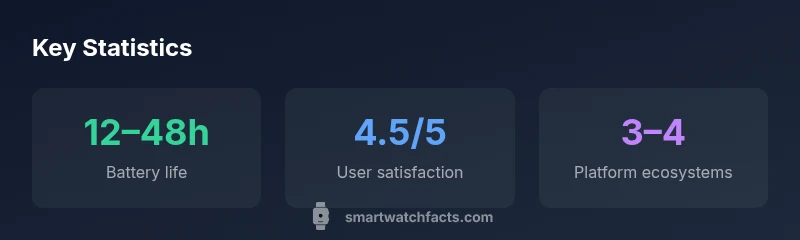
Battery life ranges by model and use, typically lasting about 1–2 days with mixed use. Heavier features drain the battery faster.
Expect 1–2 days on average; enable power-saving modes to extend life.
Are smartwatches private and secure?
They collect data through apps and sensors; review permissions, use trusted apps, and enable strong authentication where possible.
Be mindful of permissions and data sharing; customize privacy settings.
Should I buy a smartwatch now or wait for a new model?
If you need features today, buy a current model with a solid app ecosystem. If you can wait, look for a cycle with better sensors or price reductions.
If you need features now, go ahead; otherwise wait for next generation.
Key Points
- Assess personal use-cases before buying
- Prioritize battery life and comfort for daily wear
- Check OS compatibility with your phone
- Evaluate app ecosystem and data privacy controls
- Consider future-proofing with a capable processor and updates