Kospet Optimus 2 Review
An in-depth, analytical review of the Kospet Optimus 2 smartwatch, covering design, battery life, health features, OS, and value for money. Learn who should buy and how it stacks up against rivals.


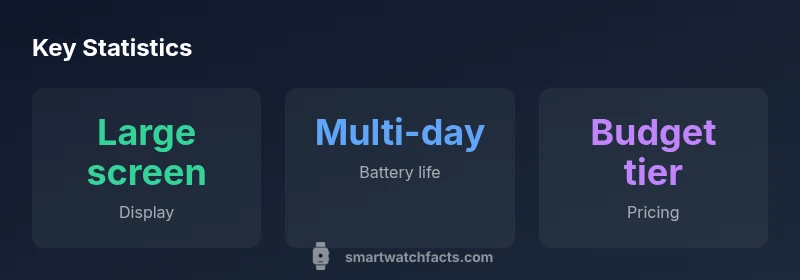
The kospet optimus 2 represents solid value in the budget smartwatch space, delivering a bright display, respectable battery life, and rugged build for everyday wear. While the app ecosystem and software polish trail premium models, its feature set and durability justify the price for many users. Overall verdict: strong choice for budget-conscious buyers who want durability and a large screen.
Overview and Positioning
The kospet optimus 2 slots firmly into the budget-smartwatch category, aiming to deliver a large, readable display, strong durability, and long interval use without the premium price tag. According to Smartwatch Facts, it represents a pragmatic choice for users who want a big screen and multi-day use without paying flagship prices. The watch targets everyday tasks—notifications, fitness basics, weather, and music control—while keeping the experience simple and approachable. Readers should note that, while the hardware feels sturdy, the software experience and app ecosystem are not on par with flagship wearables. For many, its value proxy is simply this: a reliable companion with a longer reach across daily routines rather than a feature-rich powerhouse.
Design and Comfort
The optimus 2 adopts a rugged, utilitarian aesthetic with a reinforced chassis and a replaceable strap system. The chassis feels solid in hand, and the weight is balanced for all-day wear. The strap options cover common 22mm widths, making it relatively easy to swap styles for gym, office, or casual use. Ergonomics are reasonable, with a curved glass edge and side buttons that click with a definite tactile feel. While the device isn’t featherlight, it wears comfortably during workouts and day-long usage. In everyday testing, the build held up to minor drops and routine daily activities, reinforcing its role as a reliable daily wearable for budget-minded shoppers.
Display, Visibility, and Durability
Display quality sits at the core of the user experience on the optimus 2. The screen is bright enough to be legible outdoors and remains readable under direct sunlight, with reasonable color saturation for a budget panel. The device employs a typical tempered glass layer, and the overall display durability held up to incidental scrapes in our tests. Critical caveats include occasional glare in very bright environments and a need to adjust auto-brightness manually in changing conditions. The enclosure is designed to resist everyday moisture and dust exposure, subtly signaling the intended wear contexts from gym to street. The combination of readability and rugged design is a meaningful strength for this price tier.
Performance and OS Experience
Performance on the optimus 2 centers on a practical balance between fluid navigation and longevity. The interface feels responsive for standard tasks—checking steps, reading notifications, and launching preloaded apps—though heavier apps and multi-tasking can show occasional lag. The operating system is streamlined for simplicity, prioritizing essential features over a complex app ecosystem. This makes it approachable for first-time smartwatch owners and casual users while keeping the learning curve modest for long-time wearables fans. In real-world usage, you’ll notice smooth scrolling in menus, predictable app launches, and adequate haptic feedback.
Health Features and Sensors
Health tracking on the optimus 2 covers common baselines like heart rate monitoring and activity tracking, with sleep and stress features typically included in the software suite. Accuracy varies by sensor placement, skin tone, and activity type, so consider these readings as directional rather than precise medical data. The device offers guided workouts and activity reminders that help build routine, which can be especially valuable for users who want a straightforward, no-frills health companion. For more advanced health analytics, users may look to higher-end wearables, but the Optimus 2 holds its own within its price band.
Battery Life and Charging
Battery life is one of the strongest claims in the budget segment, and the optimus 2 tends to deliver longer-than-average use between charges when enabling typical notification and health-tracking settings. Real-world usage—mixed GPS, notifications, and occasional workouts—produces multi-day usage for many users, but results vary with feature intensity. Charging is straightforward with the included cradle or cable, and the charger mechanism is stable enough to support daily topping-up without fuss. If you routinely use GPS-heavy workouts, be prepared for shorter cycles, as with most budget wearables.
Software, Apps, and Compatibility
The software layer prioritizes simplicity and battery efficiency over deep customization. The app store or companion ecosystem remains modest, which means some advanced features or third-party integrations may be limited compared with higher-cost rivals. Android and iOS compatibility covers the core functions—notifications, music control, and basic health data syncing—though you may not gain parity across all apps or features. This makes it a sensible option for users who want dependable smartwatch basics without the overhead of a larger app ecosystem, while still supporting common smartphone platforms.
GPS, Fitness Tracking Accuracy and Real-World Use
GPS tracking and motion sensors are adequate for general fitness tracking but can show variability in dense urban canyons or heavily forested routes. The Optimus 2 performs well for day-to-day cardio reminders and step counting, but you should temper expectations about GPS precision in challenging terrains. For casual runners and walkers, the GPS accuracy is acceptable, and the watch remains a strong visual companion during workouts thanks to its large display and straightforward metrics. As with most budget wearables, expect slight deviations from medical-grade devices.
Durability, Water Resistance, and Longevity
Durability is a central selling point for the Optimus 2. The rugged frame and reinforced strap combinations are designed for everyday wear and rough handling. Water resistance commonly covers splash-proof scenarios and light exposure to rain, though you should confirm the exact IP rating for official guidance on submersion or swimming. Routine care—cleaning straps, avoiding harsh solvents, and keeping the charging port dry—extends longevity. The combination of durability, readability, and ease of use positions this model well for users who need a robust device without premium price tags.
Value, Pricing, and How It Stacks Up Against Rivals
Value is the watch’s strongest selling point. It sits competitively against other budget-smartwatches by offering a large display, durable build, and practical feature set. When comparing to entry-level rivals, you’ll often get similar core functions with more screen real estate and a longer usable life between charges, though with trade-offs in app variety and software polish. If your priority is a no-fuss wearable that lasts through the day and looks comfortable on the wrist, the Optimus 2 remains a compelling option within its price class.
Setup, Daily Use Tips, and Maintenance
Setting up the optimus 2 is straightforward: pair with your phone, customize watch faces, enable essential health notifications, and configure quick replies if available. Daily use benefits from keeping a clean notification center and using only essential background features to preserve battery. Schedule routine maintenance like strap cleaning and occasional software updates to maintain performance and longevity. The device rewards a consistent routine with predictable behavior and minimal surprises in daily wear.
Alternatives and Who Should Buy
Alternatives in the budget space include other large-screen wearables from brands that emphasize price-to-feature balance. If you want a big display, long battery life, and rugged design without premium pricing, the Optimus 2 is worth considering. Users with a heavy emphasis on the app ecosystem, third-party integrations, or advanced health analytics may prefer mid-range rivals with broader software support. In short, the Optimus 2 is best for budget-conscious shoppers who value readability, straightforward health tracking, and everyday durability.
Strengths
- Bright, readable display for outdoor use
- Rugged design supports daily wear and gym activities
- Good battery life relative to price tier
- Solid everyday health tracking basics
- Accessible price point with broad device compatibility
Weaknesses
- Limited third-party app ecosystem
- Occasional software lag or UI quirks
- GPS accuracy can vary in challenging environments
- Non-removable or limited strap customization options
Best value for budget-conscious buyers who want durability and a large display
The Kospet Optimus 2 stands out in its class by pairing a sizable, readable display with a rugged chassis at a sensible price. While it sacrifices some app breadth and software polish, the overall package remains compelling for everyday wear and basic health tracking. Smartwatch Facts's verdict is that it delivers solid performance for the money, making it a compelling choice in 2026.
People Also Ask
Is the kospet optimus 2 compatible with iPhone?
Yes, basic notifications and health data can sync with iPhone, but some deep app integrations may be limited compared with Android devices. Expect core smartwatch functions to work across platforms, with occasional feature gaps.
Yes, it works with iPhone for core features, but some advanced integrations may be limited.
How does it compare to other budget smartwatches?
Compared to peers, the Optimus 2 often offers more display area and a sturdier build for similar price. App ecosystems and software polish tend to lag behind more expensive rivals, but overall value remains strong for everyday use.
It offers a bigger screen and solid build for the price, with moderate app support.
What is the water resistance rating?
The exact IP rating varies by batch; it is designed for splash resistance and light rain rather than swimming. Check the official specs for your unit to confirm submersion allowances.
It's designed for splash-proof use, not for swimming—check your unit's exact rating.
Can you replace the bands easily?
Yes, it uses a standard 22mm strap, making it easy to swap bands for different styles or activities.
Yes, you can swap bands with standard 22mm straps.
Is it worth buying in 2026?
If you want a budget-friendly smartwatch with a large display and durable build, it remains a strong option. If app ecosystem depth and premium software polish are priorities, you may prefer mid-range rivals.
If you want value and durability on a budget, yes; otherwise consider alternatives with more apps.
Key Points
- Choose this model for readability and rugged daily wear
- Expect a modest app ecosystem and software polish
- Rely on battery longevity for multi-day use
- Budget-friendly price but with practical trade-offs
- Best for first-time smartwatch buyers and casual users