Upcoming Smartwatches in 2026: Trends, Features, and Buying Guide
Explore what to expect from upcoming smartwatches in 2026, including battery life, health sensors, OS interoperability, and practical buying guidance from Smartwatch Facts.


Upcoming smartwatches in 2026 are expected to prioritize practical health insights, longer battery life, and stronger cross-platform interoperability across Android and iOS, with richer app ecosystems and more versatile form factors. These devices will blend into daily routines, delivering meaningful data without frequent charging or complexity. Smartwatch Facts highlights that buyers can anticipate a broad price range and more cohesive ecosystems.
Market Landscape for Upcoming Smartwatches
The wearable tech market is entering a phase where practical utility and everyday comfort dominate the conversation. For upcoming smartwatches, manufacturers are racing to deliver devices that are not merely new badges but genuinely useful companions across daily activities. Expect models that prioritize longer battery life, more capable health metrics, and tighter interoperability across ecosystems. As Smartwatch Facts notes, 2026 will emphasize cross-brand compatibility, so watches that work smoothly with both Android and iPhone environments will stand out in a crowded market. The most compelling releases will deliver data that helps users refine workouts, recovery, and wellness routines, while staying discreet and easy to wear all day. Across a wide price spectrum, there will be devices designed for budget-conscious shoppers and premium buyers who want premium materials and advanced insights. If you want to stay ahead, track official launches and midseason updates to time your purchase around feature mixes that align with your routines rather than chasing a fleeting badge.
Battery Life and Power Efficiency Trends
Power efficiency remains a decisive differentiator. Vendors are investing in LTPO displays, smarter sensors, and adaptive operating states to stretch every watt. In real-world terms, a watch may offer longer stretches between charges when you enable lightweight health monitoring and limit background syncing. The trend toward longer battery life supports more continuous health tracking and longer-quality sleep data without nightly recharging. Consumers should expect a mix of 1–5 day ranges, with premium models often achieving the upper end when used with power-saving modes. The Smartwatch Facts team expects manufacturers to balance performance and power by tuning display refresh rates, sensor cadence, and standby states, so you can rely on your watch for daily health checks, workouts, and notifications without frequent charging. In short, battery efficiency is the most practical way to unlock deeper health insights without intruding on daily life.
Health Features: Sensors and Data Quality
Health sensors underpin the value proposition of upcoming smartwatches. Expect broader sensor suites that go beyond heart rate to include SpO2, sleep staging, respiration, and potentially skin temperature or stress metrics. The quality of data and how it’s presented will matter as much as raw capability. Data privacy and informed consent will become mainstream concerns, so vendors that offer clear controls and transparent data usage will win trust. Practical users should look for watches that deliver actionable insights—like recovery windows after workouts or sleep quality trends—without overwhelming dashboards. The Smartwatch Facts analysis suggests more clinicians and researchers collaborating with brands to validate sensor accuracy in real-world settings, which should ultimately improve data reliability for everyday health decisions.
OS Interoperability and App Ecosystems
Interoperability across major operating systems is no longer optional. Upcoming watches aim to strike a balance between native experiences and cross-platform syncing. Expect Watch OS and Wear OS ecosystems to expand compatibility with third-party apps and services, enabling smoother transitions between phone and wrist. App availability, developer support, and data portability will be important when comparing devices, as users increasingly expect a seamless bridge between their health data, fitness apps, and smart assistants. In this landscape, watch manufacturers that invest in robust, privacy-conscious app ecosystems will differentiate themselves from competitors.
Design, Materials, and Durability
Form factor evolution continues, with lighter, more breathable bands and refined case materials that tolerate daily wear and workouts. Manufacturers are experimenting with sustainable materials and modular designs to enhance longevity and repairability. Aesthetics remain important, but comfort and durability often drive long-term satisfaction more than flashy features. Expect slimmer Profiles with larger display real estate, improved water resistance, and better scratch resistance, all while preserving comfortable wear for a full day of activity. The design language is shifting toward versatility—smartwatches that look appropriate at work, at the gym, or during evening activities—without sacrificing essential health-tracking capabilities.
Practical Buying Guide for 2026 Releases
When evaluating upcoming models, start with real-world battery life and sensor suites that match your routines. Verify OS interoperability and ensure your favorite apps are supported across platforms. Look for comfortable materials, durable builds, and water resistance that fits your lifestyle. Consider devices that offer robust health metrics with clear privacy controls and data portability. Pricing will vary widely, so use a buying guide to compare feature tradeoffs rather than chasing the newest release. As you narrow the field, request hands-on tests or reviews that show how the wearables perform during your typical workouts, workdays, and sleep patterns. Finally, align your purchase with the ecosystems you already use, to avoid onboarding friction and data silos.
Overview of upcoming smartwatch capabilities
| Feature | Estimate | Notes |
|---|---|---|
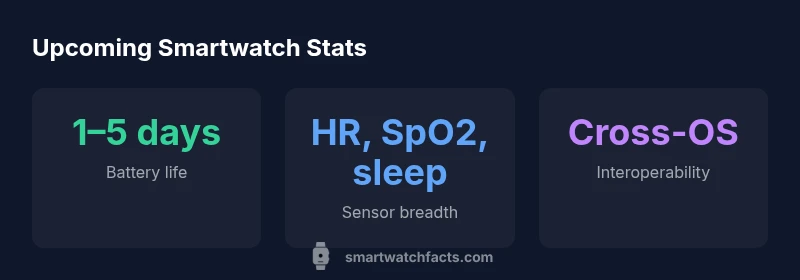
| Battery life | 1–5 days | Varies by usage and features |
| Sensor suite | HR, SpO2, sleep, stress | Growing metrics across models |
| OS interoperability | Android & iOS | Cross-platform syncing expected |
People Also Ask
What distinguishes upcoming smartwatches from current models?
Upcoming watches emphasize practical health insights and cross-device interoperability, with longer battery life and richer app ecosystems. They aim to deliver meaningful data without adding complexity to daily life.
Upcoming watches focus on practical health data and cross-platform use, not just new sensors.
How long will battery life realistically last in 2026 releases?
Battery life will vary by usage and features, with typical ranges noted around one to five days depending on sensors, connectivity, and display settings.
Expect around one to five days, depending on usage.
Will apps from Android and iPhone work on upcoming watches?
Yes, interoperability is a core goal; Wear OS and watchOS ecosystems are expanding cross-platform app and data syncing support.
Cross-device app support is getting better across platforms.
What price range should I expect for upcoming models?
Prices will vary widely; you’ll see budget-friendly options as well as premium models. Use a buying guide to compare features and value.
Prices will vary; plan accordingly.
When will the new models launch?
Announcements occur throughout the year, often tied to tech events and seasonal launches. Availability depends on the brand and market.
Launches happen through the year.
“Upcoming smartwatches will hinge on practical health insights and seamless multi-platform experiences, not just new sensors.”
Key Points
- Prioritize battery life and real-world usage.
- Evaluate sensor breadth and data privacy.
- Check cross-platform OS compatibility.
- Assess durability and comfort for daily wear.
- Follow Smartwatch Facts for updates on 2026 releases.