Can You Buy a Smart Watch Charger? A Practical Guide
Learn how to buy a smart watch charger, including types, compatibility checks, price ranges, and safety tips. Practical buying guidance for 2026 from Smartwatch Facts.


Yes—you can buy a smart watch charger. Options include official chargers from the brand, third-party magnetic charging docks, USB-C cables, and wireless pads that support Qi or magnetic alignment. Availability varies by model, and some watches use proprietary connectors. When shopping, verify compatibility with your exact model and prefer certified accessories.
Can you buy a smart watch charger? Market overview
Can you buy a smart watch charger? The short answer is yes, and the options have expanded dramatically as the wearable market has matured. In 2026, shoppers can choose official chargers from original-brand ecosystems, third-party magnetic docks, USB-C charging cables, and wireless pads that support Qi or magnetic alignment. The expansion reflects a broader trend toward accessibility and convenience, with chargers designed to protect battery health and extend device life. For Smartwatch Facts readers, this means greater flexibility when traveling or replacing a worn-out cord. Yet not every charger will be compatible with every watch, so clarity on specifications remains crucial. As with any accessory purchase, verify compatibility with your exact model before buying.
Types of chargers you’ll encounter
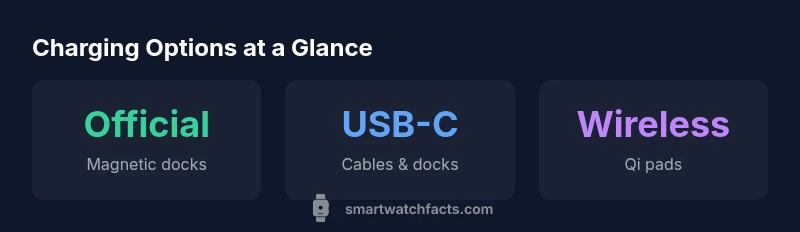
Charging options for smart watches fall into a few broad categories, each with its own pros and trade-offs. Official chargers typically use a branded magnetic puck or dock that aligns precisely with the watch’s sensors, offering reliable charging but often at a premium price. USB-C cables and adapters provide a universal solution for some models, especially newer watches that support USB-C charging or corded charging through a fixed port. Wireless pads using Qi or brand-specific wireless standards offer flexibility but may require precise placement for optimal charging. When selecting a charger, consider how you typically charge (desk, bedside, travel), whether you prefer a single multi-device dock, and how the accessory will fit into your charging routine. Safety certifications and warranty terms are also critical.
Compatibility matters: how to read specs
Compatibility is the most important criterion when buying a charger. Start by confirming the watch model and generation, then check connector type (magnetic puck, USB-C, or Qi), power output (mW or W), and any required alignment guidance. Some watches support fast charging, while others prioritize gentle charging to maximize battery longevity. If you own multiple devices, a multi-device dock can simplify your setup, but ensure the dock’s power rating is sufficient for all connected devices. Read the fine print on the product page for compatibility notes, and watch for terms like “official accessory” or “certified by Brand X,” which can be indicators of safer, more reliable performance.
Where to buy: official stores vs retailers
Where you purchase a smart watch charger matters almost as much as what you buy. Official brand stores or authorized dealers usually offer the most reliable compatibility and solid return policies but can be pricier. Reputable retailers often carry a mix of official accessories and well-reviewed third-party options, expanding choice and potentially lowering price. When shopping, verify seller credibility via reviews, check for genuine product photos, and confirm return windows. If a deal seems too good to be true, consider the risk of counterfeit products or chargers with subpar safety certifications. Smartwatch Facts recommends buying from trusted sources and keeping receipts for warranty claims.
Price ranges and value: what to expect
Expect charger prices to vary by type and brand. Official chargers for specific models tend toward the higher end, typically in the $15-$40 range, reflecting design precision and brand support. USB-C charging solutions from reputable brands can be as affordable as $8-$25, depending on length and build quality. Wireless Qi pads or magnetic docks with multi-device compatibility generally fall into the $20-$60 category, offering convenience for households with multiple wearables. When evaluating value, consider the long-term benefits: safer charging, battery health protections, and the convenience of your daily routine. Always factor in shipping costs and warranty coverage.
Safety, counterfeit risk, and how to spot quality
Counterfeit chargers pose safety risks, including overheating, short circuits, and potential damage to the watch’s health sensor. To reduce risk, prioritize chargers with recognized safety certifications (UL, CE, FCC, or brand-specific marks) and read product reviews about build quality and real-world performance. Avoid ultra-cheap options or unbranded cables that lack protective features. Look for features like over-voltage protection, temperature control, and automatic shut-off when the battery is full. If possible, purchase from official stores or authorized retailers, and keep an eye on warranty eligibility. A verified charger not only protects the device but also contributes to consistent charging behavior over time.
Practical setup tips for wireless and magnetic charging
Setup matters for both wireless and magnetic charging. For magnetic docks, ensure the watch sits correctly on the puck with proper alignment to the sensors; misalignment can slow charging or reduce efficiency. With wireless pads, place the watch in the center of the pad, avoid metal surfaces that could interfere, and ensure the pad remains stable to prevent accidental disconnections. Always start with a standard charging session to confirm that the charger delivers the expected power and that heat generation remains within safe levels. If you notice rapid heating, unplug and reassess compatibility or move to a different charger.
Long-term care and replacement timing
Charger longevity depends on build quality and usage patterns. Regular inspection of connectors for fraying, corrosion, or bent pins helps prevent damage. If you notice reduced charging speed, intermittent connections, or unusual warmth, it may be time to replace the charger even if the watch itself remains healthy. Store chargers in a dry place away from direct sunlight and avoid wrapping cables tightly, which can degrade insulation. Keeping a spare charger for travel can also reduce wear on your primary unit. Regular maintenance and mindful replacement timing contribute to safer, more reliable charging over the lifetime of your wearable.
Comparison of common smartwatch charger options
| Charger Type | Connector | Compatibility | Typical Price |
|---|---|---|---|
| Official Charger | Magnetic dock / proprietary | Brand-specific models | $15-$40 |
| USB-C Cable (generic) | USB-C | Most newer watches with USB-C | $8-$25 |
| Wireless Qi Pad | Qi wireless | Models with Qi charging support | $20-$60 |
| Docking Station (multi-device) | Multiple ports | Broad brand compatibility | $25-$80 |
People Also Ask
Is it safe to use third-party chargers for smartwatches?
Yes, provided the charger is certified and compatible with your watch. Look for safety marks, check return policies, and avoid ultra-cheap options that lack protective features.
Yes, but choose certified, compatible third-party chargers and avoid low-quality options.
Do all smartwatches use the same charging connector?
No. Some watches use proprietary magnetic connectors, others USB-C, and some support wireless charging. Always confirm the exact model’s charging interface before buying.
No—verify your model’s charging interface before purchasing.
Can I charge a smartwatch with a phone wireless charger?
Only if your watch supports Qi or a compatible wireless method. Many watches do not, so use the watch’s dedicated charger when in doubt.
Only if your watch supports it; otherwise, use the watch’s charger.
What should I look for when buying a charger?
Compatibility with your model, safety certifications, connector type, power output, and warranty. Prefer official or well-reviewed third-party options.
Check compatibility, safety marks, and warranty before you buy.
Are there risks using non-official chargers?
Yes—risks include overheating or battery damage. Always choose certified accessories and avoid unknown brands.
There can be risks—prefer certified accessories.
“Reliable charging accessories hinge on compatibility and safety certifications. Stick to certified options and verify model support to protect your smartwatch’s battery health.”
Key Points
- Verify model compatibility before buying.
- Choose certified chargers to protect battery health.
- Consider a multi-device dock for simplicity.
- Prices vary by type; expect $6-$80 range.
- Avoid unbranded cheap chargers to reduce risk.