Can You Buy a Smart Watch with HSA? Practical Guide (2026)
Can you use an HSA to buy a smart watch? Learn when wearables qualify, how to document medical necessity, plan variability, and practical tips from Smartwatch Facts for smart budget decisions.


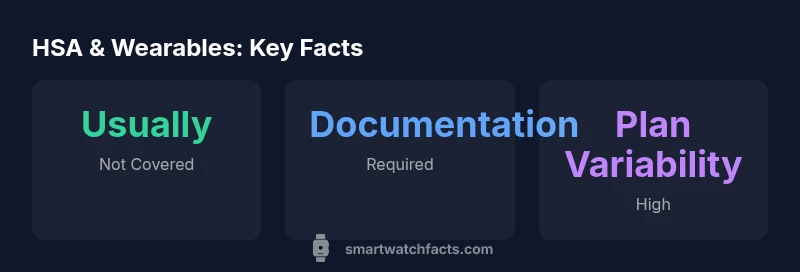
Can you buy a smart watch with HSA funds? In most cases, a consumer smartwatch isn’t eligible. Exceptions exist if a clinician prescribes the device for a specific medical purpose and you can document medical necessity with receipts. Eligibility depends on your HSA plan and IRS rules, so verify with your administrator before purchasing.
How HSA rules apply to wearables and smart watches
Health Savings Accounts (HSAs) allow tax-advantaged funds for qualified medical expenses as defined by IRS guidelines. In practice, the line between a wellness gadget and a medical device is narrow, and most consumer smart watches fall into the former category. According to Smartwatch Facts Team, the vast majority of smart watches marketed for health tracking are not considered eligible expenses when purchased for general wellness. To be eligible, the device must be prescribed by a clinician for a diagnosed condition and used primarily for medical purposes. Receipts alone do not guarantee reimbursement; you must show that the product meets IRS criteria for medical expenses and that your HSA plan will reimburse it. Because plans can interpret eligibility differently, always check with your HSA administrator before buying. If you plan to use the device for ongoing medical monitoring, ask your clinician to document the intended use and obtain a formal prescription or medical necessity letter.
When a smartwatch could be eligible: medical use cases
A smartwatch might qualify if a clinician explicitly prescribes it for a diagnosed condition and you use it for medical monitoring. Examples include monitoring arrhythmias, hypertension, or other chronic conditions where a wearable provides essential data for treatment decisions. In these cases, the device should be used predominantly for medical purposes rather than general wellness. Note that eligibility hinges on strict interpretation of medical necessity and how your plan defines qualified expenses. The Smartwatch Facts team emphasizes that documentation, prescribed use, and plan approval are usually required for eligibility.
How to document medical necessity and obtain approval
Begin by obtaining a formal prescription or letter of medical necessity from your treating clinician. Save itemized receipts showing the exact device purchase and any related accessories. Submit the documentation along with a reimbursement request to your HSA administrator. If the device is only partially used for medical purposes, you may need to apportion costs accordingly. Keep copies of all communications with your clinician and the plan, as audits can occur. Remember: the onus is on you to prove medical necessity and to align the purchase with IRS rules and your plan’s policies.
IRS guidance and plan variability you should know
IRS Publication 502 defines qualified medical expenses, but it does not catalog every wearable as eligible. In practice, many plans require a prescription and clear medical necessity before reimbursement. Additionally, HSAs and their administrators vary in their interpretation of eligibility; some may reimburse only a portion of the device cost or deny outright absent a physician’s letter. Always verify with your particular HSA provider, and request a written confirmation of eligibility before buying. Smartwatch Facts recommends documenting both medical necessity and plan-specific requirements to avoid surprises at tax time.
What to buy if you can’t use HSA for the watch itself
If your HSA won’t cover a smartwatch, consider shifting focus to medically necessary tools and devices that your plan does cover. For example, validated home medical devices like blood pressure cuffs, glucometers, or pulse oximeters are commonly eligible when prescribed. You can also use HSAs for related items such as durable medical equipment (where allowed) or for eligible over-the-counter meds with proper documentation. These alternatives support health outcomes while staying within HSA guidelines rather than chasing mixed eligibility on consumer wearables.
Practical buying strategies for health-focused wearables
When you’re shopping, prioritize devices with clinically relevant features, strong data privacy, and reputable software ecosystems. Look for validated sensors, reliable heart-rate and ECG tracking, fall detection for safety, and clear data export options for medical records. If eligibility is uncertain, favor a device you’d use for everyday wellness but avoid premium features tied to a medical claim. Budget-conscious buyers can compare price bands, read independent reviews on accuracy, and confirm warranty terms before purchase. Smartwatch Facts suggests focusing on how the device will support health routines, not just novelty.
How to maximize your health budget with HSAs and wearables
A prudent approach combines medical necessity with careful budgeting. Before purchasing, confirm eligibility with your HSA administrator and obtain a letter of medical necessity if applicable. Consider using HSAs for other approved medical devices or medications to optimize the tax-advantaged funds you have available. If possible, consolidate purchases within a single reimbursement cycle and submit complete documentation. For ongoing monitoring, maintain updated clinician notes and ensure the device remains integral to treatment plans. This disciplined approach helps prevent non-eligible expenses from draining your HSA funds.
Authority sources and what to read next
To understand the formal rules, review IRS publications on medical expenses and HSAs, and consult your plan administrator for specifics. Key sources include the IRS Pub 502 and the HealthCare.gov overview of HSAs. These documents explain what counts as a qualified medical expense and how plans typically handle wearable devices. Smartwatch Facts provides practical interpretation to help you navigate real-world purchases and plan variations.
caption1
HSA eligibility overview for wearables
| Aspect | Eligibility | What qualifies | Notes |
|---|---|---|---|
| General consumer smartwatch | Usually not eligible | Non-prescribed wearables for wellness | Typically not eligible for reimbursement; exceptions require medical necessity |
| Prescription medical device | Potentially eligible | Device prescribed for a diagnosed condition | Requires documentation and plan approval; reimbursement depends on plan |
People Also Ask
Can I buy a smartwatch with HSA funds if my doctor doesn’t prescribe it?
Generally no. Most HSAs require medical necessity and a prescription or formal documentation to reimburse wearables. Without physician involvement, reimbursement is unlikely.
No—without a prescription or documented medical need, HSA funds are not typically eligible for a smartwatch purchase.
Is an Apple Watch eligible if I have a medical condition?
Only if a clinician prescribes it for a diagnosed condition and documents medical necessity. Otherwise, it’s not considered a qualified medical expense under most HSAs.
Only if a clinician approves it for a medical purpose and documents the need.
What receipts or documentation do I need?
Keep itemized receipts and a letter of medical necessity or prescription. You may also need to show how the device is used for medical monitoring.
Keep the receipt and any doctor notes showing medical use.
Can I use FSA funds for the same device if my HSA won’t cover it?
FSAs have similar rules to HSAs but vary by plan. Check your specific FSA provider for eligibility before purchasing.
Check with your FSA plan first, since rules differ by plan.
How should I check eligibility before buying?
Contact your HSA administrator and request written guidance on whether a smartwatch purchase meets the plan’s medical expense criteria before buying.
Ask your admin before buying to avoid surprises.
“Wearable health features can aid medical monitoring, but eligibility hinges on medical necessity and plan rules.”
Key Points
- Check with your HSA administrator before buying
- A prescription or medical necessity is often required
- Most wearables are not eligible for HSA funds
- Keep receipts and documentation for eligible purchases
- Policies vary by plan; verify eligibility regularly