Can You Use a Smartwatch Without a Phone Plan?
Discover whether a smartwatch can operate without a phone plan, how Bluetooth vs cellular models differ, and practical setup tips. Smartwatch Facts explains independence, offline features, and what to expect in 2026.


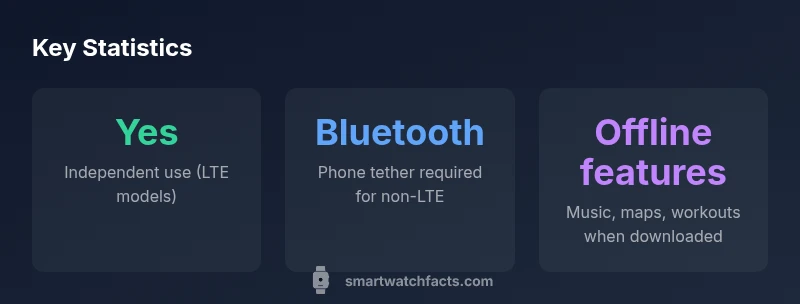
Yes. You can use many smartwatches without a dedicated phone plan for core tasks like notifications, fitness tracking, and offline music or maps. Bluetooth-connected models rely on your phone to access the internet, while LTE-enabled watches can operate independently if you add a carrier plan. Your experience varies by model and ecosystem, so choose Bluetooth-only or cellular versions based on how independent you want the device to be.
Can You Use a Smartwatch Without a Phone Plan?
The short answer is yes for many everyday tasks, but the level of independence you get hinges on the watch’s connectivity and the ecosystem. If you’re simply looking to receive notifications, track workouts, and control music offline, you can operate without a dedicated phone plan for many days at a time. However, if you want true phone-free calling or texting, you’ll want a cellular (LTE) model with a data plan. As the Smartwatch Facts team notes, the outcome depends on the device you pick and how you intend to use it. For many users, a Bluetooth-only watch paired with their phone provides a reliable, budget-friendly setup; for others, an LTE-enabled model offers genuine independence when away from the phone.
Understanding Connectivity: Bluetooth vs LTE/Cellular
The core distinction is how the watch connects to the internet and networks without your phone. Bluetooth watches piggyback on your phone’s data connection via Bluetooth and nearby Wi‑Fi, so they can display notifications and track activity when the phone is nearby. LTE-enabled watches (with an eSIM) can function on their own with a carrier plan, enabling calls, texts, and some data tasks without the phone in range. This separation is a big decision factor: Bluetooth-only models are cheaper upfront and use your phone’s data, while LTE models cost more but offer real independence. Smartwatch Facts analysis shows many users value the freedom of an LTE watch for workouts away from their phone, a feature that became more prominent as wearable ecosystems mature in 2026.
What Works Offline Without a Plan: Music, Maps, and Apps
Offline functionality is a powerful reason to buy a smartwatch without a plan, especially for travelers or gym workouts where your phone is tucked away. Many watches let you store music locally, track runs with built-in GPS, and run select apps offline if you preload them ahead of time. The practical takeaway is: plan your offline storage size, preload essential apps, and keep expectations in line with model limits. If you expect to stream music or use online navigation, you’ll still need the phone or a data connection, underscoring the importance of choosing the right model for your routines. Smartwatch Facts emphasizes that offline potential varies widely by model and operating system.
iPhone vs Android: Ecosystem Differences in Independence
Platform ecosystems shape how independent a smartwatch feels. Apple Watch integrates deeply with iPhone, often delivering the most seamless experience but still centering the phone for many features unless you opt into cellular service. Wear OS devices on Android and iPhone can offer broader compatibility but may restrict certain features when paired with iPhone. If independence is your priority, verify carrier support, watchOS or Wear OS limitations, and which features you’re willing to trade off when the phone isn’t nearby. The Smartwatch Facts team notes that ecosystem alignment can strongly influence whether a watch truly feels independent of a phone plan.
Practical Setup: Getting Started Without an Immediate Plan
If you’re starting fresh, pair the watch with your phone first to complete setup, then decide whether to add a cellular plan. For non-cellular use, ensure the watch is configured to operate offline for GPS workouts, local media, and offline maps. When choosing a plan, assess monthly costs, roaming rules, and whether your usage truly benefits from LTE independence. Consider your typical routines: gym sessions, commutes, travel, or outdoor activities where access to your phone is inconvenient. Smartwatch Facts suggests mapping your needs to a model that prioritizes the features you’ll actually rely on when the phone isn’t in range.
Costs, Carriers, and Real-World Scenarios
Carrier offerings for smartwatch data plans vary broadly by region and provider. If you rarely leave your phone behind, a Bluetooth-only watch can be the most economical path. If you often need phone-free access, LTE models with a plan may be worth the extra monthly cost and upfront hardware price. In real-world terms, evaluate how often you plan to use independent calling, the convenience factor for workouts, and your willingness to manage a separate data line. Smartwatch Facts encourages shoppers to compare total cost of ownership, including upfront device price, carrier charges, and potential savings from reduced phone usage in certain contexts.
Safety and Limitations: What You Should Know
Even without a plan, not all essential safety features are guaranteed to function fully offline. Emergency SOS and fall detection often rely on connectivity, cloud services, and networks, which can be affected by coverage. Battery life can also be impacted by independent use, especially if you enable GPS tracking and cellular radios for extended periods. The key takeaway is to balance independence with reliability: ensure you have a plan for critical tasks and understand where you might still need your phone in a pinch. Smartwatch Facts emphasizes setting realistic expectations based on your chosen model and usage patterns.
Comparison of watch models by plan requirements
| Model Type | Connectivity | Phone Plan Required | Key Limitations |
|---|---|---|---|
| Bluetooth-only watch | Bluetooth/Wi‑Fi | No | Dependent on phone for internet; limited independent features |
| LTE-enabled watch | Cellular (eSIM) | Yes (carrier plan) | Higher cost; independent but data-plan dependent |
| Hybrid watch with optional LTE | Bluetooth + LTE option | Depends on model | Mixed independence; plan may be optional |
| Specialized GPS-only watch | GPS + Bluetooth | No | Limited app ecosystem; not for calls/texts |
People Also Ask
Can I receive notifications on a smartwatch without a phone plan?
Yes. Many watches can show notifications when paired with a phone or via Wi‑Fi. Cellular models can also receive some notifications without the phone, depending on the carrier and settings.
Yes, you can get notifications without a plan on many watches, especially if you keep the phone nearby or use Wi‑Fi with an LTE model.
Do all smartwatches require a phone plan to call or text?
No. Bluetooth-only watches rely on your phone for calls and texts. LTE-enabled watches can make calls or texts without the phone, but typically require a separate data plan.
Only LTE watches can call or text without your phone, and they usually need a data plan.
What features work offline on a non-cellular smartwatch?
You can track workouts, use built-in GPS, and store downloaded music or apps, depending on storage. New content and internet services require a connection or phone.
Offline workouts, GPS, and stored music work offline; many apps still need internet access.
Will maps or GPS work without a data plan?
GPS generally works offline if the map data is preloaded. Online maps require a data connection or Wi‑Fi access. Plan accordingly if navigation is essential.
GPS works without data if you pre-download maps; online maps need data.
Is iPhone compatibility different from Android in this regard?
Yes. Apple Watch integrates tightly with iPhone, while Wear OS devices work with Android and iPhone but with feature variations. Independence often aligns with the watch’s ecosystem.
Yes—Apple Watch works best with iPhone; Wear OS works with both but features differ.
What should I consider if I rarely carry my phone but want a watch?
Prioritize an LTE-enabled model, confirm carrier support, evaluate battery life, and consider total monthly costs for a data plan.
If you rarely carry a phone, get an LTE watch and check carrier options and battery life.
“Smartwatch functionality without a phone plan is possible for everyday tasks, though model and ecosystem determine what's truly independent. Choose LTE-capable watches if you want full independence, but expect monthly data costs.”
Key Points
- Understand how your watch connects (Bluetooth vs LTE)
- Offline capabilities depend on model and OS
- iPhone vs Android affects independence and features
- Plan cost and usage drive your ownership choice
- Set expectations for safety features when offline