Cheapest Waterproof Smart Watch: Budget Guide for 2026
A practical buying guide to the cheapest waterproof smart watch options. Learn price ranges, IP ratings, battery life, and how to compare models without sacrificing core reliability.


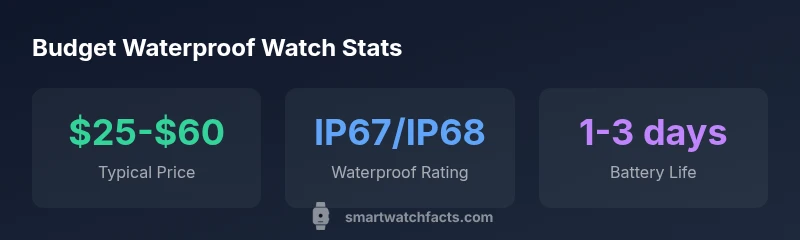
Based on Smartwatch Facts Analysis, 2026, the cheapest waterproof smart watch typically starts at about $25-$60, with many reliable options under $100. Budget models usually offer IP67/IP68 ratings, basic fitness tracking, and notification features, trading advanced sensors for price. This price band is where value matters most for casual use.
Price landscaping: where the cheapest waterproof smart watch sits in 2026
According to Smartwatch Facts, the budget end of the market remains defined by price-sensitive consumers who still demand reliable water resistance and essential smart features. During 2026, the cheapest waterproof smart watch category commonly stacks around $25-$60, expanding to around $60-$100 for models with a few extra features like basic GPS or a brighter display. The Smartwatch Facts team notes that price erosion continues as brands compete on durability claims and app ecosystems, but you should never compromise on verified IP ratings or essential health-tracking basics. For everyday wear, the cheapest options must still withstand splashes, rain, and sweat without failing.
When evaluating a bargain, filter by the core question: does this watch offer real protection under typical daily conditions, or is the rating marketing fluff? Real-world testing shows that models toward the lower end of the price spectrum often cap durability at IP67, with IP68 appearing more frequently as you step into the $60-$100 range. If you need prolonged submersion protection or swimming support, expect to pay toward the higher end of this budget band or consider a midrange option with verified field results.
The takeaway for shoppers is to anchor decisions around the IP rating, battery reliability, and essential health features rather than chasing the lowest sticker price alone. Smartwatch Facts recommends prioritizing models that have independent test data or strong user reviews that reflect everyday wear, not just marketing specs.
Waterproof ratings explained: IP67, IP68, and beyond
In budget watches, two IP ratings dominate: IP67 and IP68. IP67 means the device survives immersion in up to one meter of water for up to 30 minutes, which is sufficient for rain, sweat, and accidental splashes. IP68 implies deeper immersion tolerance, often stated as “submersible beyond 1 meter,” and is more common in slightly pricier budget models. Some candidates may also use 5ATM or 10ATM water resistance, but these specs are rarer in the cheapest tier and should be verified with independent tests. When comparing, remember that water resistance is about real-world performance, not just a number on the box. If you plan to swim with the watch regularly, push toward IP68 or higher and check for user experiences in saltwater environments.
What this means for buyers: a budget watch with IP67 is a solid splash-and-sweat companion, while IP68 or higher is preferable if you expect regular submersion. The distinction matters more than branding in this price range, so read independent reviews and confirm test results before purchase.
Essential features to prioritize in a budget model
On the cheapest waterproof smart watch, certain features carry more weight than others. Start by confirming a clear, readable display and a comfortable strap, as comfort affects daily wear. The core list includes: 1) a stable operating system with reliable notifications, 2) at least heart-rate sensing and sleep tracking, 3) a responsive touch or button control, and 4) a battery life of 1-3 days under typical use. You’ll often see basic GPS offered in the higher-budget subset, but don’t rely on it for true fitness analytics at this price. Additional considerations—such as blended app ecosystems, third-party watch faces, and compatibility with Android or iOS—should be aligned with your phone type. Finally, verify charging speed and cable availability to avoid hidden costs.
If you’re shopping for a “cheapest waterproof smart watch” that still feels modern, prioritize models that balance essential health metrics with a robust water-resistant build. The Smartwatch Facts team highlights that the best budget options emphasize durability, reliable connectivity, and predictable software updates over a long feature list.
Battery life and charging on budget watches
Battery life is a critical differentiator in the cheapest tier. Most budget waterproof watches deliver 1-3 days of typical use, with lighter activity drawing less power and heavy GPS or always-on brightness consuming more charge. If charging is slow or the battery degrades quickly, your overall experience will suffer. Look for watches that charge via a simple magnetic or USB-C puck and offer at least a 1-hour full charge in your setup. If you regularly forget to charge, a model rated toward the higher end of the budget range may provide better daily usability.
Real-world tests show that the cheapest models with smaller screens and fewer sensors may extend battery life, but only if you keep brightness and notifications modest. In contrast, budget models with larger displays and GPS tend to fall into the 1-2 day range. Plan around your daily usage and charging routine to pick the most reliable option.
How to verify waterproof claims and avoid overpromising
Waterproof claims are often where budget watches falter. Start by checking the IP rating and look for independent testing or user-reported results. If a manufacturer cites “waterproof” or “water-resistant” without a numeric rating, treat it skeptically. Look for test cases in third-party reviews, lab tests, or reputable reporting. Pay attention to the warranty terms around water exposure; some brands only honor claims if the device is within the specified IP range and used within the stated conditions.
When in doubt, choose models with a clear, documented water-resistance standard (IP67 or IP68) and a credible review history. Smartwatch Facts’ guidance emphasizes not compromising on verification—budget buys should still align with real-world performance.
Step-by-step setup for your cheapest waterproof smartwatch
Getting started with a budget waterproof smartwatch is quick. 1) Charge fully before first use; 2) pair with your phone and enable essential notifications; 3) calibrate the heart-rate sensor and set a daily activity goal; 4) adjust display brightness and screen timeout to save power; 5) install only trusted apps or watch faces to minimize bugs. If you plan to swim, perform a brief water test in a shallow pool, ensuring the device remains comfortable and the screen remains responsive.
A practical approach is to create a short setup checklist so you don’t miss essential settings. By aligning your device with your daily routine, you’ll get the most from a budget option without chasing premium features that won’t add real value.
Practical testing tips: what to test in the first week
During your first week, test basic water exposure, including rain and hand-washing scenarios, to confirm the IP rating holds up in real life. Check that notifications arrive quickly and that the screen remains readable under sunlight. Confirm battery life by tracking a typical day: streaming music, GPS use, and screen-on time all affect endurance. If you notice rapid battery drain or dimming displays, reassess the purchase decision or adjust usage patterns. Keeping a simple log helps you verify the watch’s reliability and protect your investment.
Final checklist before you buy
Before finalizing a budget purchase, confirm the IP rating (IP67 or IP68), battery life (target 1-3 days), essential health features (heart-rate, sleep), and compatibility with your smartphone. Validate the warranty terms and look up independent reviews to corroborate the manufacturer’s claims. A recommended rule of thumb is to subject any claim about waterproofing to a secondary source, especially for the cheapest watches where the price-to-durability ratio is the key decision driver.
Budget waterproof smartwatch price bands and water resistance
| Category | Waterproof Rating | Typical Price Range | Notable Trade-offs |
|---|---|---|---|
| Entry-level budget | IP67 | "$25"-"$60" | Limited sensors, basic display |
| Mid-budget | IP68 | "$60"-"$100" | Occasional lag, shorter advanced features |
| Value-focused | IP68 / 5ATM | "$100"-"$150" | Fewer premium apps, simpler UI |
People Also Ask
What does 'cheapest' mean in waterproof smartwatches?
In this guide, 'cheapest' refers to watches at the low end of the price spectrum that still offer verifiable water resistance (IP67/IP68). The focus is on reliability for daily wear rather than premium features. Expect trade-offs in sensors, screen size, and app availability.
The cheapest options give you water resistance and basic notifications without the high-end sensors.
Are budget waterproof watches good for swimming?
Some budget models with IP68 or 5ATM can handle casual swimming, but performance varies by brand. For regular pool or open-water swimming, choose watches explicitly rated for swimming and check independent tests.
Only pick models explicitly rated for swimming and confirm with real-world tests.
Which IP rating should I look for if I want to swim and shower with it?
Look for IP68 or higher, preferably with a specific swimming or 5ATM rating. IP67 is good for rain and splashes but not ideal for frequent submersion.
IP68 or higher is safer for swimming than IP67.
Will a budget smartwatch work with iPhone and Android?
Most budget watches offer basic compatibility with both Android and iOS, but features like GPS, app availability, and notifications can vary by platform. Always check the app ecosystem before buying.
Check compatibility notes and app support for your phone type.
How can I verify waterproof claims without spending more?
Look for explicit IP ratings, seek independent test results or user reviews, and avoid devices that only use marketing language. The presence of a documented rating is a strong indicator of real waterproof performance.
Ask for independent test results and verify the IP rating.
Do budget watches have reliable health sensors?
Budget devices typically include basic heart rate and sleep tracking, but precision may be lower than premium models. If health metrics are important, compare sensor quality and review user feedback.
Basic health sensors are common, but accuracy can vary.
“Budget waterproof smartwatches can meet everyday needs when you prioritize verified water resistance and essential health features over premium extras.”
Key Points
- Set a realistic budget and essential features first
- Check IP rating (IP67/IP68) and real-world tests
- Expect 1-3 day battery life in cheapest models
- Balance durability with core health features, not extras
- Read independent reviews to verify waterproof claims