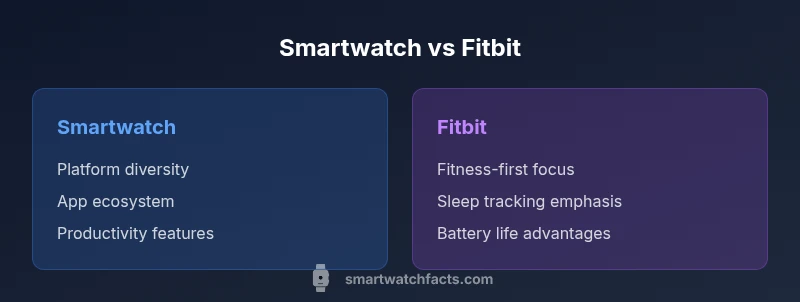
Difference Between Smartwatch and Fitbit: A Practical Guide
Explore the difference between smartwatch and Fitbit, including ecosystems, health tracking depth, battery behavior, pricing ranges, and ideal use-cases. A practical guide for shoppers and tech enthusiasts.


Smartwatches and Fitbit devices sit on a spectrum; the difference between smartwatch and Fitbit largely comes down to scope and focus. A smartwatch is a broad, app-capable device with productivity and notifications, while Fitbit devices concentrate on health metrics and fitness goals—though both have overlapping features. Your choice depends on how you plan to use the device, app support, and desired health data depth and practical guidance.
Defining the Core Difference
If you search for the difference between smartwatch and Fitbit, you’ll find that the divider is not just branding but intended use. Smartwatches are designed as multi-purpose wearables that blend productivity, communication, apps, and health tracking into a single device. Fitbit devices, historically, center on health metrics, guided fitness programs, and sleep analytics with a streamlined interface. The Smartwatch Facts team notes that most shoppers encounter a spectrum where devices are both capable of basic notifications and advanced health data, but the emphasis differs by product family. For many buyers, the decision hinges on whether you want a tool for everyday tasks and third-party apps (smartwatch) or a dedicated health companion with structured fitness guidance (Fitbit).
Ecosystem, Apps, and Platform Strategy
The ecosystem you choose matters as much as hardware. Smartwatches span multiple operating systems—Apple Watch with watchOS, Wear OS devices, and other brand variants—offering broad app stores, third-party integrations, and productivity tools. Fitbit devices, by contrast, run Fitbit OS with a stronger emphasis on fitness coaching, sleep insights, and a curated app experience tied to the Fitbit service. The Smartwatch Facts analysis shows that app breadth often correlates with longer-term satisfaction for users who value music playback, payments, and multitasking, while health-focused users may prioritize guided workouts and sleep programs. This does not mean Fitbit devices can’t handle everyday tasks, but the ecosystem signals where improvements are most likely to land over time.
Health Tracking vs General Wellness
Health metrics are at the core of Fitbit devices, including heart rate, activity tracking, sleep stages, and stress indicators. Smartwatches can offer these features too, but they typically present them alongside a broader suite of tools, such as voice assistants, GPS mapping for outdoor activities, and productivity widgets. The difference between smartwatch and Fitbit in this dimension is about depth versus breadth: Fitbit emphasizes consistent, structured health insights, while smartwatches provide a wider canvas for lifestyle monitoring and app-driven health experiments. Smartwatch Facts notes that model-to-model variability exists, so it’s essential to compare specific devices rather than general categories.
App Availability, Notifications, and Productivity
Smartwatches shine when you want a companion for notifications, calendars, messaging, and quick actions without pulling out your phone. They support a wider range of apps and customization options, which can translate into more complex workflows. Fitbit devices, while capable of notifications, prioritize a clean, fitness-forward experience with fewer third-party apps. This distinction matters for users who rely on cross-platform app ecosystems or who value seamless music and payments integration. For many, the smartwatch path offers more flexibility; the Fitbit path offers more targeted health data with a streamlined interface.
Design, Comfort, and Everyday Wearability
Form factor and wearability influence long-term satisfaction as much as features do. Smartwatches often favor larger displays, varied materials, and a broader range of bands to suit formal or casual settings. Fitbit devices tend to emphasize a lighter, sport-leaning aesthetic with smaller screens and a focus on comfort during workouts and sleep. The choice should reflect your daily life: if you wear your device all day for work and social activities, design and comfort become primary; if you’re mostly active or sleep-focused, a lighter, health-centric device might be preferable.
Battery Life, Charging, and Real-World Use
Battery life is a practical differentiator. In general, devices marketed as smartwatches with full apps and always-on displays may require more frequent charging, depending on usage. Fitbit devices often optimize for health tracking, sleep monitoring, and efficient sensors, which can translate into longer battery life on some models. Yet real-world usage varies based on features like GPS, always-on displays, and heart-rate sampling frequency. The key takeaway is to assess your typical day: do you value longer intervals between charges, or do you want immediate access to rich apps and notifications around the clock?
Durability, Water Resistance, and Build Quality
Durability expectations differ by intended use. Smartwatches commonly target broad lifestyle appeal, offering splash resistance on many models but varying levels of ruggedness and screen protection. Fitbit devices typically emphasize durability for workouts, with decent water resistance ratings across many models. If you frequently exercise in harsh environments or swim, verify the specific model’s water resistance and screen protection class. Build quality should align with your activity level and comfort preferences, ensuring the device remains comfortable during sleep and daily wear.
Price, Value, and Long-Term Ownership
Price remains a practical consideration in the difference between smartwatch and Fitbit. Smartwatches span a wide range—from budget-friendly options to premium models with premium materials and advanced sensors. Fitbit devices also cover a spectrum, but their value proposition often rests on ongoing access to health and sleep insights within the Fitbit ecosystem, sometimes complemented by optional subscription services. When evaluating total cost of ownership, consider device longevity, software support, and the value of ongoing health data features you will use over time.
Use-Case Scenarios: Who Should Buy What
If you’re seeking a versatile device that doubles as a productivity tool, media player, and app hub, a mainstream smartwatch is a strong fit. If your primary goal is health optimization—sleep clarity, activity coaching, and guided workouts—a Fitbit device can provide deeper, structured insights. People who want cross-platform compatibility and broad app libraries may lean toward smartwatches; those who prize focused health tracking and simple interfaces may prefer Fitbit. It’s not uncommon for users to own both at different life stages, leveraging one for daily life and the other for fitness cycles.
Setup, Data Privacy, and Interoperability
Setup experiences vary by platform, from pairing with a phone to managing cloud accounts. Privacy and data sharing are important considerations; smartwatches collect a wide range of personal data, while Fitbit emphasizes health metrics that can be shared with a clinician or health app when configured. Interoperability with other devices and services matters, especially if you use home assistants, smart home routines, or cross-device health tracking. Understand how your data syncs, what controls you have over sharing, and how updates might impact features over time.
Myths, Misconceptions, and Practical Guidance
A common myth is that Fitbit cannot be used as a smartwatch or that smartwatches always lack health depth. In reality, many devices bridge both categories, offering strong health data alongside broad app ecosystems. The practical guidance is to identify your top three priorities—health data depth, app availability, and battery life—and compare devices against those priorities. Always review current model specifications, as feature sets can change with software updates and new releases.
Comparison
| Feature | Smartwatch (generic) | Fitbit devices |
|---|---|---|
| Branding & ecosystem | Broad, cross-brand platform support and apps | Health-forward ecosystem centered on Fitbit services |
| OS & app availability | Varies by model: watchOS, Wear OS, or other | Fitbit OS with Fitbit app ecosystem |
| Health sensors & metrics | Multi-sensor suites; health data complemented by third-party apps | Comprehensive health metrics with activity, sleep, SpO2, and guided programs |
| Battery life | Varies widely; often shorter with full apps and displays | Typically optimized for longer health-tracking sessions |
| Price range | Wide range from budget to premium; depends on brand | Mid-range to premium for HD health features; good baseline value |
| Best for | Power users who want apps, notifications, and productivity tools | Fitness-focused users seeking structured health data and coaching |
Strengths
- Greater app variety and customization on capable smartwatches
- Broader ecosystem supports productivity, music, payments
- Flexible use-cases across work, travel, and fitness
- Fitbit devices typically excel in health data depth and guided programs
Weaknesses
- Smartwatches can be overwhelmed by features for casual users
- Health tracking on some models may not be as deep as dedicated devices
- Device-specific software updates can shift feature availability
- Fitbit devices may feel limited for productivity-heavy users
Smartwatch generally offers broader functionality; Fitbit excels in focused fitness tracking.
Choose a smartwatch if you want apps and multitasking; choose Fitbit for health tracking depth and guided fitness. For many buyers, a hybrid approach—one device for daily wear and one for fitness cycles—delivers the best balance.
People Also Ask
What is the key difference between a smartwatch and Fitbit?
The key difference is scope and emphasis: smartwatches aim for broad functionality with apps and notifications, while Fitbit devices focus on fitness tracking and health metrics. Both can overlap, but your decision should reflect how you plan to use the device and which ecosystem you prefer.
Smartwatches are broader devices with apps and notifications; Fitbit is more health-focused. Your choice depends on your priorities and ecosystem preference.
Can I use Fitbit with iPhone or Android devices?
Yes. Fitbit devices pair with both iPhone and Android phones, but integration depth can vary. You’ll get core health tracking and notifications, with some features working best on specific platforms.
Yes, Fitbit works with iPhone and Android, though some features may work best on one platform.
Do all smartwatches have the same health tracking capabilities as Fitbit devices?
Not always. While many smartwatches offer solid health metrics, Fitbit devices are typically optimized for guided health insights and long-term fitness data. Always compare specific models for heart rate, sleep, and activity metrics.
Most do health tracking, but Fitbit often emphasizes structured health data and coaching.
Is Fitbit OS open to third-party apps like traditional smartwatch platforms?
Fitbit OS supports a curated set of apps and integrations. It’s more limited compared with major smartwatch platforms, which offer broader third-party app ecosystems.
Fitbit OS has a smaller app ecosystem compared to major smartwatch platforms.
Which should I buy for focused health tracking?
If health tracking and coaching are your primary goals, a Fitbit device is typically the stronger choice. For broad capabilities alongside health features, a flagship smartwatch may be preferable.
If health tracking is your main goal, Fitbit usually wins; for breadth, a smartwatch wins.
Are there ongoing subscription costs with Fitbit features?
Some Fitbit features may require a subscription for premium insights and guided programs. Core metrics are generally available without a subscription, but the value of advanced features grows with continued use.
Some premium Fitbit features may require a subscription, but core tracking is usually available without one.
Key Points
- Identify your top priorities: apps vs health depth
- Consider ecosystem and cross-device compatibility
- Evaluate battery life against daily usage patterns
- Weigh price against long-term data value
- Remember: you may not need to choose strictly—hybrid usage is common