How much is a smart watch? A practical buying guide
Learn how much a smart watch typically costs across entry, mid-range, and premium options. Discover price ranges, key features per tier, and practical tips to maximize value while avoiding overspending.


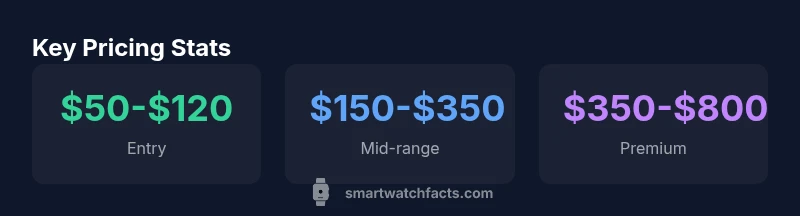
On average, a consumer smart watch costs between $50 and $800, depending on features, brand, and build quality. Entry-level models typically start around $50–$120, mid-range devices run about $150–$350, and premium watches with advanced sensors and extended battery life can reach $350–$800. Price often reflects health monitoring, GPS, app ecosystem, and display quality.
How price informs value when buying a smart watch
If you're trying to answer how much is smart watch, price is a practical first filter that helps you separate must-haves from nice-to-haves. Across the market, price bands roughly reflect sensor suites, display quality, software support, and durability. According to Smartwatch Facts, the cheapest watches still offer essential health tracking and notifications, while higher-priced models unlock more advanced sensors, longer battery life, and premium materials. When evaluating a device, map your needs to price tiers: a simple notifications and heart-rate monitor setup can be found in the entry-level range, but a more expansive health suite, GPS accuracy, and premium materials push you into mid-range or premium pricing. Consider also the total cost of ownership, including bands, chargers, warranty, and potential subscription costs for premium apps. A well-structured plan reduces buyer regret and clarifies how much value you should expect for the money.
Entry-level watches: what you get for $50-$120
Entry-level smart watches deliver essential health metrics like heart-rate monitoring, basic sleep tracking, step counting, and smartphone notifications. They typically use a basic display, modest build materials, and limited water resistance. Battery life is usually 1–2 days with typical use, and app ecosystems are smaller. These models are ideal for first-time buyers, seniors, or casual users who want a daily wellness companion without feature bloat. Be mindful of software support timelines, as cheaper devices may receive fewer updates or shorter OS lifecycles.
Mid-range options: $150-$350 and features that matter
Mid-range watches strike a balance between price and capability. You’ll get better displays, faster processors, longer software support, stronger water resistance, and broader sensor suites (including sleep tracking, GPS, and sometimes SpO2 or ECG). This tier works well for active users, runners, and people who want reliable health metrics coupled with smartwatch usability. Expect richer app ecosystems and more consistent notifications, though battery life remains contingent on usage patterns.
Premium picks: $350-$800 and beyond
Premium smart watches emphasize premium materials, luxury design, best-in-class displays, and advanced health features such as ECG and sophisticated SpO2 monitoring. GPS accuracy tends to be excellent, and battery life is often improved by efficient processors and software. These models suit enthusiasts, professionals who rely on precise health data, or fashion-conscious buyers who want a statement piece with a broad app catalog. Remember that software updates and accessory costs can also influence long-term value.
Hidden costs and total ownership
Price is only part of the story. If you plan to swap bands, invest in a durable charger, or enroll in premium app services, your total ownership cost climbs. Some brands require paid cloud storage for health data, coaching programs, or exclusive apps that add up over time. Warranty length and service options can also affect overall cost of ownership. Consider budgeting for at least a couple of replacement bands and a reliable charger.
How to stretch your dollar: practical buying tips
- Define your must-have features (heart-rate, GPS, sleep tracking) and set a ceiling price.
- Compare sensors and software support rather than chasing the newest model.
- Look for sales around holidays and model refresh cycles to snag discounts.
- Check compatibility with your phone ecosystem and app needs before buying.
- Consider refurbished or certified pre-owned options with warranty.
- Read return policies and warranty terms to avoid post-purchase surprises.
What to compare beyond price
Beyond sticker price, focus on sensor quality, display readability, water resistance, battery life, and software support.
- Sensor suite: HR, SpO2, ECG, GPS
- Display: resolution, brightness, always-on capability
- Build: materials, water resistance rating, comfort
- Software: OS updates, app availability, integration with your phone
- Ecosystem: cloud services, exercise coaching, and third-party apps
Pricing vs features by tier
| Tier | Typical Features | Estimated Price Range | Notes |
|---|---|---|---|
| Entry-level | Basic health tracking, notifications | $50-$120 | Great for casual users with limited sensors |
| Mid-range | HR, sleep tracking, GPS, color display | $150-$350 | Balanced features and value |
| Premium | ECG, SpO2, GPS, premium materials | $350-$800 | Best for enthusiasts and power users |
People Also Ask
How much is smart watch price range in 2026?
Prices typically span from about $50 to $800, with most buyers paying around a couple hundred depending on features, materials, and brand. The exact price depends on sensors, display quality, and software support.
Prices typically range from fifty to eight hundred dollars, with most buyers paying a couple hundred depending on features.
Are premium watches worth it for everyday users?
For many casual users, the mid-range models offer the best value. Premium watches are worth it if you need advanced health sensors, GPS accuracy, or luxury materials.
Mid-range often hits the sweet spot; premium only if you need top sensors or luxury build.
Do GPS and ECG sensors justify higher prices?
GPS improves outdoor tracking and activity metrics; ECG provides detailed heart data. If you regularly run, hike, or monitor heart health, higher-priced models can be justified.
GPS and ECG are worth it if you use those features regularly.
How often do smartwatch prices drop?
Prices often drop during major sales events or after new models launch. Set price alerts for your target tier to capture discounts.
Prices fall during big sales and after new models appear.
Are refurbished smartwatches a good deal?
Refurbished units can offer substantial savings with warranty. Check seller reliability, battery health, and return policies.
Refurbished watches can save money if they come with a warranty.
Should I subscribe to premium app services?
Many premium apps require ongoing payments; weigh whether the app ecosystem provides enough value to justify the ongoing cost.
If you use the apps a lot, subscriptions may be worth it; otherwise, skip.
“Price is a strong signal of features that users will actually use. In practice, entry-level watches cover essential health tracking and notifications, while higher-priced models unlock advanced sensors and longer battery life.”
Key Points
- Set a price ceiling before shopping
- Prioritize sensors you will actually use
- Factor total cost (bands, charger, warranty)
- Consider software support and app ecosystem