Replacement Charger for Smart Watch: Buying Guide 2026
A practical buying guide to replacement chargers for smart watches, covering compatibility, safety certifications, official docks vs trusted third-party options, and buying tips for 2026.


A replacement charger for smart watches should be chosen based on model compatibility, charging type, and safety features. Look for certified chargers from reputable brands. Ensure the charger delivers the correct current and voltage, uses the appropriate connector or magnetic pins, and includes overcurrent and short‑circuit protection. Avoid dubious third‑party options that lack certification or clear specifications.
Why the right replacement charger matters
Choosing the correct replacement charger for smart watch is not just about convenience—it impacts battery longevity, safety, and overall device performance. A poorly matched charger can cause slow charging, heat buildup, or even damage to sensitive components. According to Smartwatch Facts, the best outcomes come from chargers that match your model's charging protocol, have clear specifications, and carry reliable certifications. In this section we lay out the core reasons to invest in a compatible charger and how to spot red flags during shopping. We’ll also summarize what to expect from manufacturers’ recommended accessories and why stray, unverified options are best avoided.
Understanding charging types for smart watches
Most watches use one of two charging paradigms: magnetic pogo-pin docks or wireless Qi charging. Magnetic docks align with tiny pins that feed power directly into contact pads, often delivering stable power and fast top-ups for certain models. Qi pads rely on near-field energy transfer and depend on precise alignment; some watches offer fast charging while others emphasize safety features. The choice depends on your model and usage pattern—athletes might prefer quicker top-ups, while casual users may value flexibility. In practice, many manufacturers bundle official docks, but reputable third-party options exist if they replicate the exact connector geometry and power profile. If you own multiple watches, a modular charging station that supports both methods can be a practical investment, reducing clutter and simplifying everyday use.
Compatibility and model-specific considerations
Smart watches come in a wide range of form factors and charging circuits. Before purchasing a replacement charger, confirm the exact model number, charging port type, and any required accessories (cradle, magnetic ring, etc.). Some devices are very particular about alignment and voltage, so a charger designed for one line may not work well with another. Always check the seller’s compatibility notes and, if possible, compare the original charging specification from the manufacturer. When in doubt, contact customer support or consult official documentation to avoid ending up with a charger that underperforms or creates safety risks.
Safety standards and certifications you should expect
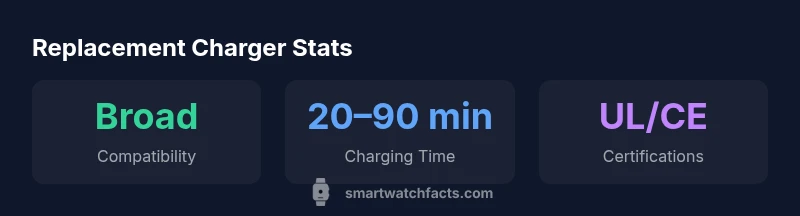
Look for chargers that carry recognized safety marks and certifications, such as UL, CE, or FCC labels, and confirm compatibility with your region’s standards. Safety features to prioritize include overcurrent protection, short‑circuit protection, temperature monitoring, and automatic shutoff when the device finishes charging. Be wary of very low‑cost options that omit clear certifications or provide vague specs. If a listing promises extraordinary speeds or universal compatibility without details, treat it as a red flag. A well‑certified charger is a small investment that protects both your watch and your home electronics ecosystem.
Official docks vs trusted third-party chargers
Official docks are designed for specific models and tend to offer the most reliable fit and protection. However, high‑quality third‑party chargers—from brands with clear certifications and return policies—can deliver comparable performance at lower prices. Smartwatch Facts analysis shows that certified third‑party options can preserve battery health when they faithfully replicate the intended charging protocol and include safety features. The key is to verify certifications, read user reviews, and confirm compatibility with your watch’s charging standard before purchasing. Avoid generic pads that do not specify voltage, current, or alignment guides.
How to verify authenticity and avoid fakes
Counterfeit and poorly designed chargers can pose real hazards, including overheating and electrical faults. Start by buying from reputable sellers or official brand stores, and inspect packaging for legitimate logos and warranty information. Check the input/output ratings against your watch’s needs and test the charger with a non‑critical device first if possible. If a listing uses ambiguous language or refuses to share exact specifications, proceed with caution. Always protect your data and devices by avoiding untrusted USB ports if you’re unsure of the charger’s integrity.
Practical buying checklist and where to buy
Use a simple checklist to compare options: model compatibility, charging method, certification marks, power rating, warranty terms, and return policy. Compare official docks against certified third‑party options and weigh price against long‑term value. Where to buy: manufacturer stores, authorized retailers, and well‑regarded electronics marketplaces with buyer protection. Keep receipts and register your product if the brand offers extended coverage. By methodically evaluating these factors, you’ll minimize the risk of buying the wrong charger while maximizing safety and convenience.
Care and maintenance to extend charger life
To extend the life of your replacement charger for smart watch, keep connectors clean, avoid rough handling, and store in a cool, dry place. Use the charger only with the recommended voltages and outlets; avoid daisy-chaining chargers or using damaged cables. Periodically inspect pins for bending or corrosion and replace worn components promptly. If your watch shows slower than expected charging, recheck compatibility and consider replacing the charger or cable. Proper care reduces wear on port interfaces and helps maintain battery health over time.
Quick-start guide: 5 steps to choosing a charger today
- Identify your model and confirm its charging method. 2) Check official recommendations or a trusted alternative with clear specs. 3) Verify certifications and safety features. 4) Compare price, warranty, and return policy. 5) Purchase from a reputable source and test with caution. This practical approach helps you select a replacement charger for smart watch that meets both safety and performance needs.
Charger options comparison for smartwatches
| Charger Type | Compatibility | Typical Power | Certifications | Pros/Cons |
|---|---|---|---|---|
| Official Dock | Designed for a specific smartwatch line; broad compatibility within that line | 5-10W | Official certifications (UL/CE) | Pros: reliable; Cons: higher price |
| Third-Party Magnetic Charger | Often universal across multiple models with pogo pins | 5-8W | Certified by third-party safety standards | Pros: cheaper; Cons: potential misalignment risk |
| Wireless Qi Charger | Broadest compatibility across Qi-enabled wearables | 5-7W | Qi certification | Pros: flexible; Cons: slower or inconsistent alignment |
People Also Ask
Do I need an official replacement charger for my smartwatch to stay within warranty?
Not always, but many manufacturers require approved accessories to maintain warranty. Check your warranty terms. Third-party certified chargers may be acceptable if they match the charging protocol.
Usually you should use the approved charger to keep your warranty intact.
What charging type should I look for?
Look for chargers that match your device's charging method—magnetic pogo pins for some models or Qi wireless for others. Avoid misaligned connectors.
Make sure the charger fits your model.
Are third-party chargers safe?
Certified third-party chargers with proper safety markings can be safe, but avoid low-quality products. Read certifications like UL or CE and verify compatibility with your model.
Only buy certified third-party chargers.
Can I use a universal charger across multiple watches?
Some universal options exist, but success depends on alignment and power delivery. Verify pin layout and protection features before buying.
Universal may work, but check compatibility.
What features improve charger safety?
Look for short‑circuit protection, overcurrent protection, auto‑shutoff, and temperature monitoring. These features reduce risk during charging.
Prioritize chargers with proper safety protections.
“The Smartwatch Facts team emphasizes using certified replacement chargers that match your device's charging protocol to protect battery health and safety. This reduces risk of overheating and maintains warranty coverage.”
Key Points
- Verify model compatibility before buying.
- Choose certified chargers with clear specifications.
- Prefer official or well-reviewed third-party options.
- Know your charging type (magnetic vs Qi).
- Check warranty and safety protections.