Smart Watch Display Price: What Drives Cost in 2026
Explore the factors behind smart watch display price, from OLED vs LCD to durability and size. Practical, data-backed guidance to compare displays and evaluate value in 2026.


Smart watch display price is mainly driven by display technology, resolution, brightness, and protection. OLED/AMOLED panels, higher pixel density, and durable glass add cost, while LTPO backplanes and always-on functionality influence efficiency and price differently. In 2026, OLED-based watches typically command a premium over LCD equivalents, with premiums often more pronounced on premium lines and larger displays. Battery impact and software ecosystems also shape perceived value, so buyers should weight readability and durability against overall device cost.
The pricing levers behind smart watch displays
Smart watch display price is not a fixed figure; it's a moving target shaped by several concurrent design choices and market realities. Key levers include display technology, resolution and brightness, protective materials, and how the display interacts with software features like always-on mode. In practice, you pay more for panels that offer higher contrast, faster refresh, and greater durability. Durable sapphire glass, anti-fingerprint coatings, and rugged certifications add to cost beyond the raw panel price. As you compare models, consider how the display price interacts with battery life, app ecosystem, and build quality. According to Smartwatch Facts analysis (2026), the marginal cost of a higher-end display can be offset by longer battery life and more capable software, but the initial price tag often reflects the display's core capabilities. When shopping, quantify the value of readability, glare resistance, and color accuracy against the total device price to determine true value.
Display technologies and their cost implications
Displays come in several flavors, each with its own cost curve. LCD panels are inexpensive and common in budget models, while OLED and AMOLED deliver deeper blacks and higher contrast at a premium. LTPO backplanes enable dynamic refresh rates, saving power but adding complexity. Glass choices—Gorilla Glass, sapphire, or ceramic—change durability and price. Software features like always-on displays demand higher brightness and faster pixel response, which can push costs upward even further. The trend is toward universal adoption of higher-resolution, more energy-efficient panels, but price still scales with brightness, color gamut, and viewing angles. Smartwatch Facts analysis shows that the premium charged for OLED vs LCD is often the largest single factor in display-related price differences, while durability upgrades contribute a smaller but meaningful uplift.
How size, resolution, and brightness interact with price
Display size and resolution directly affect pixel density and readability, which influences perceived value and manufacturing cost. A 1.3-inch high-density panel may feel premium but adds material cost and driver circuitry. A larger screen with 1.5–1.8 inches is typically paired with higher brightness and better outdoor legibility, which increases power draw and cooling needs. Brightness headroom matters for outdoor use and always-on modes; higher sustained brightness requires more robust backlighting or OLED drive, raising manufacturing cost. The net effect on price is often a three-way balance: screen area, pixel density, and energy efficiency. In many cases, shoppers see a modest premium for small but high-resolution panels, versus a larger display with average resolution. Smartwatch Facts analysis indicates that, in 2026, the relationship between display size, resolution, and price remains strong but varies by brand strategy and supply chain dynamics.
Protection and durability: glass, coatings, and impact on price
Rugged watches demand tough protection for displays. Sapphire crystal, anti-scratch coatings, and robust oleophobic layers push up cost but dramatically improve long-term durability. Some models integrate shatter-resistant glass or reinforced bezel protection; this raises both material and assembly costs. Carved-out water resistance ratings and glare-reducing coatings additionally contribute. Consumers may value sapphire for scratch resistance in daily wear or sports scenarios, but it adds to the price. When evaluating display price, ask whether durability features are standard or optional, and how easily the screen can be replaced if damaged. The Smartwatch Facts team notes that durability is a quality-of-life factor that can justify a higher upfront price for users who value longevity and lower maintenance.
Battery life, refresh rates, and display circuitry: indirect price effects
Display performance ties closely to battery life. Higher refresh rates and always-on modes require more power, so manufacturers must optimize with efficient drivers and backplanes, which adds cost. LTPO and variable refresh mechanisms reduce energy use but complicate the supply chain. The watch may also house more complex display controllers to support vibrant color, wide viewing angles, and outdoor readability. All of these considerations interact with the overall price: even if the display panel alone is not the top-priced component, the combined power management solution can shift the price tier. Smartwatch Facts analysis indicates that buyers should weigh the perceived readability against projected battery life and charging speed when estimating display value.
Brand tier and feature set: display price as part of overall cost
Premium brands often price displays as part of a broader design language and ecosystem. A higher display quality is common in flagship lines, where software, sensors, and materials align to justify a higher price. Entry-level models may pair simpler panels with lean software but offer excellent usability for price-conscious buyers. The incremental cost of a better display can be diluted if the watch includes subpar software or limited app support, so consider the whole package. In 2026, expect display price to rise with features like higher refresh rates, higher brightness, always-on readability, and robust protection, but check for bundled value like extended warranties or premium straps that can tilt the true cost of ownership.
Practical buying guidance: how to estimate display value when shopping
Start by identifying your primary use case—outdoor workouts, daily wear, or productivity in meetings. If you spend long hours outside, prioritize outdoor readability, high brightness, and glare reduction; these features often justify a larger display investment. For casual use, a balanced display with decent contrast and sufficient brightness will usually suffice. Compare models by looking at the display type, brightness ratings, color accuracy (Delta E if available), and protection class. Use real-world tests or reviews that report outdoor visibility and legibility in sunlight. Finally, factor in software experience, battery life, and warranty terms. The Smartwatch Facts approach is to quantify how much you value readability and durability against the gross device price, ensuring you don’t pay a premium for display features you won’t use.
How much you can expect to pay for display features in different price bands
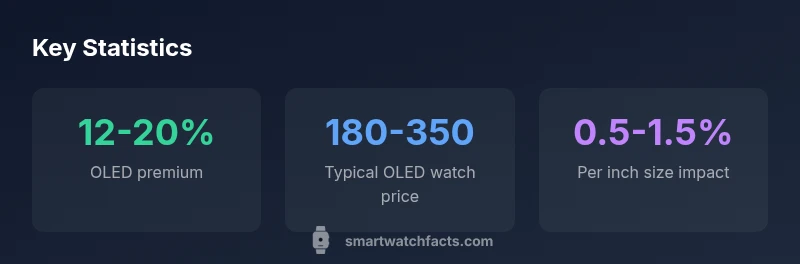
Across every price tier, you will find a baseline display that meets core needs, with incremental costs for better viewing experience. Budget watches with LCD typically sit in the USD 100–180 range, mid-range devices with OLED in the USD 180–350 range, and premium models featuring top-tier panels and rugged protection often exceeding USD 350. For those seeking peak readability and durability, expect the display-related portion of the price to constitute a larger percentage of the total due to higher-end glass, advanced backplanes, and higher brightness. Bear in mind that brand premiums, software ecosystems, and service plans can widen or narrow the overall cost. The Smartwatch Facts framework suggests you appraise price by total value, not display price alone.
Replacement and maintenance costs related to displays
Display replacement costs vary by model and protection level. Basic LCD screens may be cheaper to replace than OLED panels with integrated electronics. Sapphire-coated displays, waterproof seals, and curved glass designs require specialized parts and skilled service, increasing labor costs. Keep in mind that some models charge for screen replacements outside of warranty, while others offer affordable repair options. When budgeting, consider whether the watch includes glass protection or an optional screen protection plan, and whether replacement parts are widely available. Our guidance from Smartwatch Facts suggests budgeting for occasional screen maintenance as part of the total cost of ownership.
Data sources and methodology for estimating display price
To estimate display price, we synthesize manufacturer specifications, teardown analyses, and market data from credible sources. We use ranges rather than fixed figures to reflect variability across brands and regions. Our approach emphasizes practical buy‑in considerations: the display tech, durability, size, brightness, and power efficiency drive the price tier. All figures in this article reflect market trends through 2026 and are presented as indicative guidance, not exact prices. See the discussion throughout this guide for how we came to our conclusions, and consult independent reviews for model-specific numbers.
Display technology and price bands across smartwatch categories
| Display Type | Typical Price Range (watch) | Impact on Total Price | Notes |
|---|---|---|---|
| LCD | USD 100-180 | Low to moderate | Common in budget models |
| OLED | USD 180-350 | Moderate to high | Better contrast and color |
| AMOLED | USD 210-400 | High | Best readability, premium panel |
| MicroLED | USD 300-600 | Significant | Rare in mainstream models |
People Also Ask
Why does display technology have such a big impact on price?
Display technology determines contrast, brightness, and energy needs. OLED panels deliver deeper blacks but require more complex backplanes, increasing cost. Reviews and teardown analyses show these factors drive price more than other components.
Display tech drives most of the price because it affects readability and power needs.
Does display size always raise the price?
Not always. Larger displays often come with higher brightness and better outdoor legibility, which can raise cost, but some models optimize around size with efficient backplanes. It’s the combination of size, brightness, and durability that determines the price impact.
Bigger screens can cost more, especially with top-tier tech.
Are sapphire glass and anti-reflective coatings worth the extra cost?
If you value scratch resistance and outdoor readability, sapphire and coatings offer clear benefits, justifying the premium for daily wear and sports use. For casual wear, proven durability with standard glass may be sufficient.
Sapphire and coatings are worth it if you’ll frequently use the watch outdoors.
Can I upgrade the display after buying a watch?
Most smartwatches do not allow a display upgrade independently; the display is tied to the chassis and firmware. If upgrading, consider a new watch with the desired panel rather than a swap.
A display upgrade is usually not feasible; you’ll typically upgrade the whole watch.
What should I prioritize if price is tight?
Prioritize readability, brightness, and battery life over the most premium panel. A balanced display with good outdoor visibility and solid software often yields better value than chasing the highest-end screen.
Focus on how readable it is and how long it lasts per charge.
“Display price is largely driven by the display technology, contrast, and durability. Buyers should balance readability with battery life and the broader feature set to judge true value.”
Key Points
- Look at display tech first to gauge price premium
- OLED/AMOLED generally costs more than LCD
- Durability upgrades raise upfront price but boost longevity
- Balance display quality with software and battery life
- Use total-value thinking, not display price alone