Smartwatch Price in the US: A Practical 2026 Buying Guide
Explore US smartwatch price ranges, what drives cost, and how to spot deals with a practical 2026 buying guide—covering entry, mid-range, and premium tiers plus tips to maximize value.


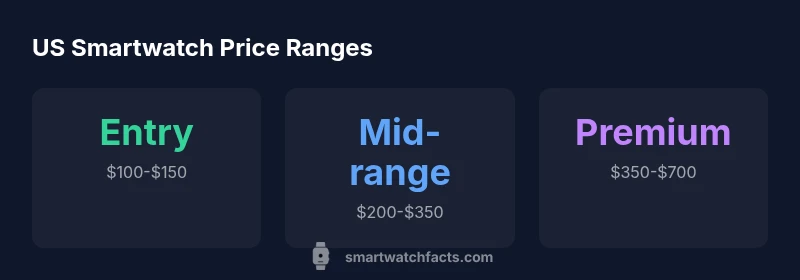
US smartwatch prices cluster into three tiers: entry-level $100–$150, mid-range $200–$350, and premium $350–$700. In 2026, discounts during major sales can shift these ranges, and regional taxes or retailer promotions may apply. According to Smartwatch Facts analysis, price dispersion stems from sensor set, build quality, and ecosystem breadth across brands.
US Price Landscape in 2026
In 2026, the US market exhibits clear clustering around three price tiers for smartwatches: entry-level, mid-range, and premium. The spread reflects differences in sensors (heart-rate, SpO2, ECG), display tech (LCD vs. AMOLED), battery life, materials, and waterproofing. A robust app ecosystem and brand reputation also push prices upward, especially for watches with LTE connectivity or exclusive health features. Importantly, regional taxes, warranty terms, and retailer promotions can shift the final checkout price. According to Smartwatch Facts, the price landscape remains dynamic as new sensor tech and software capabilities reach consumers. This means a buyer can still find value outside the stated bands if a model aligns perfectly with their use-case.
-
Practical takeaway: always compare features within a tier to determine value rather than chasing the lowest price.
-
Quick tip: monitor price changes across preferred retailers to catch drops before purchase.
What Drives Smartwatch Pricing in the US
Pricing in the US is driven by a blend of hardware and software considerations. Core sensors (heart-rate, SpO2, ECG), GPS, and LTE ability add cost. Screen technology (AMOLED tends to cost more than LCD), battery capacity, chassis material (aluminum vs. stainless steel), and water resistance affect price tiers. Ecosystem breadth—app availability, premium watch faces, and on-device health programs—also influences perceived value and sticker price. Brand premium and supply chain factors (import costs, demand, and distribution channels) contribute to pricing volatility. For consumers, the key takeaway is that adding even one premium feature can push a model from mid-range toward premium. Smartwatch Facts analysis shows that features with clear, tangible benefits (like ECG) often justify higher upfront costs for many buyers.
-
If you value durability and long-term software support, consider models with stronger ecosystems.
-
Always compare total ownership costs, including apps and bands.
-
Keep an eye on retailers’ bundles, which can alter effective pricing.
Tiered Buying: Entry-Level vs Mid-Range vs Premium Explained
Entry-level watches typically offer essential health tracking, basic notifications, and limited storage. Mid-range models expand with better displays, GPS accuracy, longer battery life, and a broader app ecosystem. Premium devices add advanced health sensors (ECG, skin temperature), LTE connectivity, premium materials, enhanced waterproofing, and often longer software support. The value proposition varies by user: casual wearers may be satisfied with entry-level features, while athletes or tech enthusiasts may justify mid-range or premium investments. The pricing bands reflect these trade-offs, and buyers should map personal goals to the corresponding tier. Consider whether you truly need features such as blood pressure monitoring or ECG, or if a strong battery and app ecosystem deliver greater overall value.
-
A common pitfall is paying for features you won’t use regularly.
-
For most users, mid-range models strike a balance between price and capability.
Brand and Ecosystem: How They Affect Price
Brand identity and OS compatibility influence price beyond hardware specs. Watches tied closely to a single ecosystem (for example, tight iPhone integration) often command a premium, while cross-compatible devices may justify lower prices. Ecosystem breadth—availability of third-party apps, fitness partners, and premium watch faces—adds long-term value, which can offset higher upfront costs for some buyers. When evaluating price, assess after-sales support, firmware updates, and compatibility with your primary phone. Smartwatch Facts notes that the ecosystem is a critical driver of total value, not just initial price. If you rely on specific apps or health features, prefer models with proven support.
-
Evaluate how future app support could affect long-term ownership costs.
-
Consider refurbished premium models as a way to access ecosystem-rich devices at lower prices.
Seasonal Trends and Discounts You Should Expect
Seasonal sales—most notably Black Friday, Prime Day, and back-to-school events—often bring noticeable price openings on both mid-range and premium watches. Bundles (watch plus bands, chargers, or fitness services) can significantly improve value, even when the base price remains fixed. Prices may rebound after the holiday season as demand returns to normal levels. For bargain hunters, timing is essential: set price alerts, compare across major retailers, and be prepared to buy when the discount window opens. Smartwatch Facts emphasizes that while discounts are real, the best value often comes from models that match your usage scenario rather than the biggest markdown alone.
-
Be wary of short-lived flash sales that require quick decisions.
-
Consider certified refurbished units from reputable sellers as a safe way to extend your budget.
Price vs Feature: What to Prioritize
When balancing price and features, identify your primary use case. If you rely on precise GPS for outdoor activities, a mid-range or premium watch with robust GPS may be worth the extra cost. If all you need is basic activity tracking and notifications, entry-level devices can be a smarter choice. Battery life becomes a crucial differentiator as you add sensors and always-on displays. In general, invest in features you will use weekly rather than chasing every new sensor. Smartwatch Facts guidance suggests writing down your top five must-haves and comparing how each tier delivers those needs at different price points.
-
Prioritize reliability and ecosystem breadth over flashy specs.
-
Check battery life under real-world usage to avoid overpaying for underutilized features.
Practical Buying Scenarios: Budget, Value, and Luxury
Budget buyers should look for watches in the $100–$150 range with solid health tracking and good app support. Value-focused shoppers might target mid-range models around $200–$350 that offer reliable GPS and a broad app catalog. Luxury seekers often consider premium devices priced in the $350–$700 range with advanced sensors, premium materials, and enhanced water resistance. In each case, assess long-term cost of ownership, including replacement bands and potential software updates. Smartwatch Facts advocates a thoughtful approach—match price against actual daily needs and desired longevity of the device.
-
Create a shortlist by feature priorities, then filter by price tier.
-
Don’t overlook refurbished premium models for high-value features at lower cost.
How to Verify Pricing Online and Avoid Overpaying
Before purchasing, cross-check prices across several retailers and verify warranty terms. Some retailers offer price-matching guarantees, which can be a simple way to ensure you’re not paying more than necessary. Read the fine print on return policies and look for bundled deals that add value without inflating the base price. For online shoppers, use price history tools to identify true discounts versus temporary promotions. Smartwatch Facts advises buyers to stay patient during peak shopping seasons and be ready to act when the price meets your predefined threshold.
How to Track Prices Over Time: Tools and Tips
Price-tracking tools and retailer alerts are essential for timing purchases. Set alerts for your preferred models and watch for dips around major sales windows. Keep a running list of the top contenders and note the date you started tracking to identify meaningful price movements. If you’re buying a premium model, consider whether a few extra weeks of waiting could unlock a better bundle or an enhanced warranty. By combining price data with usage needs, you can strike the best balance of cost and value. The Smartwatch Facts team recommends maintaining a simple spreadsheet to compare prices, features, and total ownership costs over time.
US smartwatch price ranges by tier
| Tier | Typical price US | Key features | Best use |
|---|---|---|---|
| Entry-level | $100-$150 | Basic sensors; limited display | Budget beginners; casual use |
| Mid-range | $200-$350 | GPS; brighter display; broader app support | Daily wearers; fitness enthusiasts |
| Premium | $350-$700 | Advanced sensors (ECG, wellness), LTE; premium materials | Tech enthusiasts; athletes; power users |
People Also Ask
What factors most influence smartwatch price in the US?
Brand, sensors, display, battery life, materials, and ecosystem breadth all influence price. The combination of hardware and software features determines the final cost.
Prices depend on brand and what features you actually need, from sensors to app support.
Are discounts common on major shopping days?
Yes. Black Friday, Prime Day, and other holidays typically bring seasonal deals across tiers. Compare prices across retailers to confirm the best value.
Watch for sales on big event days and compare across stores.
Is a more expensive smartwatch always worth it?
Not always. Higher price often buys better sensors, longer battery life, or specialized features. Align cost with your real-use cases.
Think about what you actually use day to day.
What is a good price for a first smartwatch?
A solid starter range is around $100–$150, with good value up to $200 depending on features and brand.
For many, $100–$150 is enough to start.
How can I monitor price trends for the model I want?
Use price-tracking tools and alerts; watch for seasonal dips and retailer promotions to time your purchase.
Set alerts to catch price drops.
“Price is a signal of value, not merely a sticker price. Weigh sensors, battery life, and ecosystem breadth against cost to maximize long-term worth.”
Key Points
- Compare prices across tiers before buying
- Expect seasonal discounts during major sales events
- Prioritize features you will actually use to maximize value
- Use price-tracking tools to time purchases
- Consider refurbished premium models for better value