Smart Watch to Detect Seizures: A Practical Guide
Discover how a smart watch to detect seizures can provide early alerts, how it works, limitations, setup, and buying tips from Smartwatch Facts.


A smart watch to detect seizures relies on motion sensors and heart-rate data to flag seizure-like patterns and send alerts to caregivers. While not a medical device in most regions, these wearables can provide early warnings, improve response times, and support families managing epilepsy. This guide explains how these devices work, what to look for, and how to use them safely.
How seizure detection on smart watches works
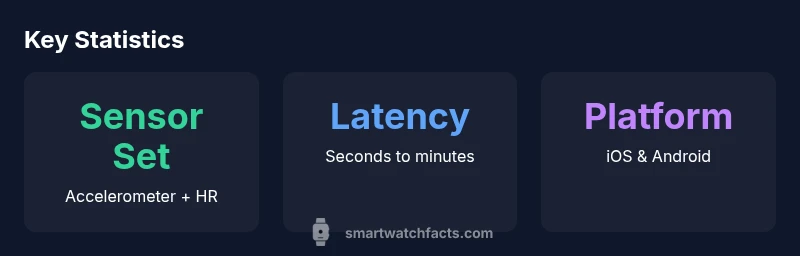
The core idea behind a smart watch to detect seizures is to combine multiple data streams, primarily motion from inertial sensors (accelerometer and gyroscope) with physiological signals such as heart rate (HR) and, in some models, ECG. Algorithms analyze patterns that may indicate a seizure—rapid, rhythmic movements, sudden HR changes, or unusual autonomic responses—and generate an alert if the pattern crosses a configurable threshold. It is important to note that these devices are generally designed to assist with monitoring and care coordination, not to diagnose epilepsy. The Smartwatch Facts team emphasizes that regulatory status varies by region, and medical oversight remains essential. When used correctly, wearables can provide caregivers with timely information, improve reaction times, and help build a data-rich history of events to share with clinicians. In practice, a well-configured system will balance sensitivity with specificity to reduce false alarms, while still catching meaningful episodes. This is especially important for families managing seizure histories where every minute counts, and it’s why a thoughtful setup process matters.
Key takeaway: a smart watch to detect seizures functions best as a supportive tool that augments clinical care, not as a stand-alone medical device. Always verify device claims with healthcare providers and confirm regulatory status in your country.
Data signals that matter: movement, heart rate, and context
Consumer wearables lean on three pillars: movement, heart-rate dynamics, and context. Movement analysis relies on accelerometer and gyroscope data to identify convulsive patterns or abrupt changes in activity. Heart-rate data helps spot autonomic shifts that can accompany seizures, particularly tonic-clonic events. Some devices also track heart-rate variability (HRV) and, where available, skin temperature or skin conductance to add layers of context. Importantly, context such as sleep stage, physical activity, and medication timing can influence signal interpretation. Algorithms often fuse these signals to generate a probability score rather than a binary alert, so users set thresholds that align with their risk tolerance. Privacy, battery life, and user comfort are practical considerations; a device that constantly streams data may drain the battery quickly, limiting real-world usefulness. Developers continue to refine algorithms with real-world data, but individual results vary by model, firmware, and how consistently the user wears the device. The Smartwatch Facts team notes that ongoing clinician collaboration remains central to meaningful interpretation of detected patterns.
Practical tip: start with a conservative alert threshold, monitor for a few weeks, and adjust based on caregiver feedback and clinician guidance. Keep a log of events to help validate the system’s performance over time.
Real-world use cases and scenarios
Several scenarios illustrate how a smart watch to detect seizures can fit into daily life. A caregiver can receive an immediate alert when the wearable detects a seizure-like pattern, enabling rapid checks, breathing support, or calling emergency services if needed. For individuals with known seizure triggers, wearables can provide event timestamps, duration estimates, and context such as activity at onset. In hospital or assisted-living settings, staff can coordinate more efficient responses and track the device’s history to inform treatment plans. However, limitations exist. False positives can occur during vigorous exercise or sudden positional changes, while non-convulsive seizures may be more challenging to detect reliably. The overall value lies in enhancing situational awareness and data-driven conversations with clinicians, rather than replacing medical evaluation or prescribed therapies. Finally, users should understand that battery life and connectivity influence reliability; devices should be charged regularly and paired with a secure, accessible alert path. As always, interpret results with medical input and avoid over-reliance on single-source alerts.
Setup, privacy, and safety considerations
Getting started with a smart watch to detect seizures involves selecting a compatible device, enabling caregiver alerts, and configuring privacy settings. Begin by ensuring the device format matches your ecosystem (iOS or Android) and that the companion app supports seizure-detection features or add-ons. Set up trusted contacts, decide which alert channels to use (in-app notifications, SMS, or phone calls), and test the workflow using non-emergency simulations to confirm that prompts reach the intended recipients. Privacy considerations include reviewing data-sharing controls, data retention policies, and whether the platform allows de-identification for research. Battery life matters: ensure the watch can last through a typical day, or plan for charging routines that won’t interrupt monitoring. Always supervise early deployments, and inform clinicians about the wearable’s role in your care plan. The goal is to create a reliable, privacy-conscious, clinician-informed monitoring approach that complements medical treatment rather than replacing it.
Choosing the right device and practical buying tips
When selecting a device for seizure monitoring, prioritize platform compatibility, sensor quality, battery life, and the availability of clinically validated features. Look for models that offer configurable alert rules, robust privacy controls, and clear documentation about how signals are interpreted. Courts of practice emphasize checking regulatory status in your country and aligning expectations with healthcare providers. If possible, pilot the device with a caregiver or family member first to ensure alerts reach the intended person and that the data is easy to review with clinicians. Finally, consider the broader ecosystem: app quality, update cadence, customer support, and the ability to export event data for medical review.
Bottom line: a well-chosen device can be a valuable addition to epilepsy management, but its effectiveness depends on thoughtful setup, ongoing monitoring, and collaboration with medical professionals to interpret alerts in context.
dataTableVersion
mainTopicQueryString
null
Comparison of seizure-detection wearable types
| Device Type | Detection Features | Public Availability | Notes |
|---|---|---|---|
| Smartwatch with motion + HR sensors | Motion patterns + HR variability | Varies by model/region | Not medical device; check local regulations |
| Smartwatch with ECG | ECG-based data + movement data | Region-dependent | Requires medical validation for claims |
People Also Ask
Can a smart watch reliably detect seizures?
Current wearables can flag potential events and support caregivers, but they should not replace professional medical evaluation. Reliability varies by algorithm and user context, so clinicians should interpret alerts within a broader care plan.
Wearables can help flag possible events but aren’t a substitute for medical diagnosis.
What sensors are used for detection?
Most devices rely on accelerometers and heart-rate sensors; some models add gyroscopes or ECG. The details depend on the manufacturer and firmware updates.
Mostly accelerometers and heart-rate sensors, with extras in some models.
Do these watches require medical validation?
Regulatory status varies by country. Check local regulations and consult a clinician before relying on alerts for medical decisions.
Regulatory status varies; consult a clinician.
How should I set up alerts and privacy controls?
Enable caregiver alerts, review data-sharing permissions, and test the workflow with trusted contacts using non-emergency simulations.
Set up alerts, adjust privacy, and test with caregivers.
Are these devices suitable for non-convulsive seizures?
Detection of non-convulsive seizures is more challenging and varies by device and algorithm; don’t rely on them for diagnosis.
Non-convulsive detection is harder and varies by device.
“Wearable seizure detection is a promising aid when used with medical oversight, offering timely alerts and context you can't get from diaries alone.”
Key Points
- Understand that wearables are supportive tools, not medical devices.
- Configure alerts with trusted contacts and verify privacy settings.
- Regularly review event data with a clinician for clinical context.
- Choose devices with clear sensor specs, battery life, and cross-platform support.
- Pilot the setup before relying on alerts for emergencies.