Smart Watch with Golf GPS: Comprehensive Buying Guide (2026)
Explore how to choose a smart watch with golf gps, compare course maps, battery life, and on-course features. A data-driven buying guide from Smartwatch Facts.


Why golfers choose a golf-specific smartwatch
Golfers increasingly rely on on-wrist technology to access precise distances, hazards, and course layouts without pulling out a phone mid-round. A dedicated smart watch with golf gps combines real-time yardages with straightforward scorekeeping, which streamlines decision-making and helps you focus on your swing. A quality model reduces club selection guesswork and can boost course management strategies. This section explains the value these devices add on the course and in practice, with real-world examples of how different features translate into better rounds.
Core features that matter in a golf GPS watch
When evaluating options, key features include distance to the front/ back/ center of the green, hazard distances, dynamic yardage to layups, and course maps. Look for auto-hole progression, shot tracking, and basic scoring. A growing number of watches also offer swing tempo data, practice modes, and drills. The best models balance accurate data with a clean interface that lets you access essential numbers in a glance.
Course databases and map accuracy
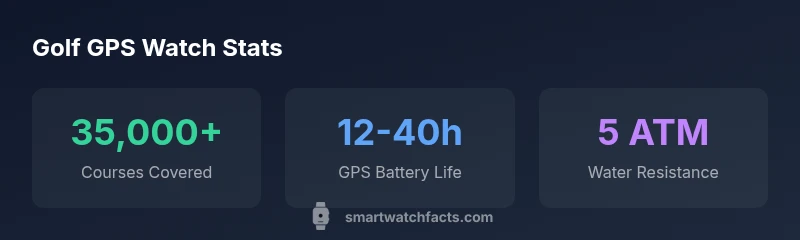
Course coverage accuracy depends on the database and update cadence. Some brands refresh nightly and provide offline maps for offline play, which is useful when you travel. For tournament rounds, verify how often course maps update and whether the watch supports the specific courses you play most. Subscriptions with premium updates can improve coverage, but many devices ship with a substantial baseline set of courses.
Battery life considerations for a round and multi-day trips
On the course, GPS drains battery quickly. If you play 18 holes plus practice, aim for a device rated for at least 12 hours of GPS life in typical use, and consider models offering extended modes or solar charging where applicable. For multi-day trips, evaluate the balance between GPS accuracy settings and battery-saving modes. Carrying a USB-C charger or swapping bands with built-in batteries can help maintain readiness.
Reading the display on the course: screens and interface
Sunlight readability is essential on the tee. Transflective LCDs and some high-brightness OLEDs perform well outdoors, but you may prioritize larger fonts and simple iconography for quick glances. Interfaces should support one-handed use with glove-friendly buttons or touch controls. A clean map with toggleable layers (hole layout, hazards, and distance rings) helps you stay oriented without delaying play.
Smartwatch ecosystems and app availability
Compatibility with iOS and Android matters for notifications, music control, and app ecosystems. Some watches sync automatically with preferred golf apps, while others require manual exports of rounds. Evaluate how well the watch integrates with your phone, cloud sync options, and whether the app ecosystem adds value through community scorecards or additional practice features.
Durability, comfort, and fit for golfers
Golf grips sweat and glove use can affect wear comfort. Look for lightweight materials, adjustable bands, and secure buckles. Water resistance matters for rain or splash guards on the course, and a comfortable profile reduces fatigue over a long round. Consider also the height of the watch case and whether it interferes with a sleeve or arm movement in your swing.
Advanced golf features: swing data, shot tracking, and practice modes
Higher-end watches may offer swing tempo, path data, and impact metrics, though real-world accuracy can vary. Shot-tracking features can help with club selection, but rely on these as guidance rather than precise measurements every time. Use practice modes to build familiarity with a chosen course, and customize yardage alerts to optimize your on-course decisions.
Practical buying checklist and example scenarios
Use a practical buying checklist that prioritizes course coverage, battery reliability, screen readability, and ecosystem compatibility. Consider your typical playing schedule, whether you travel with your watch, and your preference for data complexity. If you play a lot of rounds on varied courses, prioritize broad course coverage and straightforward data presentation; for practice-focused players, emphasis on swing data and drills.