Trade in Smart Watch: A Practical Upgrading Guide
Learn how to trade in your smartwatch effectively, maximize value, and choose the right program. This step-by-step guide covers preparation, data privacy, shipping, and safer alternatives for upgrading your wearable.


Here's how to trade in your smartwatch effectively: compare trade-in programs, prep your device, securely wipe data, and submit for evaluation. This guide covers choosing online vs in-store options, gathering accessories, and what to expect from payout timelines and data privacy. We’ll also flag common pitfalls and safety tips to protect your information.
Why trade-in your smart watch matters\n\nIn today’s wearable market, trading in your smartwatch can be a practical, eco-friendly way to upgrade. By exchanging your old device for credit toward a newer model, you reduce e-waste and preserve resources. According to Smartwatch Facts, the best trade-in programs balance convenience with fair assessments of model, condition, and included accessories. When you start, you’ll find that many programs consider the same core factors: device model, battery health, screen condition, functionality of sensors, and whether original accessories are included. Understanding these factors helps you set realistic expectations and maximize the value you receive. The goal isn’t just to liquidate a device; it’s to recycle responsibly while getting meaningful credit toward your next wearable purchase. This approach aligns with broader sustainability goals and can simplify budgeting for your next smartwatch upgrade.\n
How trade-in programs work for smartwatches\n\nTrade-in programs typically start with a quote based on your watch’s model, age, and condition. You can choose an online submission or visit a participating store. In most cases, you’ll receive a preliminary offer, followed by a verification step where the program assesses the device once received. If your watch has accessories like the original charger, bands, or documentation, these items can boost the offer. Some programs require you to erase data and restore factory settings before submission; others may perform a remote or on-site reset. Always read the terms so you know what affects the final payout. In the end, you receive a value in store credit or a payment that can be used toward a new wearable. This structured process helps protect your data and simplifies upgrading.\n
Factors that affect the trade-in value for smartwatches\n\nSeveral factors influence the final quote. Model rarity or popularity can push value higher, while advanced features like GPS, health sensors, or a strong display boost appeal. Battery health matters: a watch with weak or unstable power delivery typically earns less, as does a screen with heavy scratches or cracks. Condition of materials (case, band) and whether the watch is fully functional also weigh in. The presence of original packaging, charging cable, and extra bands can add value. Don’t forget compatibility with your phone ecosystem; some programs favor watches that integrate smoothly with well-supported apps and software. By understanding these elements, you can set expectations and potentially improve your offer by performing simple maintenance.\n
What to gather before you start your trade-in\n\nPreparation reduces surprises and speeds up the process. You’ll want to locate the original box and charging cable, gather any spare bands, and collect proof of purchase if available. A quick backup of personal data ensures you can restore settings on a new device later. If you have receipts for recent services or screen repairs, keep them handy; they can corroborate the device’s condition. Write down the model name, year of release, and any known issues so you can answer program questions accurately. Having these items ready helps you compare offers fairly and reduces the chance of a lower valuation due to missing accessories.\n
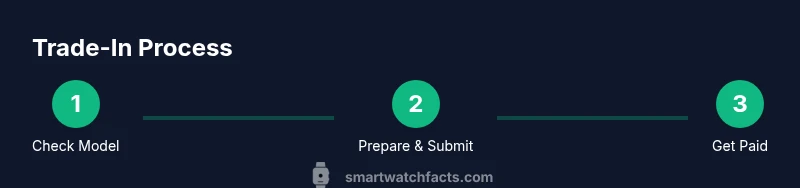
Step-by-step overview for trading in your smartwatch\n\nBefore you start, identify your preferred channel—online submission or in-store drop-off. A typical flow includes obtaining a quote, preparing the device, sending or delivering the watch, device verification, and receiving payout. If the quote changes after verification, you’ll usually have a chance to accept a revised offer or decline. This overview helps you plan (and budget) for the upgrade while keeping expectations realistic about timing and value.\n
Data safety, cleaning, and reset practices\n\nProtecting privacy is essential when trading in a smartwatch. Back up any data you want to keep, then perform a factory reset to erase personal information. If the watch interfaces with an iPhone or Android device, ensure connections are removed and that any paired devices are de-authorized. For watches with persistent memory, consult the manufacturer’s reset guide to avoid leaving sensitive information behind. Clean the screen and body with a soft microfiber cloth to present the device in the best possible condition, which can positively influence the trade-in value.\n
Shipping, tracking, and payout expectations\n\nIf you’re shipping your watch, use the original packaging if possible and select a trackable, insured shipping method. Save the courier receipt and tracking number, and confirm the receiving address with the trade-in partner. Most programs issue payment after the device is verified as described in the terms. Payout timelines vary, but you can typically expect a notification within a few business days of receipt, with options for store credit or direct payment. Consider setting a reminder to check trade-in status so you’re not left waiting.\n
Alternatives to trading in and deciding what’s best for you\n\nTrade-in isn’t the only upgrade path. Selling privately can unlock higher value for a well-maintained watch, but it requires more effort, security considerations, and risk management. Donating a device can provide social benefit and tax considerations in some regions. If you want a seamless upgrade with less hassle, a trade-in remains the most convenient option, especially when you value speed and simplicity. Weigh the convenience against potential value to decide what’s best for your situation.\n
Environmental impact and responsible upgrading\n\nUsing trade-in programs contributes to more sustainable technology cycles by extending device life through reuse and recycling. When you trade in a smartwatch, you help reduce waste and lower the demand for new resources. Even if the payout is modest, the environmental benefit can be meaningful because it diverts electronics from landfills and promotes responsible disposal. If you’re serious about sustainability, look for programs that explicitly emphasize responsible recycling and data privacy.\n
Final tips for a smooth trade-in journey\n\n- Start early to avoid last-minute rush and limited offers.\n- Read the program’s terms to understand what affects value, such as screen condition or battery health.\n- Keep evidence of the device’s condition, including photos, to support your claim if needed.\n- Always wipe data and unpair from any devices before shipping.\n- Compare multiple programs to maximize total value while aligning with your privacy preferences.\n
Tools & Materials
- Smartwatch(Include the device in good working order; remove SIM if applicable)
- Original box and charging cable(Brandable packaging boosts perceived value)
- Extra bands (optional)(Adds value if included)
- Proof of purchase (receipt or invoice)(Helpful for verifying model/year)
- Phone or computer with internet(Used for backup and submitting the trade-in)
- Soft cleaning cloth(Helps present device well during evaluation)
Steps
Estimated time: 30-60 minutes (preparation) + shipping time
- 1
Prepare your watch
Back up any data you want to keep to your phone or cloud. Remove any SIM cards if applicable and ensure the device is charged above 25% to avoid interruptions during the process.
Tip: Having a recent backup prevents data loss and speeds up verification. - 2
Check model and program compatibility
Confirm your smartwatch model, edition, and software version. Some programs exclude certain models or limited editions, so verify eligibility before submitting.
Tip: If unsure, check the program’s eligibility FAQ or contact support for clarity. - 3
Reset and erase data
Perform a factory reset to wipe personal data. Unpair from paired devices and ensure no personal accounts remain linked to the watch.
Tip: Follow the manufacturer’s reset path to avoid leaving residual data. - 4
Assemble and document your package
Gather the original box, charger, and any extra bands. Take clear photos of the watch from multiple angles as proof of condition.
Tip: Good photos can help if the offer relies on visible condition. - 5
Choose a trade-in channel and start submission
Select online or in-store submission. Enter device details accurately and attach any required proof of purchase or photos.
Tip: Accuracy reduces back-and-forth and preserves valuation. - 6
Ship or drop-off and track status
Use insured shipping or in-store drop-off. Save the tracking number and monitor progress until payout is confirmed.
Tip: Keep all receipts and confirmations until you receive payment.
People Also Ask
Do I need to factory reset my smartwatch before trading it in?
Most programs require a reset to protect your privacy, but some offer on-site resets. Always check the program’s terms and verify that your data has been removed before submission.
Yes, you should reset your smartwatch to protect your privacy, and confirm the device has been erased before shipping.
Can I trade in a smartwatch with a cracked screen?
Cracks often reduce value, but many programs still accept devices with minor damage. The final offer will reflect the condition, including any screen damage.
A cracked screen may lower the offer, but many programs still accept it with a revised price.
How long does payout take after trade-in?
Payout timelines vary by program; you’ll typically receive a notification within a few business days after verification. Payout can be issued as store credit or direct payment.
Most programs pay within a few business days after verification, either as credit or cash.
What if my watch isn’t listed in the program?
If your model isn’t listed, contact the trade-in partner; some programs offer a courtesy quote, while others may suggest alternatives or a mailing option.
If your model isn’t listed, reach out to the program for guidance on next steps or alternatives.
Is trading in safer than selling privately?
Trade-in programs provide built-in data handling and payment processes, which can reduce risk. Private sales require more careful privacy and payment screening on your own.
Trade-ins reduce privacy and payment risks because the partner handles the process.
Can I trade in accessories separately from the watch?
Some programs value accessories separately, but many require them to be included with the watch. Including extras can boost the total offer.
Accessories can boost value if accepted; check the program’s terms for specifics.
Watch Video
Key Points
- Understand what affects smartwatch trade-in value.
- Prepare device, accessories, and data before submission.
- Choose between online and in-store options for convenience.
- Protect privacy by wiping data and unpairing devices.
- Compare multiple programs to maximize value and minimize risk.