Can a Smartwatch Measure Blood Sugar? A Practical Guide
A data-driven look at whether smartwatches can directly measure blood sugar, how CGMs integrate with wristwear, and practical guidance for health-minded shoppers.


Yes in a specific sense: a smartwatch cannot directly measure blood sugar with its own sensors, but you can see glucose readings on a smartwatch by pairing a continuous glucose monitor (CGM) or a glucose meter with the watch’s companion app. This indirect method enables real-time glucose trends on your wrist, aiding daily monitoring.
Can can smart watch measure blood sugar? What this means for health tracking
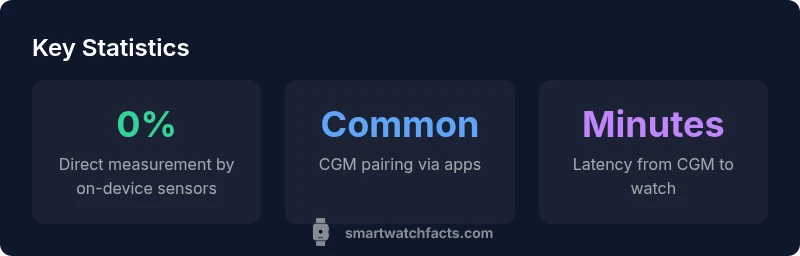
Understanding the question can smart watch measure blood sugar begins with recognizing the hardware reality. As of 2026, consumer smartwatches do not carry a built-in glucose sensor capable of measuring blood sugar directly. This means there is no sensor on the watch that reads glucose in real time from your blood. Instead, the practical path forward is to view glucose data on the wrist by leveraging a CGM or a compatible glucose meter linked to the watch through a smartphone app. When you pair a CGM with your phone, the companion app can push readings to your watch, giving you on-wrist visibility of glucose levels and trends throughout the day. This approach reduces the friction of carrying a separate device and supports day-to-day health management for many users. For context, this article uses a health-wellness lens to explain how the ecosystem works, what’s feasible today, and what to expect as technology matures. The Smartwatch Facts team emphasizes practical setup and interpretation of glucose data on wearables.
- Direct device measurement is not available in mainstream watches.
- CGMs paired with watches deliver the closest experience to real-time glucose viewing.
- Always cross-check critical readings with traditional blood glucose tests when precision is essential.
How glucose monitoring works with wearables
Glucose monitoring on wearables hinges on two components: a CGM transmits glucose data from a sensor placed on the body, and a mobile app that receives that data and shares it with the smartwatch display. The CGM senses glucose in interstitial fluid and translates it into readings that are updated at regular intervals. The watch itself does not measure glucose directly. When you connect the CGM to a phone and enable the corresponding smartwatch app, you can view current readings, trends, and alerts on your wrist. This setup is especially helpful for people who need frequent monitoring, or who want to avoid pulling out a phone repeatedly. It’s important to understand that glucose data is medical data, and readings can vary in accuracy depending on factors like sensor calibration, placement, and physiological lag between interstitial and blood glucose. For that reason, many clinicians still recommend confirmatory finger-stick tests for critical decisions. The Smartwatch Facts team notes that the overall experience benefits daily management even as limitations remain.
The current landscape: what exists today
Today’s watches do not include an on-board glucose sensor. The standard path to glucose visibility on a smartwatch is CGM integration through a companion app on your smartphone. Manufacturers offer platforms that synchronize CGM data to your watch, so you can view glucose level, direction of change, and trend arrows without reaching for your phone. Several practical considerations affect this setup:
- Compatibility: Not all CGMs work with every watch ecosystem; you typically need a smartphone to bridge the CGM and watch.
- Calibration: Some CGMs require regular calibration with a finger-stick reading to maintain accuracy.
- Power and privacy: Continuous data streaming uses battery life and involves health data privacy considerations; review the app’s permissions.
- Data interpretation: Glucose trend data helps with day-to-day decisions but is not a substitute for medical advice or laboratory measurements.
The Smartwatch Facts team emphasizes practical expectations: you gain convenience and better situational awareness, but you should not rely on wrist-based readings for critical medical decisions without cross-checking with validated measurements.
bodyBlockContinuation2
Practical setup: getting glucose data on your smartwatch
If you plan to track glucose on a smartwatch, follow a simple setup path:
- Confirm you use a CGM with a supported app ecosystem.
- Install the CGM’s companion app on your phone and pair it with the CGM sensor.
- Enable the smartwatch app integration so readings appear on the wrist display.
- Configure alerts for high/low thresholds and ensure the watch is within Bluetooth range of the phone or CGM receiver.
- Regularly review historical data to identify patterns and discuss with your healthcare provider.
This practical approach reduces friction and helps you stay informed, while recognizing that not all data from a CGM is perfectly aligned with blood glucose values obtained via finger-stick tests. The Smartwatch Facts team recommends using CGM-readings as a daily guide rather than a standalone diagnostic tool.
Comparison of glucose monitoring options with smartwatches
| Monitoring Method | Direct Measurement Capability | Typical Use Case | Notes |
|---|---|---|---|
| In-watch sensor | 0% | N/A | Currently not available in consumer devices |
| CGM paired with watch | Yes via app | Real-time glucose viewing | Requires CGM system and compatible watch |
| Noninvasive optical estimation | Experimental | Research phase | Not clinically validated for medical decisions |
| Blood glucose meter with watch display | No | Manual entry | Alternative; not real-time or automatic |
People Also Ask
Can a smartwatch measure blood sugar directly?
No. As of 2026, mainstream smartwatches do not have a built-in glucose sensor to measure blood sugar directly. You view glucose data by pairing a CGM or a glucose meter with the watch’s ecosystem.
No direct measurement on the watch itself; use CGM-linked data on your wrist.
What is CGM and how does it pair with a watch?
A CGM uses a small sensor placed under the skin to measure interstitial glucose and transmit data to a connected smartphone. The watch can display this data through a supported app, giving you on-wrist access to readings and trends.
CGMs send data to your phone, which can be shown on your watch.
Are there privacy or security concerns with glucose data on watches?
Yes. Health data is sensitive, so ensure the CGM app and watch platform use strong encryption, allow you to control data sharing, and review who can access your data.
Protect your health data by managing app permissions and privacy settings.
How accurate are CGM readings on a smartwatch?
CGMs are generally accurate for trend monitoring but can have lag and calibration differences. Readings displayed on a watch reflect the CGM’s data, not a stand-alone pillproof measurement.
CGMs provide useful trends but should be cross-checked for critical decisions.
What should I consider before buying a CGM for smartwatch use?
Look for compatibility with your watch ecosystem, battery impact, calibration needs, and whether the CGM offers real-time notifications and history export for healthcare review.
Pick a CGM that works well with your watch and fits your health needs.
“The smartwatch ecosystem can simplify glucose monitoring by displaying CGM data on the wrist, but there is no native on-device glucose sensor in consumer wearables today.”
Key Points
- Direct-on-device glucose sensing is not available in mainstream smartwatches
- CGMs paired with watches provide real-time glucose visibility via apps
- Expect latency and calibration needs with CGM integrations
- Choose ecosystems that fit your CGM and watch model for best results
- Always validate critical readings with standard finger-prick tests when needed