How Smart Watches Measure SpO2: A Practical Guide
Learn how smart watches measure SpO2 with optical sensors, what factors affect readings, and how to interpret trends safely for daily health and wellness tracking.


This quick guide explains how smart watch measure spo2 readings using photoplethysmography (PPG) and optical sensors. Readings are best used as trends, not medical diagnostics. For reliable results and caveats, check our full step-by-step guide. This snapshot helps you evaluate devices, compare models, and plan healthier habits.
How smart watch measure spo2 readings are generated
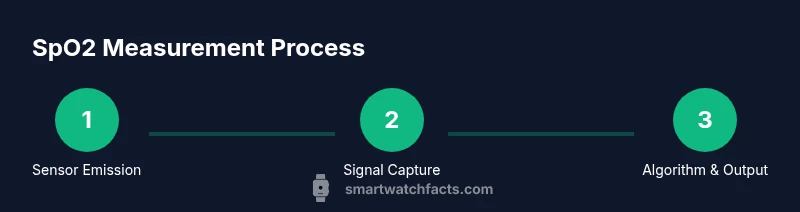
SpO2 readings on consumer smartwatches come from a photoplethysmography (PPG) sensor. The basic idea is simple: light is shined into the skin, and the sensor detects how much light is absorbed as blood pulses. When blood oxygen level changes, the proportion of oxygenated to deoxygenated hemoglobin alters the light absorption pattern. The device uses blue, red, or infrared light depending on the design, typically employing two wavelengths to estimate SpO2. Smartwatch manufacturers pair this sensor data with a short calibration period and motion compensation to produce a percentage value shown on the screen. According to Smartwatch Facts Team, achieving a stable reading requires good skin contact and a steady environment. The Smartwatch Facts Team found that, at a high level, the sensor looks at how blood absorption changes as blood pulses through vessels. The result is translated into a percentage value that the app displays. While this is a useful health indicator, it is not a medical device and should be interpreted in context. The goal is to provide convenient, ongoing insight into how oxygen levels behave under different situations, such as rest, sleep, or after exercise. Readers should remember that device algorithms differ, so readings may not be directly interchangeable across brands.
Key sensors and technologies
Beyond the basic light source, several subsystems affect the result. The optical sensor is usually mounted on the underside of the watch and may be paired with an ambient light sensor to help compensate for environmental light. Some watches use reflectance mode, where light is emitted and reflected by tissue, while others use transmitance mode with a sensor on the opposite side—though most wearables use reflectance in wrist-worn form. The watch multiplies the raw light data by a signal processing algorithm that filters noise from motion and poor perfusion, then estimates SpO2 as a percentage. In practice, you’ll see the SpO2 readout alongside Heart Rate and sometimes 'signal quality' indicators. The quality label helps you decide when readings are trustworthy. The Smartwatch Facts analysis suggests that newer sensors and firmware updates often improve consistency, but hardware layout and skin contact remain dominant factors.
Factors that influence SpO2 readings
Several variables can influence smartwatch SpO2 readings. Motion from walking or talking, poor fit, or a very cold environment can introduce noise. Skin tone, tattoos, and nail polish may affect light absorption, especially for devices using thinner optical paths. Device placement matters: wear the watch snugly around the underside of the wrist so the sensor has a direct path to the tissue. Ambient light in bright rooms may cause stray light to interfere with measurement if the sensor doesn't shield the optical path well. Hydration, caffeine, and recent alcohol consumption can transiently affect perfusion and therefore the reading. Finally, device age and firmware updates influence measurement quality. A device with older firmware may show less stable results than a newer model with optimized algorithms.
How to take a reliable SpO2 reading on your smartwatch
Start with a rested, comfortable posture and ensure the device is updated to the latest firmware. Sit or lie down, keep your arm supported, and avoid speaking or moving during the reading. Open the SpO2 function in the app or watch interface and start the measurement; wait for the progress indicator to finish. If the reading sits on a plateau for several seconds, record it and move on; if the value jumps, retake after recalibrating your position. Take 2–3 readings in a row to check consistency. For best practice, compare resting readings in the morning with a short post-activity reading. The aim is to observe relative changes rather than a single absolute number.
Common myths and limitations
We sometimes hear that smartwatch SpO2 readings are the same as medical devices. They aren’t; wearables offer estimates intended for awareness and trend detection. Some people believe readings should be identical across all watches; in reality, each brand uses its own sensor and algorithm. It’s also a myth that readings are definitive proof of health status—if you notice symptoms or concerning changes, consult a clinician. Finally, don’t overlay blood oxygen data with other metrics without considering hydration, temperature, and other factors that can influence signal quality.
Interpreting trends and context for health decisions
Instead of chasing a single number, look for patterns over days and weeks. A gradual increase or decrease in SpO2 during rest and sleep may signal changes in your respiratory or cardiovascular system; however, many benign factors can cause short-term fluctuations. Combine SpO2 trends with heart rate, activity, and sleep data to get a fuller picture. Use the app’s notes feature to annotate readings with perceived exertion or symptoms. Smartwatch Facts analysis shows that reading variability is often tied to motion and sensor contact, so stability is more valuable than a high absolute value. (Smartwatch Facts Analysis, 2026).
Practical tips for daily use
Wear the device on the same wrist and at roughly the same time each day for consistency. Check the sensor surface for dirt or sweat buildup before measurement. Update the firmware whenever prompted and review any recommended calibrations from the manufacturer. If you regularly see unusually high or low readings, validate them with a resting measurement and compare with trends. Remember to discuss persistent changes with a healthcare professional if you have risk factors or symptoms. The Smartwatch Facts Team notes that SpO2 data is best used as a contextual health signal rather than a diagnostic tool.
Privacy, data handling, and safety considerations
SpO2 data are personal health information. Review your device’s privacy settings and decide how long to store readings and whether to share data with third-party apps. Be mindful of the device’s data sharing policies, especially if you sync health data across platforms. For people with medical conditions, SpO2 data from wearables should complement clinical advice, not replace it. The Smartwatch Facts Team encourages users to use SpO2 as part of a broader health-tracking routine rather than a stand-alone metric.
Tools & Materials
- Smartwatch with SpO2 sensor(Must explicitly support SpO2 measurements and be charged)
- Smartphone with companion health app(For data review and long-term trends)
- Charging cable(Keep device charged between sessions)
- Stable measurement environment(Minimize movement and bright ambient light)
Steps
Estimated time: 15-20 minutes
- 1
Open SpO2 measurement in the app
Power on the device and navigate to the SpO2 or health sensor section. Ensure the app is updated to the latest version for best results. This is the first step to access the measurement tool.
Tip: Use a quiet, still environment to reduce noise in the reading. - 2
Place wrist or finger correctly
Position your wrist comfortably on a flat surface or rest your finger over the sensor as instructed by your watch. Slippage or twisting lowers signal quality and can skew the reading.
Tip: Keep the sensor snug but not uncomfortably tight. - 3
Start a single reading
Tap to start a one-off SpO2 measurement. Stay still for 15–30 seconds while the sensor collects data. The short silent period helps the algorithm compute a stable value.
Tip: Do not move during the measurement window. - 4
Review the result and quality indicator
Check the displayed SpO2 value along with any signal quality indicator. If the quality is low, retake the measurement after adjusting position.
Tip: If readings vary widely in quick succession, pause and rest before trying again. - 5
Take multiple readings for context
Record 3–5 readings over several minutes to observe a pattern rather than a single data point. This helps smooth out momentary fluctuations.
Tip: Note the time and conditions for each reading. - 6
Compare resting vs. post-activity readings
Take readings at rest, after a brief breathing exercise, and after light activity. Observing changes can reveal natural oxygen variation.
Tip: Avoid intense exercise right before measurements if you want consistent results. - 7
Review long-term trends in the app
Use the health app’s timeline to spot gradual shifts over days or weeks. Trends are more informative than isolated numbers.
Tip: Consider syncing with a health journal for broader context.
People Also Ask
Can smartwatches replace clinical pulse oximeters for medical decisions?
No. Smartwatches provide estimates and trends, which are useful for monitoring but not a substitute for professional medical devices or advice. If you have concerning symptoms, consult a clinician.
Wearables give you trend data, not a diagnosis. Contact a clinician if you have concerns.
Do readings change during exercise?
Yes, movement and higher heart rate can affect accuracy. If you need precise values, measure during rest and repeat after calming down.
Movement can affect readings; rest yields more reliable numbers.
Why do readings differ across devices?
Different devices use different sensors, sampling rates, and algorithms. Use the same device for trend tracking rather than comparing old vs new devices.
Different sensors and software can cause variation; compare within the same device.
Are SpO2 readings accurate for all skin tones?
Readings can be influenced by skin tone and perfusion; they are estimates. Use readings as supportive data rather than definitive values.
Estimates can vary with skin tone; use as supportive data.
How often should I measure SpO2?
Daily resting readings and periodic checks after activity are common practices. Adjust frequency based on health goals and doctor recommendations.
Most people do daily resting readings; follow medical guidance for higher risk.
Watch Video
Key Points
- SpO2 readings come from PPG-based sensors, not medical instruments.
- Readings vary with movement, skin perfusion, and lighting.
- Take multiple measurements for better reliability.
- Use trends over time, not single numbers, for health insights.
- Keep device firmware updated for best performance.