Smart Watch and Radiation: A Practical Comparison Guide
Learn how smart watch radiation works, compare common wireless configurations, and pick practical steps to reduce exposure without sacrificing essential smartwatch features.


Short answer: Radiation exposure from smart watches is generally within safety limits. A Bluetooth-only model typically emits less radio energy than feature-rich watches with NFC, Wi‑Fi, and cellular radios. For most users, prioritize essential features, and rely on manufacturer safety testing and regulatory standards.
What qualifies as smart watch and radiation, and why it matters
When people talk about the phrase smart watch and radiation, they usually refer to non-ionizing electromagnetic energy produced by wireless radios in wearables. Smartwatches emit RF energy from Bluetooth, NFC, Wi‑Fi, and sometimes cellular links. The energy levels are tiny and designed to be safe for everyday use. The key distinction is non-ionizing radiation, which does not have enough energy to break chemical bonds in human tissue. As the Smartwatch Facts team notes, wearable RF exposure remains within regulatory limits, but it’s reasonable to consider how different configurations affect daily wear.
This article investigates what drives exposure, how to compare models, and practical steps to minimize exposure without sacrificing essential smartwatch features. You’ll learn how to balance convenience, safety, and price while staying informed by current science and regulatory guidance.
The science behind smart watch and radiation
Smart watches rely on several short-range wireless technologies. Bluetooth LE emits low-power radios designed for intermittent data bursts, while NFC uses brief, close-range communication for payments and pairing. Some watches also include Wi‑Fi or cellular radios for faster data transfer, streaming, or standalone connectivity. All of these radios produce non-ionizing radiation, which is far less energetic than ionizing radiation like X‑rays. Across thousands of wearables, independent reviews and regulatory filings show that average RF exposure is well below safety thresholds. Smartwatch Facts analysis shows that typical exposure from common configurations remains far below levels of concern, especially when users enable power-saving modes and minimize unnecessary data transfers. The core takeaway: exposure matters less than how you use the device, not merely what radios it contains.
Myth-busting: what the research really says
A common myth is that any radiation from wearables equals danger. In reality, health agencies distinguish between ionizing and non-ionizing exposure. Current research and regulatory assessments indicate that the RF energy emitted by modern smart watches is unlikely to cause harm at normal usage levels. Citing studies and regulatory reviews, the consensus is that typical use does not pose known health risks for adults. People with specific medical concerns should consult healthcare professionals, but general populations are not advised to avoid wearing a smartwatch due to radiation fears. Smartwatch Facts emphasizes evaluating claims with independent testing and reputable sources rather than marketing hype.
How to compare models: labeling and measurements
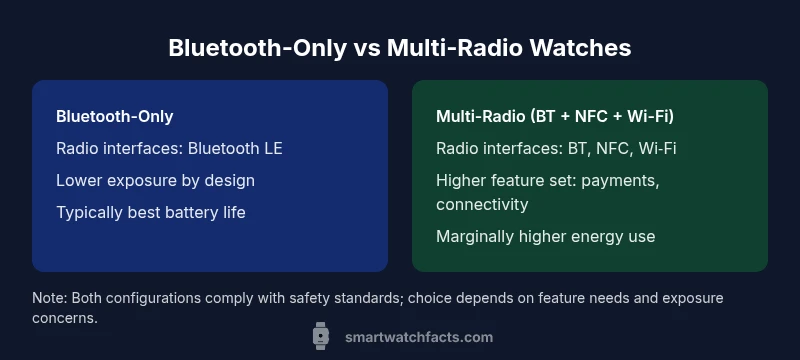
When comparing watches, start with the radios and power features. A Bluetooth-only model minimizes RF exposure, whereas watches with NFC, Wi‑Fi, and optional cellular support introduce additional radio activity. Look for independent safety testing summaries and manufacturer disclosures about SAR or RF exposure, even if raw numbers aren’t always provided. Consider your use case: if you rarely use contactless payments or streaming, a simpler radio configuration often suffices and can improve battery life. For most buyers, the best choice maximizes needed features while keeping exposure within regulatory expectations.
Practical exposure considerations in daily use
Exposure is influenced by how often radios are active, how close the device sits to the body, and how long it stays on. In daily life, most wearers use watches during commuting, workouts, and work. Keeping the device in a sleep or power-saving mode when not actively syncing can reduce overall radio activity. Avoid wearing the watch while it’s charging, and use airplane mode if you don’t need constant notifications. Adopting these habits reduces RF emission without removing core smartwatch benefits.
Minimizing exposure without sacrificing features
If radiation exposure is a priority but you still want value, try these practices:
- Choose Bluetooth LE-only models when possible and disable nonessential radios.
- Use power-saving modes and limit background syncing during inactivity.
- Prefer devices with reputable safety disclosures and independent testing.
- Turn off NFC when not needed and use tap-to-pay only at checkout.
- Keep your watch on your wrist rather than in a pocket or bag when not actively transmitting data.
- Regularly update firmware to ensure radios operate efficiently.
- Consider occasional breaks from continuous connectivity to reduce cumulative exposure. Each practice balances safety with practical smartwatch usage.
Regulatory context and health guidance
Regulatory bodies worldwide establish limits for RF exposure and require safe design practices. While the exact limits differ by country, the overarching standard is to keep real-world exposure well within safety margins. Health authorities generally agree that non-ionizing RF energy from wearables is unlikely to cause harm when used as intended. For the cautious consumer, familiarizing yourself with regulatory guidance and manufacturer safety statements helps make informed decisions about which watch models to purchase.
How different wireless technologies affect exposure
Bluetooth LE focuses on low-powered data exchange and is typically the primary contributor to RF exposure in most watches. NFC uses even shorter bursts of energy, mainly during tap-to-pay or pairing gestures. Wi‑Fi and cellular radios can increase activity, especially when streaming, downloading large updates, or using cloud-based features. If your priority is minimizing exposure, a Bluetooth-only watch minimizes energy use and emission, while multi-radio watches offer convenience with modest exposure increases when used intensively.
Special cases: medical devices, pregnancy, implants
People with implanted medical devices or specific health concerns should consider exposure patterns carefully. While wearable RF exposure is generally considered safe, implanted devices can have unique considerations. Pregnant individuals should follow general guidance from healthcare providers and avoid unnecessary radio activity when possible, especially in cases where medical devices are sensitive to external EMF. For most people, adopting the practical tips above is sufficient to maintain comfortable use.
Evaluating claims from brands and marketers
Brand marketing often highlights convenience features tied to wireless radios. When evaluating claims about radiation, rely on independent testing, regulatory filings, and credible health sources rather than marketing slogans. Look for transparency about how the device manages radio power and whether the watch supports safety features like sleep mode, automatic power saving, and user-controlled radio toggles. A thoughtful evaluation helps prevent overestimating risk while acknowledging legitimate concerns.
How to talk to retailers and manufacturers
Ask specific questions about how the device manages RF exposure: which radios are active during everyday use, whether there is a global SAR value, and what steps the device takes to minimize active radio time. Seek product guides or white papers from manufacturers that describe radio management. If a retailer cannot provide clear answers or independent safety data, consider consulting independent reviews or the brand’s official safety statements. Smart shoppers combine feature needs with exposure-conscious usage.
Comparison
| Feature | Bluetooth-only smartwatch | Multi-radio smartwatch (Bluetooth + NFC + Wi-Fi) |
|---|---|---|
| Radio interfaces | Bluetooth LE only | Bluetooth LE + NFC + Wi-Fi |
| Battery life (typical use) | Longer due to fewer radios | Shorter due to more radios |
| Exposure practicality | Lower RF energy in daily use | Marginally higher energy with active radios |
| Best for | Minimal exposure, essential features | Convenience features (payments, streaming) |
| Price range | Lower to mid-range | Mid to high-range |
Strengths
- Low exposure with Bluetooth-only models
- Better battery life on simpler radios
- Lower upfront cost for basic configurations
- Fewer radios means simpler, focused features
- Easier to explain safety to non-technical users
Weaknesses
- Fewer features (NFC, Wi‑Fi, payments)
- Higher-radio models offer convenience at a small exposure and power-use trade-off
- Higher price for feature-rich models
- Battery life can drop faster with more radios
Bluetooth-only watches minimize RF exposure and usually offer better battery life; multi-radio watches provide convenience with marginal exposure increases
If radiation exposure is a primary concern, prioritize Bluetooth LE-only designs. If you need NFC payments or Wi‑Fi connectivity, accept a small, practical increase in radio activity. Both configurations typically meet safety standards when used as intended.
People Also Ask
Is smart watch radiation dangerous to health?
Current research and regulatory reviews indicate that non-ionizing RF exposure from wearables is not hazardous at typical usage levels. The risk remains low for the general population, though individuals with certain medical conditions should consult their clinicians.
No, with typical use the RF exposure from smart watches is not considered dangerous for most people.
What is SAR and why does it matter for wearables?
SAR, or specific absorption rate, measures how efficiently a device’s RF energy is absorbed by the body. Wearables are designed to stay within regulatory SAR limits, and many provide safety disclosures. It helps consumers compare potential exposure across devices.
SAR tells you how much energy the body might absorb; devices stay within legal limits.
Do NFC or Wi-Fi increase radiation exposure more than Bluetooth?
NFC and Wi-Fi can increase RF activity compared with Bluetooth alone, especially during continuous use. In typical daily wear, the difference is small, but it grows with frequent data transfer or streaming.
NFC and Wi‑Fi add a bit more activity, but for most people it’s still within safe limits.
Can I reduce exposure by turning off radios or using airplane mode?
Yes. Enabling airplane mode or turning off unused radios reduces RF exposure and can extend battery life, while still allowing key functions you need when you turn radios back on.
Turning off radios can lower exposure and save battery.
Are some brands safer than others with respect to radiation?
Safety standards apply across reputable brands. Differences usually come from hardware complexity and usage patterns rather than one brand being inherently safer. Look for independent testing and clear safety disclosures.
Safety comes from proper use and testing, not brand alone.
Key Points
- Prioritize essential features to minimize exposure
- Bluetooth LE dominates energy efficiency and exposure
- All mainstream wearables comply with safety standards
- Use power-saving modes to reduce cumulative exposure
- Check for independent safety testing when evaluating claims