Is it ok to charge smart watch overnight: A practical guide
Discover whether overnight charging is safe for your smartwatch, how to protect battery health, and practical tips for safe charging in 2026.


Is it safe to charge a smartwatch overnight? Generally yes, with the right precautions. Use the official charger, avoid extreme heat, and keep the device in a ventilated area. Most modern wearables manage long charging periods through built-in protections, but always follow model-specific guidance to preserve battery health.
Is it ok to charge smart watch overnight? A practical overview
Is it ok to charge smart watch overnight? This question often comes up for busy users who rely on their devices to wake them up and track health data. According to Smartwatch Facts, overnight charging is generally safe when you follow practical precautions. Modern smartwatches include safety features that protect against overheating, overcharging, and short circuits, but the definitive guidance depends on your model and charger. In this section we set the stage: you’ll learn why overnight charging is common, what battery health and safety risks exist, and how to charge while preserving long-term longevity. We’ll also distinguish true overnight charging from leaving a device plugged in after it reaches full capacity. Practical habits reduce wear, keep the watch ready, and minimize stress on the battery over years of use.
How lithium-ion batteries in wearables work
Smartwatches use lithium-ion cells whose chemistry governs how energy is stored and released. Each cycle—charging from a low level to a higher level and discharging again—gradually reduces maximum capacity. Heat is a major driver of wear, and a well-designed Battery Management System (BMS) manages current, voltage, and temperature to slow degradation. Overnight charging typically means the device sits on the charger after it reaches 100%, which most devices tolerate thanks to the BMS's trickle-charge behavior. However, if the watch experiences repeated high heat or stays at high degrees for long periods, the aging process can accelerate. Understanding these basics helps explain why many users accept overnight charging as convenient, while still paying attention to temperature and charger quality. The bottom line is that gentle, controlled charging is less stressful for the cell than rapid, high-current charging bursts.
What manufacturers say about overnight charging
Manufacturers generally promote using the official charger and avoiding extreme heat. They acknowledge that many users leave devices on the charger overnight or during extended periods, but they caution against using uncertified accessories or charging in places with poor ventilation. Based on Smartwatch Facts analysis, reputable brands emphasize compatibility, temperature monitoring, and safe charging cycles rather than encouraging constant full-charge resting on a hot surface. The takeaway is not that overnight charging is inherently dangerous, but that following certified accessories and normal care reduces risk and preserves battery health over years of use.
Safety considerations when charging overnight
Safety is a mix of good hardware and good habits. First, ensure you’re using a certified charger with appropriate output for your watch. Second, avoid charging on soft or insulating surfaces that trap heat, such as beds or couches. Third, keep the charging area ventilated and away from flammable materials. Fourth, keep the watch free of moisture and remove any sweaty straps or accessories that might trap heat around the watch housing. Finally, if the watch gets unusually hot or smells odd, unplug immediately. These precautions are simple but effective for reducing the risk of overheating or battery damage while charging overnight.
Battery health and charging habits for longevity
Battery health hinges on how often you allow the battery to reach very low or very high states of charge and how heat is managed. In practice, you don’t need to micro-manage every moment of charging, but you should aim for moderate charging, avoid charging in hot environments, and replace damaged cables promptly. Keeping the device within a comfortable ambient temperature—roughly room temperature for most homes—minimizes stress on the cells. If your watch has a temperature probe or indicator in the app, use it to monitor during the initial hours after plugging in. Over the long term, consistent, moderate charging with good airflow tends to preserve battery capacity better than constant high-current top-offs on hot surfaces. Smartwatch Facts emphasizes that patience and sensible habits matter more than any single accessory.
Choosing the right charger and accessories
Only use official or certified third-party chargers that match your watch’s specifications. Low-quality or counterfeit cords can deliver unstable current, which increases heat and wear. Check that the charger’s output rating aligns with the watch’s recommended charging profile and avoid using adapters or multi-port hubs that are not designed for wearables. Use a clean, dry surface for charging and maintain a safe distance from heat sources such as radiators or electronics that generate heat. If you travel, bring the original cable and a compact power brick rather than relying on unfamiliar hotel USB ports. Small steps here protect battery health and reduce risk during overnight charging.
Overnight charging vs. myths and reality
Some myths persist, such as the idea that leaving a device on the charger overnight will always shorten battery life. Reality is nuanced: most modern watches have robust battery management that prevents overcharging once the battery is full, and many will enter a low-current trickle mode. The actual impact depends on ambient temperature, charger quality, and how often you repeatedly heat the device. Smartwatch Facts’ guidance is to view overnight charging as a safe default when performed with a certified charger and an appropriate environment, rather than a guaranteed life-shortening habit. Debunking myths helps you make smarter daily choices that balance convenience with battery longevity.
Practical overnight charging setup
Create a safe, simple charging station: a flat, non-flammable surface near an outlet, not under thick blankets or pillows. Place the watch on its cradle so the sensors face up and nothing compresses the band. If your model supports it, enable any temperature alerts or battery health notifications in the companion app. Make sure cables are tucked away to avoid snagging or tripping hazards. If you prefer bedside charging, keep the area cool and ventilated, and avoid charging right beside a sleeping person who might obscure heat dissipation. A clean, stable setup makes overnight charging both convenient and safer for your wearable.
What to monitor while charging overnight
During the first few hours after plugging in, watch for unusual heat, odd sounds, or a noticeably warm charger. If the device remains warm after an hour or two, consider transferring it to a cooler environment or unplugging and inspecting the charger. Always use a charger that is in good condition—frayed cables or cracked insulation raise the risk of short circuits. If you notice swelling around the watch, flickering indicators, or a battery that won’t reach a full charge, it’s time to contact support. Routine checks help you catch problems early and keep overnight charging safe.
Troubleshooting and when to unplug
Unplug immediately if you detect burning smells, smoke, or the charger feels abnormally hot to the touch. If the device shows distorted charging indicators or the watch fails to reach a full charge after several hours, try a different certified charger and verify the outlet is functioning. In some cases, a battery health service may be warranted. Keeping receipts or warranty information handy ensures you can address any hardware fault quickly. Remember that safe charging behavior is part of the overall care plan for your wearable.
More tips for different environments
At night, rooms with stable temperatures around 20-22°C generally provide the best conditions for battery health. In humid climates, ensure connectors stay dry and dry hands are used when plugging in. If you share a charger with multiple devices, avoid charging heavy power-hungry devices at the same time. For athletes who sweat after workouts, wipe down the watch cradle and cable connectors before charging. Simple routines, along with certified accessories, help you keep overnight charging convenient and safe in any environment.
Final notes on safe overnight charging
Overnight charging is a practical habit for many smartwatch users, provided you follow basic safety and health guidelines. Using certified accessories, maintaining a cool, ventilated charging space, and monitoring for heat or signs of wear reduces risk and extends battery life. Smartwatch Facts recommends pairing practical charging routines with regular battery-health checks in the companion app. With careful setup, you can rely on your smartwatch every morning without worrying about safety or long-term battery aging.
Tools & Materials
- Official smartwatch charging cable(Use the cable that came with the watch or an approved replacement.)
- Wall adapter with appropriate output(Choose a power brick that matches the watch's charging spec.)
- Flat, non-flammable charging surface(Avoid beds or sofas; ensure airflow around the charger.)
- Ambient temperature monitor (optional)(Helpful for ensuring a cool charging environment.)
Steps
Estimated time: Overnight (8-12 hours)
- 1
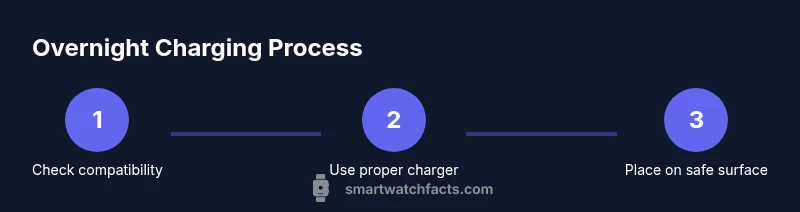
Check compatibility and use the official charger
Verify the watch model's charging requirements and connect the official charger. This minimizes risks from mismatched voltages and ensures safe charging behavior.
Tip: Always use manufacturer-approved accessories to maintain safety. - 2
Connect the charger to a safe outlet
Plug the charger into a stable outlet, avoiding extension cords and daisy-chaining outlets. A stable connection reduces the chance of current fluctuations that generate heat.
Tip: Test the outlet with a small appliance if you’re unsure of its reliability. - 3
Place watch on the charger correctly
Position the watch so the charging contacts align and the device sits securely. Misalignment can prevent proper charging and may heat unevenly.
Tip: Use the cradle or puck designed for your model for best results. - 4
Monitor temperature for the first hour
Keep an eye on heat levels during the initial hours. If the watch or charger feels unusually warm, pause charging and check connections.
Tip: If it remains hot after an hour, unplug and inspect the setup. - 5
Avoid insulating coverings or clutter around the charger
Do not place the setup under blankets or near heat sources. Adequate airflow helps manage heat and maintain device safety.
Tip: Clear air space around the charging area enhances safety. - 6
Establish a routine that fits your schedule
If you routinely charge overnight, position the station near your bedside for convenience while maintaining a cool environment.
Tip: Keep cables organized to prevent accidental pulls. - 7
Unplug if you notice trouble
If you detect swelling, odor, or smoke, unplug immediately and seek support from the manufacturer or service.
Tip: Do not try to improvise repairs yourself.
People Also Ask
Is overnight charging safe for all smartwatch models?
For most models, overnight charging is safe when you use the official charger and keep the environment cool. Always follow the manufacturer’s guidance for your specific model.
Most watches tolerate overnight charging, but always use the official charger and keep the area cool.
Will overnight charging harm battery health over time?
Repeated exposure to heat or using low-quality chargers can affect battery health. In practice, occasional overnight charging with proper setup is unlikely to cause significant damage.
If you keep it cool and use a certified charger, overnight charging won’t greatly harm the battery.
Can I use any USB charger for my smartwatch?
Prefer official or certified chargers that meet the watch’s specifications. Unregulated chargers may deliver unstable current and increase risk of damage or overheating.
Stick with certified chargers that match your watch’s requirements.
What signs indicate I should unplug immediately?
If you notice a strong burning smell, smoke, swelling, or excessive heat that lasts beyond a short period, unplug and inspect the setup.
If it’s hot, smells odd, or swells, unplug now.
Is it better to unplug after a full charge?
Most devices have a built-in protection system that prevents overcharging. Unplugting after a full charge is optional, but can be prudent if the device gets warm.
If it stays cool after charging, unplugging is optional.
Watch Video
Key Points
- Use official or certified chargers to safeguard safety.
- Charge in a cool, ventilated area and avoid heat traps.
- Overnight charging is generally safe with proper setup.
- Monitor for overheating; unplug if any abnormal signs appear.
- Maintain regular battery-health checks via the companion app.