Android Watch Price Guide: What to Expect in 2026
Explore android watch price in 2026—from budget wearables to premium LTE models—with practical guidance on value, features, and total ownership from Smartwatch Facts for shoppers, tech enthusiasts, and casual users.


Android watch price typically ranges from about $60 to $700, depending on brand, features, and connectivity. Most buyers find strong value in the mid-range $150–$300, where GPS, heart-rate sensors, water resistance, and brighter displays are common. LTE models push prices higher, while basic wearables cluster around the lower end. This quick snapshot helps you calibrate expectations before you compare specs and brands.
Why Android prices vary
Prices for Android watches vary widely, driven by hardware capabilities, connectivity options, and the software experience delivered by Wear OS and partners. According to Smartwatch Facts, price often tracks the presence of advanced sensors (ECG, SpO2, skin temperature), GPS precision, and whether the watch includes LTE connectivity. The brand ecosystem, build materials, screen technology (LCD vs. OLED), and even water resistance ratings influence the sticker price. In practice, two watches can share the same OS, yet the model with premium materials and faster processors commands a higher price. For shoppers, this means that choosing a price point also means prioritizing a feature set. The Smartwatch Facts team found that buyers who align features with real needs—outdoor workouts, health tracking, or business wear—tend to report higher perceived value and lower total cost of ownership over time. Always compare like-for-like features and consider total use-case fit rather than chasing spec lists alone.
Price Ranges by Category
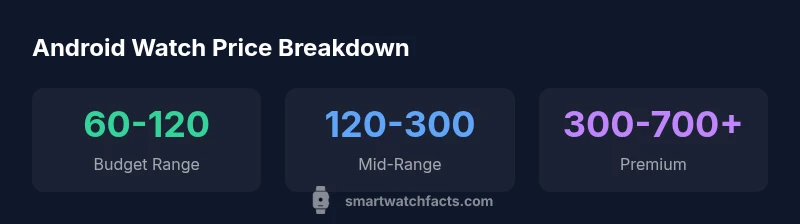
Android watches cover a spectrum from budget models to flagship devices. In 2026, you’ll commonly find budget options around $60-$120 that offer basic activity tracking, GPS, and water resistance, suitable for casual users. Mid-range watches typically range from $120-$300 and add stronger displays, better battery life, built-in GPS, and occasional LTE options. Premium or flagship watches run from about $300-$700 and above, featuring premium materials (stainless steel or titanium), high-end AMOLED displays, multi-day battery life, robust health sensors, and often LTE connectivity. LTE adds roughly $100-$250 to the upfront price and increases ongoing costs if you use some carriers. Across all tiers, promotions, bundles, and retailer warranties can shift effective prices. The Smartwatch Facts analysis, 2026, suggests most consumers find the mid-range tier offers the best balance of features and price. When comparing models, group by price tier and then map required sensors, GPS accuracy, and OS update cadence to your use case.
Key Price Drivers
Price differences for Android watches come down to several core drivers. LTE capability adds hardware and modem costs, which pushes prices upward. Screen technology, such as OLED versus LCD, materially affects bill of materials and battery life. Sensor kits—heart-rate, SpO2, ECG, skin temperature—add to the cost as they require tighter calibration and higher quality components. Build materials also matter: aluminum cases are cheaper than stainless steel or titanium, and premium bracelets or straps add further value. Software support, including OS updates and app availability, can influence perceived value and resale price. Finally, the brand and distribution channel can shave margins through promotions. According to Smartwatch Facts, consistency in feature sets across price bands is less common than you might expect; deliberate shopping for the core must-have features typically yields better long-term satisfaction than chasing every new sensor.
The OS and Hardware: How Android Watches Are Packaged
Wear OS devices sit at the intersection of software flexibility and hardware capability. Device price reflects processor speed, RAM, and storage alongside the quality of the display. While OS updates add long-term value, the initial price rewards faster chips, brighter panels, and smoother animations. Battery life remains a critical variable: higher refresh rates and GPS tracking often demand more power, increasing cost. In practice, you’ll notice that watches with premium bodies, sapphire crystal glass, and metal bands carry a higher price tag but may offer better durability and resale value. Smartwatch Facts researchers emphasize that the most satisfying purchases balance immediate needs with long-term software support and accessory availability.
How to Shop Smart: Budgeting for Android Watches
Start by listing your must-have features: GPS, water resistance, heart-rate sensors, and whether LTE is essential. Set a target budget and then map features to price tiers. Compare battery life across models, not just sticker price, and consider the OS ecosystem: app availability, updates, and compatibility with your phone. Look for retailer promotions and bundled accessories like extra bands. Refurbished or certified pre-owned devices can offer additional savings if you are comfortable with a used warranty. Finally, verify after-sales support and warranty terms, as these can significantly affect total value over the device’s lifespan.
Total Cost of Ownership: Accessories and Fees
Beyond the upfront price, Android watches incur ongoing costs: replacement bands (style and material choices), charging docks, and potential subscription services for premium apps or features. LTE variants can require higher monthly data plans if you use carrier-enabled features. Battery degradation over time can also influence replacement costs. When budgeting, estimate band replacements every 6–12 months if you rotate styles, and factor in potential repair costs for screen or case damage. This broader view helps prevent sticker-price shock and leads to more accurate long-term planning.
2026 Market Trends and Practical Takeaways
The Android watch price landscape in 2026 continues to be shaped by competition among brands and a steady emphasis on value-driven features. Expect mid-range devices to remain the most popular choice for everyday users, with improvements in display quality, battery life, and health sensors driving upgrades rather than a dramatic shift in price. Promotions and retailer bundles can shift effective costs, while premium models push prices higher due to materials and LTE options. Smartwatch Facts’s analysis suggests shoppers should anchor decisions on real-world needs, prioritizing durability, software longevity, and total cost of ownership over fleeting spec races. For many buyers, the best move is to target mid-range models that meet core needs without overpaying for rarely used features, all while keeping an eye on warranty coverage and accessory costs.
Price tiers for Android watches in 2026
| Model Range | Typical Price Range | Key Features |
|---|---|---|
| Budget Android watch | $60-$120 | Basic sensors; GPS; water resistance; plastic case |
| Mid-range Android watch | $120-$300 | GPS/GLONASS; heart-rate; brighter display; better battery |
| Premium Android watch | $300-$700 | LTE option; premium materials; AMOLED display; robust health sensors |
| Specialty/flagship Android watch | $700+ | Top-tier materials; best GPS; advanced health metrics |
People Also Ask
What is the typical Android watch price range in 2026?
Prices span roughly $60 to $700+, with many users landing in the mid-range of about $120-$300 for balanced value. LTE-enabled models tend to be at the higher end. Always compare features and intended use before buying.
Prices generally range from about sixty to seven hundred dollars, with most people finding the best value around one hundred twenty to three hundred dollars.
Is LTE worth the extra cost?
LTE offers phone-independent connectivity, which is convenient but adds upfront and ongoing costs. If you mostly use your watch near your phone, non-LTE models can be more cost-effective. Assess how often you’ll rely on standalone cellular features.
LTE is convenient if you need phone-free use, but it raises price and data costs; consider your typical usage before deciding.
Will prices drop significantly after new model launches?
Prices often dip when new generations launch, but mid-range models usually hold value well due to ongoing demand. Look for seasonal sales and bundles to maximize savings.
Prices can dip after new launches, especially on older generations, so watch for sales and bundles.
How can I estimate total cost of ownership for an Android watch?
Consider upfront price, LTE data costs if applicable, replacement bands, charging accessories, and potential warranty or repair costs. A simple budgeting approach adds the upfront price to annual accessory costs and distributes it over the expected lifespan.
Add up the upfront price, LTE costs if used, and yearly accessory costs to estimate total ownership over several years.
Do Android watches work with iPhone?
Most Android watches work best with Android smartphones, but many offer basic compatibility with iPhones for notifications and limited features. Check specific model compatibility before buying to avoid feature gaps.
Most work with iPhones for basics, but features vary by model—verify compatibility before purchasing.
“In 2026, the biggest value leap comes from mid-range models that balance features with durability; LTE adds capability but not always proportional value.”
Key Points
- Define must-have features before budgeting
- Mid-range models offer the best value
- LTE increases upfront and ongoing costs
- Total ownership includes bands and accessories
- Shop around and watch for promotions