Mini Smart Watch Price: A 2026 Buying Guide
Explore realistic mini smart watch price ranges for 2026, what drives costs, and smart buying strategies. Learn how to balance features, durability, and value with practical tips and examples.


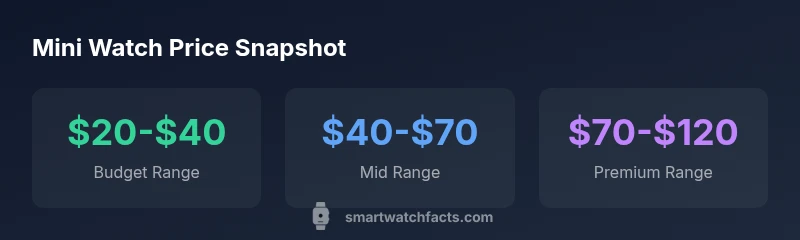
The mini smart watch price typically ranges from about $20 to $120, with budget models under $40 and feature-rich options around $60–$120. Price differences hinge on display size, sensors (GPS and heart rate), battery life, build quality, and brand. Premium models also add NFC, GPS accuracy, and stronger water resistance.
Understanding the mini smart watch price landscape
The mini smart watch price is a reflection of many moving parts in the wearable tech market. When you compare models, you should consider display technology, case material, and the presence of sensors like GPS, heart-rate monitoring, SpO2, and advanced health metrics. The 2026 landscape shows a broad spectrum: ultra-budget devices that cover basics, mid-range watches with GPS and sleep tracking, and premium mini smartwatches that add NFC, robust water resistance, and faster processors. Regional taxes, import duties, and retailer promotions also influence sticker price. According to Smartwatch Facts, price dispersion is largely tied to feature depth and brand positioning, not just screen size. This means two watches with similar dimensions can diverge in price based on sensor suite and software experience.
For shoppers, the takeaway is to map your must-have features to price. If you only need notifications and basic fitness tracking, you can stay near the lower end of the range. If you want GPS, precise activity data, and contactless payments, plan for the higher end. Remember that the total cost of ownership includes bands, chargers, and potentially a more durable strap. Smartwatch Facts also notes that software updates, OS support, and app ecosystems can affect long-term value, not just the upfront price.
Key price drivers: display, sensors, battery, and OS
Price is not only about a bigger or brighter screen. The display technology (LCD vs OLED), brightness, and always-on capabilities contribute to power drain, which in turn affects battery life and perceived value. Sensors are another major driver: GPS, heart-rate sensors, SpO2, and skin temperature add to manufacturing costs but provide richer health data and more precise activity tracking. The operating system (OS) and app ecosystem determine how much value you get over time; watches with broad app libraries tend to hold price better due to ongoing usability and software support. Durability features like water resistance (true depth ratings), reinforced cases, and scratch-resistant glass also factor into cost, especially for compact designs that must balance protection with thin profiles.
From the consumer’s perspective, it’s worth comparing two or three models that share core features but differ in sensors and build quality. If budget constraints apply, prioritize essential sensors and software support—these often deliver the best long-term value.
Budget tier vs premium tier: what you get for your money
In the budget tier, you usually find compact watches with basic health sensors, limited on-device storage, and shorter battery life. These devices are ideal for first-time wearers, casual notifications, and light fitness tracking. Mid-range mini smartwatches typically add GPS, sleep tracking with better accuracy, and a more polished display, along with better water resistance. Premium mini watches go further with faster processors, broader app ecosystems, NFC for payments, and more durable materials. The value question hinges on your intended use: if you cycle between gym and commuting and rely on GPS for accuracy, a mid-range model may offer compelling value. If you want seamless payments and robust health features for daily wear, a premium option may be worth the extra cost. Smartwatch Facts’s analysis shows that the best value often sits in the mid-range where feature depth and price meet user needs.
Region and retailer effects on cost
Prices vary by region due to taxes, import duties, and currency fluctuations. Online marketplaces frequently run promotions that temporarily lower price, while official brand stores might price-watch consistently, though with more reliable warranty programs. Retailers also affect perceived value: third-party sellers may offer bundles that include extra straps or charging cables, effectively boosting the perceived price-to-value ratio. If you live in a region with strong sales tax, think about total ownership cost rather than sticker price. Smartwatch Facts recommends checking regional price history and promotional calendars before purchasing, especially for models that frequently cycle through discounts during holidays or back-to-school events.
How to estimate total ownership costs
Beyond the sticker price, total ownership costs include bands, chargers, and potential repair or replacement fees. Some mini watches come with removable bands in plastic or silicone; higher-quality straps can improve comfort and durability but also add cost. If you plan to upgrade bands often, look for a model that uses common lug sizes and widely available third-party straps. Battery life influences long-term cost too: watches with longer battery life reduce charging frequency and may save money on chargers or spare cables. Warranties can also affect long-term expenses; consider models with at least a one-year warranty or better. Finally, factor in software updates and potential paid features; long-term OS support can extend the useful life of your device and improve price-per-year value.
Quick buying checklist for mini smart watches
Use this quick checklist to compare models quickly:
- Core sensors: heart-rate, GPS, SpO2
- Display: size, readability, brightness
- Battery life: hours of typical use, standby time
- OS and app ecosystem: availability, compatibility with your phone
- Water resistance and durability: rating and build quality
- Price vs. features: does it cover essential needs within budget?
- Warranty and seller reliability: return policies and support
- Accessory costs: extra bands, charging cables, and cases These basics help you avoid overpaying for features you won’t use and prioritize durability and software value.
Case studies: small watch buying examples
Case A: A student needs a compact watch for notifications and basic fitness tracking. They choose a budget mini with a 1.3-inch display, simple interface, and no GPS. It costs roughly $25-$40, offers several day-to-day features, and keeps costs low. Case B: A commuter who runs outdoors prefers GPS tracking and heart-rate monitoring in a small form factor. A mid-range mini with GPS, decent battery life, and a strong app ecosystem is priced around $60-$90, delivering solid value for daily wear. Case C: A tech enthusiast who wants contactless payments, NFC, advanced health metrics, and premium durability might opt for a premium mini watch at $100-$120. These examples illustrate how feature depth drives price and how context (usage) should guide purchasing decisions.
Future trends: 2026 outlook for mini smart watch price
Looking ahead, we anticipate continued price dispersion driven by feature differentiation and brand positioning. As sensors become cheaper and more efficient, the price gap between budget and mid-range models may narrow for core features, while premium models consolidate advantage through software capabilities and robust durability. Consumers can expect more bundles and promotions around major shopping seasons, making it easier to find a mid-range watch with GPS and decent health tracking near the lower end of the spectrum. The Smartwatch Facts team predicts that price volatility will be influenced by supply chain dynamics and regional demand, underscoring the importance of monitoring promotions over several weeks before purchase.
Common myths about mini smart watch price
Myth: Bigger screens always justify higher prices. Reality: price is more strongly linked to sensors, battery life, and software support. Myth: Cheaper models are unreliable. Reality: budget mini watches can be dependable for basic tasks and casual wear. Myth: The most expensive option is the best value. Reality: value depends on your needs; many users gain excellent value from mid-range devices that balance features and cost. Myth: Price equals quality. Reality: build quality and durability can vary independently of price, so read reviews and verify warranty details.
Price ranges by model type
| Model Type | Typical Features | Approx. Price Range |
|---|---|---|
| Budget mini | Basic display, limited sensors | "$20-$40" |
| Mid-range mini | GPS, sleep tracking | "$40-$70" |
| Premium mini | GPS, NFC, advanced health sensors | "$70-$120" |
People Also Ask
What qualifies as mini in 2026?
Mini smartwatches typically have smaller case sizes and lighter form factors while retaining core smartwatch features such as notifications and fitness tracking.
Mini watches are small and comfortable, designed for easy wear all day while still offering essential smartwatch features.
Do mini watches have GPS?
Some mini watches include GPS, especially in mid-range and premium models. Budget options often omit GPS to save costs.
Some mini watches do have GPS, but not all budget models include it.
Are mini watches good for health tracking?
Yes for basic metrics like heart rate and sleep, but accuracy and sensor depth vary by model. Check sensors before buying.
They’re good for basic health tracking, but confirm the sensors and data accuracy for your needs.
How often do mini prices drop?
Prices typically drop during major sales events and holidays, with promotions varying by retailer and region.
Watch for seasonal sales and promo events to snag a better deal.
What else should I compare besides price?
Battery life, display quality, durability, OS/app ecosystem, and warranty are crucial when evaluating value.
Look beyond price—think about durability and software support.
Is the cheapest option always best value?
Not always. Consider durability, repairability, and warranty to assess long-term value beyond upfront cost.
The cheapest model isn’t always the best value if durability and support are weak.
“Pricing reflects feature depth and build quality; focus on your real use-case to judge value.”
Key Points
- Define your use-case before price.
- Budget mini watches cover basics and casual wear.
- GPS and health sensors drive price more than screen size.
- Shop around and watch for seasonal promos.
- Total ownership cost matters: bands, chargers, and warranty matter.
- Mid-range models often deliver the best value for most users.