Samsung Smart Watch Specs: Your 2026 Buying Guide
Explore Samsung smart watch specs in 2026. Learn to compare displays, battery, sensors, and OS, and pick a model that fits your budget and daily routines.


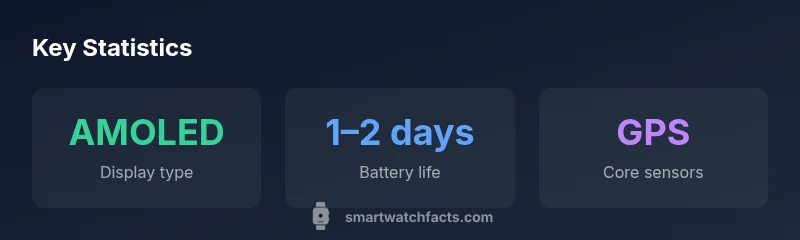
Samsung smart watch specs vary by model, but a practical baseline for 2026 includes AMOLED displays, multi sensor health tracking, and versatile workouts. This guide explains how to compare RAM and storage, battery life, waterproofing, and OS compatibility, helping you prioritize features based on budget and daily use. By understanding the key spec categories, you can quickly narrow options and avoid buying a smartwatch that under delivers.
Display and Interaction: What to expect from Samsung smart watch specs
In 2026 the display is a focal point of Samsung smart watch specs. Most models use OLED or AMOLED panels with high brightness and vivid color, offering an always on option that remains legible in bright outdoor conditions. The user experience hinges on smooth animations, responsive touch, and efficient power management, all of which contribute to perceived speed. When you compare models, look for pixel density, brightness levels, and refresh rate as practical indicators of clarity and usability in day to day tasks. Price tiers often align with display quality, so set a baseline that matches where you plan to wear your watch most and how you use it for notifications, fitness metrics, and quick replies.
Sensors and health tracking: the core of samsung smart watch specs
Health and fitness tracking is a headline feature across Samsung watches. Expect heart rate sensing, SpO2, and sleep tracking, with advanced models offering ECG where permitted by the region. GPS is common in mid to high end models for route tracking during runs or cycles. Motion sensors like accelerometers and gyroscopes enable gesture controls and activity recognition. Battery management and software optimization influence how often these sensors sample data. For users with privacy concerns, review permissions and data sharing options in the companion app, and consider whether the health data transfer aligns with your privacy preferences.
Battery life and charging: real world expectations
Battery life varies by usage, but a practical rule of thumb is that most Samsung watches will last about one to two days with typical daily activity. Heavy use for GPS tracking, continuous heart rate monitoring, and always on display will shorten that window. Charging speed has improved, with many models supporting wireless charging and reverse charging on some devices. If you rely on your watch all day for fitness metrics or continuous alerts, prioritize models advertised with longer endurance and efficient charging. Always factor regional power standards and charging accessories into the buying decision.
OS, apps, and ecosystem: what the specs mean for daily use
Samsung watches commonly run Wear OS with Samsung One UI Watch, delivering access to a broad app ecosystem and cross device compatibility. In practice, this means strong integration with Android phones and selective compatibility with iOS. When reading spec sheets, note supported app counts, offline music storage, and smartwatch app availability in your region. The user experience is also shaped by software update cadence and the length of the security patches, which affect long term usability.
Build, durability, and water resistance considerations
Durability is more important than many buyers realize. Look for robust materials like stainless steel or aluminum frames, reinforced glass, and secure pin systems for bands. Water resistance ratings in Samsung watches commonly cover swimming and sweat resistant activities, with most models rated at least 5 ATM. If you swim regularly or plan outdoor activities, verify the exact IP rating or ATM equivalence for your region. The choice of strap material and buckle type also affects comfort during workouts.
How to compare models: a practical buyer's checklist
Create a short list of your must have features, then map each to model specs. Start with display quality and size, then battery endurance, sensor availability, and OS features. Check storage for offline music or apps if you plan to use streaming or offline workouts. Finally, compare warranties and service options, especially if you expect the watch to be a long term companion. Reading customer reviews can reveal real world performance that the spec sheet may not show.
Practical steps for reading Samsung watch specs before purchase
Begin with the official spec sheet and verify each item against independent reviews. Look for consistency across multiple sources for display type, sensor availability, and water resistance. If a model lists a feature as available in certain regions, double check regional limitations or restrictions before buying. Finally, calculate total cost of ownership by including bands, chargers, and potential app subscriptions.
Real world use case scenarios: choosing based on lifestyle
For active runners or cyclists, models with GPS, robust battery life, and robust water resistance are advantageous. For casual wearers, emphasis on display clarity and day to day comfort matters more. If you rely on notifications and quick replies, check the typing experience and latency of the watch’s interface. In short, Samsung smart watch specs should be evaluated in the context of how you plan to use the device daily.
Model tier comparison for samsung smart watch specs
| Tier | Display | Battery Life | Sensors | Water resistance |
|---|---|---|---|---|
| Baseline | AMOLED, 1.2–1.4 in | 1–2 days | HR, SpO2 | 5 ATM |
| Mid-range | AMOLED, 1.3–1.5 in | 1–2 days | HR, SpO2, GPS | 5 ATM |
| Premium | AMOLED, 1.4–1.8 in | 1–3 days | HR, SpO2, GPS, ECG | 5–10 ATM |
People Also Ask
Do Samsung smart watches work with iPhone, and what is lost if I pair with iOS?
Samsung watches pair with iPhone but some features may be limited. Health data can sync in many regions through the companion app, but notification replies and certain sensors may not be fully integrated. If iPhone only is a hard requirement, verify feature availability in your region.
Samsung watches work with iPhone but some features may be limited. Check health data syncing and notification options in your region.
Do all Samsung watch models include ECG functionality?
ECG functionality is model and region dependent. Some premium models include ECG, while others do not. Always confirm regional availability and device compatibility before purchase.
ECG is not universal. Check your model and region before buying.
Which Samsung smartwatch has the best battery life?
Battery life depends on usage patterns. In general, models with efficient displays and conservative GPS use offer longer endurance, often around one to three days with mixed use.
Endurance varies by use; most wearers see about 1 to 3 days.
Is 5 ATM water resistance sufficient for swimming?
Yes for most swimming activities, but verify the exact rating and guidelines for each model. Some watches handle casual swims in shallow water, while others support more intense aquatic activities.
Typically fine for swimming, but check the exact rating for your model.
What is the typical RAM and storage on Samsung watches?
Most Samsung watches offer a range of RAM from around 512 MB to 2 GB and storage from 4 GB to 32 GB, depending on the model and region. Higher tiers generally provide more space for apps and offline music.
RAM and storage vary by model; higher tiers offer more space.
How often do Samsung smartwatch specs change with new models?
Samsung tends to release updated hardware and software on annual or near annual cycles. Expect improvements in display tech, sensors, and processing power with new generations.
New generations arrive roughly every year or so with upgrades.
“Specs are the starting point, but the real value comes from how features translate into daily use and reliability.”
Key Points
- Define your budget and core needs first
- Prioritize display quality and battery life
- Check sensor availability by region
- Assess OS and app ecosystem for long term use
- Read real world reviews before buying