Smart Watch and Tattoos: A Practical Comparison
Thorough, data-informed guidance on using smart watches with tattooed skin, covering sensor accuracy, safety, healing stages, placement tips, and best practices for real-world wear.


Choosing between wearing a smart watch on tattooed skin versus non-tattooed skin is a practical trade-off. In short, most smartwatches work well on tattooed skin once tattoos are fully healed, but readings from optical sensors can vary with ink depth and placement. For best results, consider non-tattooed wrist options during healing, ensure the strap fits snugly, and test heart-rate readings across everyday activities.
Overview of the smart watch and tattoos landscape
The phrase smart watch and tattoos describes a growing niche where wearables intersect with body art. For people with tattoos, a smartwatch can be a powerful companion for fitness, reminders, and health insights—but it also raises practical questions about sensor performance, skin safety, and comfort. The Smartwatch Facts team notes that tattooed skin can influence how accurately certain sensors read data, especially during healing and for inks with high pigment density. In this guide, we examine how to balance personal style with reliable health tracking, while keeping skin health front and center. We also explore how tattoo placement, ink color, and skin type affect readings, power management, and overall user experience. Throughout, we discuss the reality that smart watch and tattoos are not mutually exclusive; with mindful setup and expectations, you can maintain both aesthetics and functionality. The aim is to help you make informed choices about placement, bands, calibration, and daily routines so your wearable stays comfortable and accurate over time.
Sensor behavior on tattooed skin: what to expect with a smart watch and tattoos
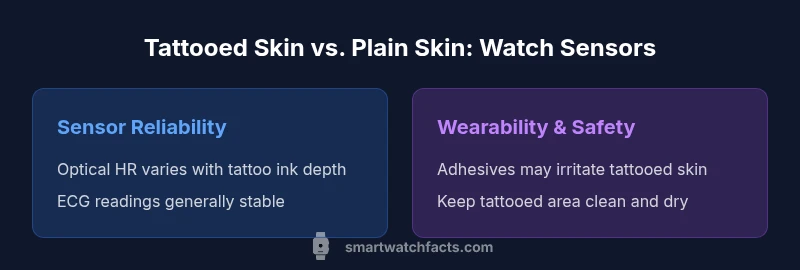
When evaluating a smart watch and tattoos, the most salient factor is sensor interaction with tattooed skin. Optical heart-rate sensors emit light and measure how much light is reflected to estimate pulse. Tattoos can alter light absorption in some individuals, particularly when ink is dense or dark. In practical terms, readings may appear slightly less stable on tattooed skin during high-intensity activity or when the tattoo is new and healing. However, as the tattoo settles and the skin returns to baseline, measurements often align with those taken on non-tattooed skin. For many users, this means you may notice short periods of adjustment after acquisition, but long-term performance is usually comparable. If precise health monitoring is essential (for athletes or medical monitoring), consider validating readings across activities and, if possible, performing calibration when the tattoo is fully healed. In a broader sense, this is part of the ongoing conversation about smart watch and tattoos compatibility. The Smartwatch Facts findings emphasize patience during the initial weeks after getting a tattoo and a willingness to adapt watch settings to your skin.
Skin safety, adhesion, and wearability with tattooed skin
A critical component of the smart watch and tattoos equation is skin safety. Tattooed skin can respond differently to adhesives used in watch bands, especially during the healing phase. Even after healing, some individuals experience mild irritation or increased perspiration under the band. To minimize risk, choose hypoallergenic bands and ensure the contact area is clean and dry before wearing. The fit should be snug enough to prevent excessive movement but not so tight that it restricts circulation. For people with high-sensitivity tattoos, testing different strap materials (silicone, elastomer, fabric) can help identify the most comfortable combination. Regular cleaning reduces residue and prevents friction that might irritate tattooed skin. These practical steps are essential in navigating the space where smart watch and tattoos intersect, and they reflect a cautious, user-centered approach to daily wear.
Healing stage considerations for tattooed wearers
For many tattoo enthusiasts, the healing stage is the most sensitive period for wearing a smartwatch. In the initial days to weeks after getting a tattoo, the skin is more vulnerable to friction, moisture, and adhesives. During this window, it may be prudent to wear the watch on the non-tattooed wrist or to remove it when engaging in activities that cause heavy sweating. Once healing is complete, the watch can resume normal wear with careful attention to the band and skin condition under the tattoo. The same applies to the smart watch and tattoos pairing: monitor for any signs of irritation or pigment reaction, and adjust strap tightness and wear time accordingly. In time, most users notice that daily wear becomes routine, and the fusion of technology with tattoo artistry can be both functional and expressive. Smartwatch Facts’s perspective is that patient progression through healing determines when to resume full-time wear on tattooed skin.
Placement, ink color, and sensor accuracy: what matters most
Placement is a central factor in the smart watch and tattoos equation. Areas with dense ink or large solid blocks may influence sensor readings differently than areas with lighter shading. Ink color matters because darker pigments can interact with certain wavelengths used by optical sensors. In practice, many users find forearm placements under or near inked designs to be compatible after healing, while some wrist placements experience more variability. An informed path is to experiment with alternative placements, check manufacturer guidance on sensor performance with tattoos, and calibrate after repositioning. The key takeaway is that tattoo color and placement impact early readings; post-healing, readings often converge with expectations for non-tattooed skin, enabling reliable health tracking across a typical day.
Practical setup: bands, calibration, and day-to-day tips
For a smart watch and tattoos scenario, practical setup starts with strap choice and fit. A snug but comfortable band reduces movement-induced friction and helps stabilize readings on tattooed skin. Consider rotating bands if a tattoo covers a high-friction area to minimize irritation. Calibration routines—performed during typical activities—can improve accuracy with tattooed skin. Regular cleaning and dryness before wearing reduce moisture buildup and skin irritation. Keep an eye on long-term changes: aging ink, stretching, or new tattoo updates can subtly alter wear dynamics. By combining careful placement, appropriate band materials, and periodic calibration, you can optimize the experience of a smart watch and tattoos in daily life.
Design, materials, and future-proofing for tattooed wearers
From a design standpoint, the intersection of smart watches and tattoos invites thoughtful selection of materials and finish. Stainless steel, titanium, or ceramic watches paired with hypoallergenic bands minimize skin reactions. For tattooed skin, consider design-compatibility with your tattoo motif—whether you prefer minimalistic interfaces or bold design elements that echo your ink. The future of wearables may include sensors designed to be resilient across a variety of skin conditions, expanding the comfort and reliability of the smart watch and tattoos pairing. As devices evolve, users can expect improved calibration protocols and more flexible wear options that accommodate tattoos without sacrificing performance. The Smartwatch Facts team expects ongoing improvements in sensor algorithms and skin-aware features that make the smart watch and tattoos pairing even more seamless.
Comparison
| Feature | Wearing on tattooed skin | Wearing on non-tattooed skin |
|---|---|---|
| Sensor accuracy during wear | Comparable on healed tattooed skin | Comparable on non-tattooed skin |
| Skin comfort and irritation risk | Potentially higher during healing; improves with time | Generally stable comfort and irritation risk |
| Adhesive longevity and band feel | May require adjustments for tattooed areas | Stable adhesion with plain skin |
| Aesthetic flexibility | Tattooed skin enables cohesive style; ink can complicate aesthetics | Clean, plain look with non-tattooed skin |
| Best use case | Tattoo-bearing users who have fully healed ink | Users without tattoos or who want consistent readings |
Strengths
- Integrates personal style with technology
- Maintains daily usability when tattoos are fully healed
- Offers flexible placement options for tattooed wrists
- Promotes mindful maintenance and skin care routines
- Allows wearers to express individuality without sacrificing features
Weaknesses
- Healing tattoos require watch-off-wrist periods during healing
- Adhesives may irritate tattooed skin for some users
- Sensor readings may be less consistent during variable tattoo conditions
- Ink and pigment variability could affect appearance and readability of certain displays in bright light
Wearing a smartwatch on tattooed skin is viable with careful management; non-tattooed placement offers extra consistency.
For most users, the smartwatch experience on tattooed skin improves after healing. If health metrics are critical, consider non-tattooed placement or conduct thorough activity-based readings before relying on the device daily.
People Also Ask
Can tattoos affect smartwatch heart-rate readings?
Yes, tattooed skin can occasionally influence optical heart-rate readings, especially during healing or with very dense ink. Most devices normalize after the tattoo heals, but users should be aware of potential short-term deviations.
Tattooed skin can affect heart-rate readings briefly after getting inked, but readings usually stabilize after healing.
Is it safe to wear a smartwatch over a fresh tattoo?
During the first days to weeks, avoid wearing the watch directly over a fresh tattoo to prevent irritation and rubbing. If you must wear it, use a protective band and keep the area clean and dry.
Avoid wearing the watch over a fresh tattoo until it’s healed; use protection and cleanliness.
Do all sensors behave the same on tattooed skin?
Not all sensors respond identically to tattooed skin. Optical sensors may vary by ink color and placement, while ECG-based measurements tend to be more stable. Always verify readings during key activities.
Sensors can vary with tattoos; verify readings during activities you care about.
What placement works best with tattoos?
Forearm placements with healed tattoos are commonly reliable. Inside-wrist placements can be more variable depending on ink and skin condition. Try multiple placements to find the most stable readings for your lifestyle.
Try different spots to see which gives steady readings.
How can I maintain sensor accuracy with tattoos?
Keep skin clean and dry, ensure a proper band fit, and calibrate after any tattoo changes or updates. If readings drift, re-check after a workout or daily activity to confirm stability.
Calibrate after changes and check readings during activities.
Are there watches designed for tattooed skin?
There are no models built specifically for tattooed skin, but many brands offer sensors and bands that perform well across skin types. Review manuals for skin-contact guidance and consider customer reviews from tattoo-wearing users.
No special models, but many watches work well with tattoos; check guidance.
Key Points
- Confirm tattoo healing before extended wear
- Test sensor readings across activities
- Choose hypoallergenic bands for sensitive skin
- Consider alternative placements if readings vary
- Regularly calibrate after any tattoo changes