Do Smart Watches Work with Tattoos: Sensor Realities in 2026
Explore whether do smart watches work with tattoos, how tattoo ink affects optical heart-rate sensors, and practical tips to get reliable readings on tattooed skin. Learn how ink density, placement, and device design influence performance in 2026.


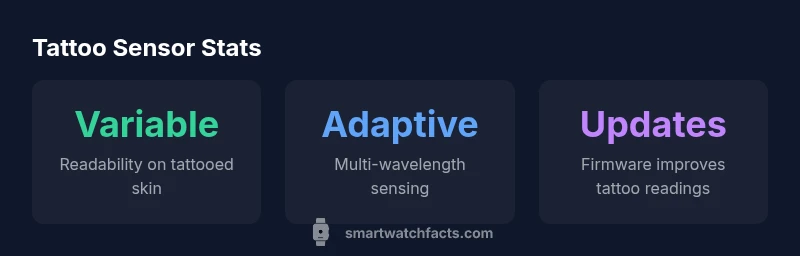
Do smart watches work with tattoos? In short, tattoo ink can interfere with optical heart-rate readings, causing variability that depends on ink density, placement, and skin tone. Some brands have improved sensor algorithms and multi-wavelength approaches, but performance still varies across devices and tattoo configurations. Expect moderate accuracy on tattooed skin and check manufacturer guidance for your model.
How tattoos affect optical heart-rate sensors
Do smart watches work with tattoos? The question hinges on how optical heart-rate sensors (PPG-based) read blood flow through the skin. Tattoos introduce ink particles that absorb and scatter light differently than uninked skin. When the LED light from a sensor probes the skin, ink can reduce signal strength and distort the photodiode’s ability to detect pulsatile blood flow. The result can be higher noise, more outliers during movement, and sometimes underestimation or overestimation of heart rate. In practice, the effect is not uniform across all tattoos or devices, but it is a real consideration for anyone with ink on the wrist. Smartwatch Facts notes that sensor quality and processing algorithms matter a lot here, and some watches adapt with multi-wavelength sensing to counter aging ink and dense pigment. If you wear tattoos, you should anticipate occasional deviations and understand that readings may be less precise during workouts than on tattoo-free skin.
Tattoo ink density, placement, and skin tone: the hidden variables
Ink density, ink color, placement on the wrist, and even skin tone interact with how well a wearable can read your pulse. Heavily inked areas may absorb more light and create shadows that confuse the sensor, especially when the watch is pressed tightly or when the wrist is in motion. Placement over bony areas or near tendons can further affect readings due to skin stretch. Lighter inks may cause fewer disruptions than dense blacks, but differences between brands remain. Smartwatch Facts analyses show that tattooed readings tend to vary with ink aging and skin hydration, so you may see improvements over time or with different hydration levels. Consider testing readings across activities to understand your own tattoo’s impact.
Brand and sensor technology: who reads tattooed skin well?
Different smartwatch brands use different sensor architectures and signal processing pipelines. Some devices rely heavily on single-wavelength PPG, while others employ multi-wavelength (red and infrared) approaches intended to penetrate ink more effectively. In general, newer watches with adaptive algorithms and improved skin-tone compensation tend to perform better on tattooed skin, but there is no universally best option. If you have tattoos, review brand-specific notes, user forums, and expert reviews to gauge how a model performs for tattooed users. Remember that real-world performance also depends on wrist position, activity level, and firmware updates. Smartwatch Facts encourages buyers to consider compatibility notes for tattooed skin when choosing a device, rather than relying solely on official marketing claims.
Practical steps to improve readings on tattooed wrists
To maximize reliability when do smart watches work with tattoos, try several practical adjustments:
- Calibrate readings during a rest state before workouts to establish a baseline.
- Check multiple positions on the wrist and try both wrists if possible.
- Ensure the device is not overly tight; a snug, not constricting, fit helps sensor stability.
- Keep the skin clean and dry; moisture and lotions can affect optical readings.
- Update firmware and sensor software; manufacturers often roll improvements that refine tattoo readability.
- If available, enable multi-wavelength or ECG-based measurements as fallbacks for heart-rate tracking during intense activity.
- In high-variance conditions (muddy water, sweat, or dense tattoos), rely on additional metrics like pace, GPS, or VO2 estimates rather than solely heart rate.
Implementing these steps can reduce discrepancies and help you get the most from your smartwatch while wearing tattoos.
Myths vs. reality: common misconceptions
- Myth: Tattoos permanently ruin smartwatch readings. Reality: Readings vary, especially during movement or hydration changes, but improvements in sensors over time can mitigate gaps.
- Myth: All brands perform the same on tattooed skin. Reality: Performance varies by sensor type, algorithm, and firmware; some brands show more robust results with tattoos than others.
- Myth: ECG mode always fixes tattoo issues. Reality: ECG can help in some situations, but tattoo ink can still affect signal quality depending on placement and device design.
Making an informed choice: what to look for in a smartwatch if you have tattoos
If you have tattoos and plan to wear a smartwatch regularly, prioritize models with robust skin-tone compensation, multiple wavelength sensors, and clear guidance for tattoo users. Look for:
- Multi-wavelength PPG sensors that can compensate for ink density.
- Clear notes about tattoo compatibility in the official specs.
- Firmware updates focused on sensor accuracy for diverse skin tones.
- An ECG option as a supplementary or alternative heart-rate reading method.
- Positive user feedback from tattooed wearers in reviews and forums.
By focusing on these features, you can choose a device that performs better on tattooed skin and stay aware of potential readings that may require validation with other metrics.
Summary: practical expectations for tattoo wearers
Ultimately, the best answer to the question is nuanced: do smart watches work with tattoos? The answer depends on ink density, placement, skin tone, and the specific smartwatch’s sensor and software design. Expect some variability, but with modern devices and proper usage, reliable readings are achievable in many contexts. Always consult official manufacturer guidance and independent reviews for tattoo-specific performance before purchasing.
Tattoo interactions with smartwatch sensors
| Aspect | Tattoo impact | Notes |
|---|---|---|
| Optical HR Readings | High variability | Ink density and placement matter |
| PPG vs ECG Readings | ECG readings can be more stable | Depends on device and sensor design |
| Ink aging | Readings may stabilize over time | Older tattoos can read more consistently |
People Also Ask
Do tattoos always interfere with heart-rate sensors?
Not always. Interference depends on ink density, placement, and sensor type. Some devices perform better on tattooed skin, but readings may drift during movement.
Tattoos don’t always interfere; results depend on the device and ink.
Will ECG sensors work better on tattooed skin?
ECG-capable sensors can be less affected, but outcomes vary by device and setup. Check official specs and user reviews for tattoo-specific performance.
ECG sensors can help, but results still depend on the device and placement.
Can I improve readings by moving the watch or using a different wrist?
Yes. Trying different wrists and various snugness levels can improve consistency. A looser fit or a different angle may reduce artifacts.
Try moving the watch or switching wrists to find a stable reading.
Are tattoo sleeves or covers helpful for readings?
Covers or sleeves can alter light exposure and sensor readings, sometimes reducing noise. They are not a guaranteed fix and are not commonly recommended as a sole solution.
Covers might help in some cases, but aren’t a guaranteed fix.
Which brands are best for tattoos?
Brand performance varies; look for models with multi-wavelength sensors and strong tattoo user reviews. No single brand is universally best; focus on your tattoo density, placement, and how the device handles skin tone.
Some brands perform better for tattoo wearers, but it depends on ink and placement.
“Tattoos introduce a variable that many wearable sensors still struggle to read consistently; outcomes depend on device design, ink density, and skin tone.”
Key Points
- Ink density and placement affect readings; test devices.
- Adaptive sensors improve accuracy on tattooed skin.
- Try different wrists or positions for best results.
- Review brand guidance for tattoo-friendly features.
- Firmware updates can enhance tattoo readability over time.