Smart Watch Brands in USA: A Practical Buying Guide for 2026
Compare leading smart watch brands in the USA, explore ecosystems, battery life, health features, and price ranges to pick your ideal smartwatch in 2026.


The leading smart watch brands in the USA span Apple, Samsung, Garmin, and Fitbit, with strong ecosystems and broad price ranges. For shoppers, the best choice hinges on your phone, intended use, and budget. This guide summarizes current market leaders, ecosystem benefits, and practical buying criteria to help you decide in 2026.
smart watch brands in usa: Market overview
The smart watch brands in usa landscape remains a dynamic mix of premium devices, midrange wearables, and sport-focused trackers. According to Smartwatch Facts, the U.S. market is shaped by three forces: ecosystem depth, battery reliability, and value delivery relative to price. In 2026, shoppers increasingly evaluate watches not just for hardware specs but for how seamlessly the device fits into daily life—whether you’re tracking workouts, receiving notifications, or managing health data. Apple, Samsung, Garmin, and Fitbit lead the conversation, but there’s meaningful competition from Fossil and other fashion-forward models. The result is a broad spectrum where premiums still command attention while affordable options expand accessibility. For buyers, understanding the tradeoffs between ecosystem lock-in, third-party app availability, and reliability helps identify the best fit. This guide breaks down the current landscape, highlights practical decision criteria, and points to ecosystems that align with common user needs.
The leading brands and what they bring to the USA market
In the premium segment, Apple Watch dominates among iPhone users due to tight hardware-software integration, a broad health feature set, and a mature accessory ecosystem. For Android and mixed-device households, Samsung's Galaxy Watch series offers strong compatibility, robust fitness tracking, and a more open app environment in Wear OS. Garmin remains a favorite for serious athletes and outdoor enthusiasts, delivering expansive GPS, multisport modes, and long battery life. Fitbit sits at the value-to-midrange tier, offering health insights and an accessible app. Fashion-forward brands like Fossil contribute with stylish hybrids that balance design with essential smartwatch functions. Practically, buyers should evaluate the total ecosystem, including apps, watch faces, and third-party accessories, before deciding on a primary device. Support for updates and repairability increasingly shapes long-term satisfaction.
Why ecosystems matter when choosing a brand
Platform ecosystems shape app availability, health services, and cross-device integration. Apple Watch (watchOS) provides deep iOS integration, HealthKit data sharing, and exclusive health features. Wear OS powers Android devices and broad compatibility, with Google services and a growing app base. Galaxy Watch devices offer a balanced ecosystem with strong Android integration while supporting limited iOS functionality. When evaluating, consider app reliability, software update cadence, and privacy controls. If you want seamless iPhone pairing, Apple is often the go-to; if you value flexibility and device variety, Wear OS or Galaxy Watch may be preferable.
Price ranges and value propositions across segments
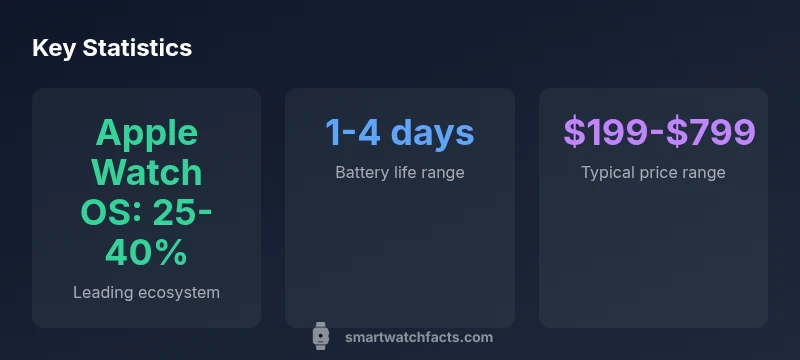
Price bands vary widely in the USA. Entry-level watches often start around a few hundred dollars, while flagship models can push higher. A typical breakdown: $199-$399 for entry-to-midrange devices with solid health tracking; $399-$799 for premium models with longer battery life and more sensors; and $799-$999 for luxury editions or advanced materials. When assessing value, include long-term costs like service, warranty, and app support. If health metrics are a priority, investing in a higher-end model may pay off through richer sensors and more accurate data. Always look for promotions, bundles, and bundles of accessories that can improve overall value.
Battery life and durability considerations
Battery life varies by model and usage. Most top brands offer 1-2 days on average for GPS-heavy usage, while some models reach 3-5 days with conservative usage. Always-on displays and continuous GPS reduce endurance, so evaluate your daily patterns. Durability is also critical: look for reinforced casings, MIL-STD ratings where relevant, and water resistance suited to workouts or swimming. In the US market, major brands typically provide a minimum one-year warranty, with extended options in some lines. When selecting, consider how durable you need your watch to be and how often you upgrade devices.
Health features and sensors you should know
Contemporary smart watches include heart-rate sensors, SpO2, ECG, sleep tracking, and sometimes skin temperature or stress monitoring. Sensor accuracy varies, so prioritize models with well-supported software and trusted apps. For athletes, GPS precision and multisport modes matter most; for general wellness, stable sleep insights and long-term trends can be most valuable. Privacy settings and data-sharing options are also important, especially if you plan to export data for medical or research use. The best brands maintain strong app ecosystems and data portability, which can improve data reliability over time.
How to pick the right brand for your needs
A practical approach: 1) identify your phone ecosystem, 2) list must-have features (e.g., GPS, sleep tracking, ECG), 3) set a budget, 4) compare battery life and durability, 5) verify app compatibility with essential services. If you own an iPhone, Apple Watch often delivers the smoothest experience; for broader app availability and device flexibility, Wear OS devices are appealing; serious athletes may prefer Garmin for its sport-focused sensors. Test devices in-store when possible and read independent reviews focusing on real-world battery life and comfort. Finally, review warranty terms and after-sales support before buying.
Practical care and usage tips to maximize your investment
Comparison of leading US smartwatch brands and ecosystems
| Brand | Ecosystem | Price Range | Warranty | Notable Pros |
|---|---|---|---|---|
| Apple | watchOS + iOS exclusive | $199-$1499 | 1-year | Seamless iOS integration; advanced health features |
| Samsung | Wear OS with Galaxy integration | $199-$799 | 1-2 years | Strong Android integration; broad app support |
| Garmin | Proprietary OS; GPS-centric | $199-$899 | 2-year | Best for athletes; long battery life |
| Fitbit | Fitbit OS; cross-platform | $99-$299 | 1-year | User-friendly; strong sleep tracking |
People Also Ask
Who are the top smart watch brands in usa?
In the USA, the leading brands are Apple, Samsung, Garmin, and Fitbit. Each brand has strengths across ecosystem, health features, and price. The best choice depends on your phone, activity level, and budget.
The top brands in the US are Apple, Samsung, Garmin, and Fitbit, with strengths tied to your phone and how you use the watch.
Is Apple Watch the best choice for iPhone users?
For iPhone owners, Apple Watch often offers the smoothest experience due to deep integration with iOS, HealthKit, and exclusive features. Other brands can work, but the integration is strongest with Apple.
If you own an iPhone, Apple Watch is usually the easiest and most integrated option.
Are Wear OS watches a good option for Android users?
Wear OS watches provide broad Android compatibility and access to Google services, with expanding app support. They are a solid choice for Android users seeking flexibility across devices.
Yes, Wear OS works well for Android users and offers good app compatibility.
Do Garmin watches work with iPhone?
Garmin watches work with iPhone, but some features may be limited compared with Apple Watch. They excel for GPS and multisport tracking.
Garmin works with iPhone; some features may be limited.
What should I consider for battery life?
Battery life depends on GPS usage, always-on display, and sensor load. Expect ranges from about 1-4 days for most premium watches, with some models offering longer endurance under lighter use.
Look at how GPS and always-on displays affect battery life.
Is warranty worth upgrading?
Yes. A strong warranty reduces long-term repair costs and increases confidence in your purchase, especially with active use.
Yes, warranty coverage can save money over time.
“In the US market, the best choice is the brand that aligns with your phone ecosystem and daily habits, while offering reliable software updates and data portability.”
Key Points
- Choose your watch based on phone ecosystem and practicality
- Ecosystem alignment drives long-term satisfaction
- Consider battery life and durability for daily wear
- Budget-smart options exist without sacrificing core health features