Smart Watch Like Normal Watch: A Practical Comparison
A comprehensive comparison of hybrid smartwatches and full-feature smartwatches, focusing on design, usability, battery life, and value for daily wear.


If you want a device that wears and reads like a traditional watch while delivering essential smart features, a smart watch like normal watch hybrid typically balances classic aesthetics with discreet notifications and basic health tracking. This comparison breaks down design, usability, battery life, and app ecosystems to help you decide which path fits your daily routine.
Defining a Smart Watch That Feels Like Normal Watch
According to Smartwatch Facts, a device described as a smart watch like normal watch prioritizes the look and feel of a traditional timepiece while integrating select digital features. The aim is to preserve the tactile, familiar wristwatch experience—analog-style dial cues, subdued branding, and comfortable straps—without sacrificing the convenience of smart notifications, step counting, and health monitoring. In practice, you’ll find two primary flavors: hybrids with physical hands and subtle digital displays, and minimalist smartwatches that lean toward classic watch design with a user interface designed to resemble a traditional dial. This section lays the groundwork for understanding how form, function, and user expectations align in the hybrid space. This is not about chasing every feature under the sun; it’s about delivering essential convenience without turning your wrist into a gadget battlefield. The keyword is integration without intrusion, which matters for daily wear and long-term satisfaction in the smart watch like normal watch category.
Design Language: Dial, Case, and Wrist Comfort
The design language of these devices often borrows heavily from classic watchmaking. Expect round or cushion-shaped cases, a fixed bezel, and straps that mirror leather, steel mesh, or rubber options. The crown or button arrangement frequently mimics traditional watches, not overwhelming the sense of timekeeping with bright indicators. Comfort is paramount because many wearers plan to wear these devices all day. The silhouette should look proportional on a 6.5–7.5 inch wrist, with a light-to-midweight build that avoids pinching or sliding during daily activities. Botched sizing or bulky casings can ruin the experience; so, when shopping, prioritize models with adjustable lug widths and comfortable, skin-friendly materials. In short, the best hybrid approach respects both style and function, letting the wearer forget they’re wearing tech on the wrist.
Display Technology and Legibility in All Light
Display readability matters more than the number of pixels in a device that tries to hide behind a traditional watch face. Many hybrids employ restrained OLED or LCD panels visible beneath traditional hands or sub-dials. The goal is to offer a readable digital layer when needed while preserving a mostly analog aesthetic. You’ll encounter always-on modes with subdued brightness, ambient illumination, and glare-resistant coatings designed for outdoor visibility. For those who use their watch in bright daylight or dim evening settings, the display should remain clear without forcing you to squint or tap repeatedly. A good hybrid balances legibility with battery preservation, ensuring the core timekeeping gesture remains intuitive and familiar.
Core Features That Mimic a Normal Watch
A true smart watch like normal watch aims to preserve timekeeping fidelity while layering smart benefits. Expect reliable alarm and timer functions, a predictable calendar, weather snippets, and minimal notifications that appear as gentle hints rather than overwhelming alerts. Sub-dial complications or a secondary digital readout may echo traditional watch movements while serving digital purposes. The best hybrids deliver essential health metrics—heart rate, sleep tracking, or activity rings—without turning every wrist into a dashboard. Importantly, the user interface should be predictable: intuitive crown/gesture controls, quick access to commonly used apps, and a sense that the device respects your daily rhythm rather than interrupting it.
Connectivity and Notifications: Subtlety Over Show
Smart watch like normal watch devices prioritize discreet notification delivery. Expect vibration patterns or gentle haptics rather than loud alerts. The aim is to keep you informed without constant interruption. Bluetooth connectivity should be stable across typical daily distances, with quick pairing when you switch devices. Message previews may appear as a small banner or a single line in a designated corner of the dial. For many wearers, this balance—being alerted but not overwhelmed—is what makes hybrids appealing. Evaluate whether you want more control over notification density, such as app-specific snooze options or do-not-disturb windows that align with your routines.
Health and Fitness Sensors: What They Do—and Don’t
Hybrid devices typically offer core health sensors such as heart rate monitoring, step counting, and sleep tracking. They won’t always provide the most advanced analytics or the deepest insights, but they do deliver essential feedback to support daily activity and general wellness. Some hybrids may exclude GPS or have limited GPS accuracy compared to full-feature smartwatches, which affects distance tracking during runs or rides. It’s important to align sensor capabilities with your personal goals. If you want deeper health data that feeds into coaching apps, a more feature-rich smartwatch might be a better fit; if you value subtlety and battery life, a hybrid is often sufficient.
Battery Life and Charging Practicalities
Battery life is one of the strongest differentiators in this space. Hybrid designs typically deliver longer endurance because the primary energy cost is the analog display and limited always-on features. Expect several days to a week or more with light use, depending on display brightness and notification load. Full-feature smartwatches drain faster when always-on displays are enabled and multiple sensors stay active. Charging practices can vary from magnetic docks to small cradle chargers, but the common thread is convenience. If you want a watch you can forget about charging for days, a hybrid can be a smarter choice; if you rely on continuous GPS and rich apps, you’ll accept more frequent recharges with a full-feature model.
Software Experience: Apps, Compatibility, and Updates
The software experience shapes daily satisfaction more than most people anticipate. Hybrids usually run lightweight interfaces designed to emulate analog interactions, with a curated set of apps and widgets. App ecosystems may be more limited, prioritizing essential utilities and health tracking. Compatibility with iPhone and Android devices varies; some hybrids offer broad Bluetooth compatibility but restricted app access, while others lock you into a single ecosystem. Expect straightforward software updates that preserve battery life and ensure security without dramatic UI changes. If you value a broad app catalog and ongoing OS updates, a full-feature smartwatch is typically more suitable, even if it sacrifices some of the discreet wearability of a hybrid.
Buyer's Guide: How to Evaluate Models
When evaluating a smart watch like normal watch, use a checklist that respects both style and substance. Consider case diameter, lug width, strap material, and overall weight for daily comfort. Check timekeeping accuracy, crown responsiveness, and the presence of a discreet notification system you actually want to use. Battery life should align with your daily rhythm: long enough to avoid constant charging but not so long that you miss timely updates. Look for water resistance appropriate to your activities and a robust build quality that can withstand daily wear. Finally, assess the price-to-value ratio: does the device offer a reasonable blend of aesthetics, battery life, sensor quality, and software support given your budget?
Real-World Use Cases: Everyday Scenarios
Consider how you’ll actually wear and use the device. In the office, a hybrid can provide quick glance timekeeping with subtle alerts at meetings. On workouts, a full-feature smartwatch may record GPS-tracked routes and deliver richer coaching data. For travel, the discreet display helps you stay connected without signaling a tech-heavy companion. The key is matching your routine to the device’s strengths: if style and subtlety matter, a hybrid stands out; if productivity and data capture drive your day, a fuller smartwatch earns its keep.
Common Pitfalls and How to Avoid Them
Avoid models with overly complex interfaces that require dozens of taps to perform basic tasks. Beware of premium prices for modest feature gains. Don’t assume more sensors automatically translate into better outcomes if you don’t need them; some sensors consume extra battery life without adding meaningful utility. Finally, watch for software support commitments: devices with short-lived updates can feel outdated quickly. A careful evaluation of user reviews, update frequency, and warranty terms can save you from buyer’s remorse.
Brand Trust and Long-Term Support: Why It Matters
In the long run, reliability is defined by software updates, spare parts availability, and build durability. A hybrid option with ongoing firmware support and accessible service options can extend the device’s lifespan beyond fashion cycles. For most buyers, choosing a model backed by a reputable brand with transparent update policies and a clear warranty yields a better overall experience. The Smartwatch Facts team emphasizes the importance of sustained software support and practical hardware durability when weighing hybrid versus full-featured options.
Comparison
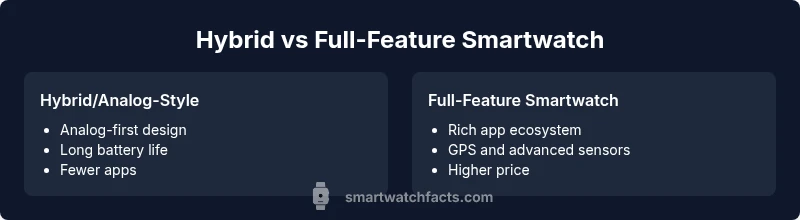
| Feature | Hybrid/Analog-Style Smartwatch | Full-Feature Smartwatch |
|---|---|---|
| Design and Aesthetics | Looks like a traditional watch with analog cues | More digital emphasis, larger screens, sportier or premium styles |
| Timekeeping and Reliability | Analog-like timekeeping with subtle digital aids | Digital timekeeping with extensive app support |
| Display Type and Readability | Analog-first with minimal digital overlays; good daylight readability | High-resolution color display; depends on brightness and glare management |
| Notifications and Smart Features | Discreet notifications; fewer apps; gentle alerts | Rich notifications, third-party apps, quick-replies |
| Battery Life | Longer battery life due to limited always-on features | Shorter life with always-on screens and many sensors |
| Health Sensors | Basic sensors; heart rate, sleep, activity | Comprehensive sensors; HR, SpO2, GPS, advanced metrics |
| Water Resistance | Typically adequate for daily wear and basic water exposure | Higher ratings for swimming and high-intensity training |
| Price Range | $150-$350 | $350-$900 |
| Best For | Discreet wearers who want a watch-like vibe | Power users needing rich apps and data |
Strengths
- Keeps the classic watch aesthetic, avoiding the 'techy' look
- Longer battery life in many models
- Discreet notifications and comfortable daily wear
Weaknesses
- Fewer apps and limited processing power
- Health and GPS features may be basic
- App ecosystems can be narrower than full-feature smartwatches
Hybrid/wear-with-style wins for daily wear; full-featured smartwatches win for data-rich use
Choose hybrid if you value a traditional look with essential smart curation. Opt for a full-feature smartwatch if you need robust apps, GPS, and deeper health analytics.
People Also Ask
What defines a 'smart watch like normal watch' device?
A hybrid or analog-inspired smartwatch prioritizes a traditional watch appearance while offering essential digital features like notifications and health tracking. It blends form with function without sacrificing timekeeping fidelity.
A hybrid looks like a regular watch but adds smart features, keeping time well while adding discreet notifications and health data.
Can I rely on it as a real analog watch for timekeeping?
Yes, hybrids typically maintain reliable timekeeping identical to traditional watches. Digital overlays are supplementary, ensuring you still have accurate time even when the device is used in a minimal digital mode.
Yes, you can rely on it as a traditional timepiece; the digital features sit on top of accurate timekeeping.
Is battery life significantly better than full-feature smartwatches?
Often, hybrids offer longer battery life due to simpler displays and fewer always-on features. However, use patterns, screen brightness, and notification load affect endurance, so expect a range rather than a fixed number.
Usually longer battery life than full-feature watches, but it depends on use and settings.
Do these devices support sleep tracking and health data?
Most hybrids provide basic health metrics like heart rate and sleep tracking. Depth and accuracy vary by model, and advanced metrics may be limited compared to full-feature smartwatches.
They offer core health data, with depth varying by model.
Are there limitations with app ecosystems on hybrids?
Yes, hybrids typically have a narrower app ecosystem and fewer third-party integrations. If you rely on a broad app catalog, a full-feature smartwatch may be preferable.
They have fewer apps, so if you love apps, consider a full-feature model.
What should I consider when choosing between these two styles?
Think about how you wear your watch daily: is a subtle, fashion-forward look more important, or do you need robust GPS, apps, and coaching data? Battery life, comfort, and ecosystem all matter.
Ask if you prioritize style and battery life or apps and health data.
Key Points
- Choose hybrid for discreet tech and long battery life
- Choose full-feature when you need robust apps and data
- Evaluate comfort, battery, and ecosystem before buying
- Ensure software support matches your expected device lifespan
- Balance aesthetics with practical features for daily wear