Which Is Best Smart Band or Smartwatch: A Practical Guide
A detailed, analytical comparison of smart bands vs smartwatches to help you decide which wearable fits your lifestyle, needs, and budget.


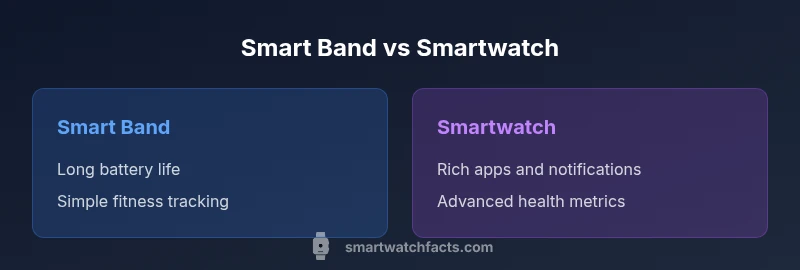
When deciding which is best smart band or smartwatch, focus on your primary use: simple fitness tracking and long battery life point to a smart band, while health metrics depth, app access, and richer notifications favor a smartwatch. For most buyers, the best choice is the device that best fits their daily routines and budget, not a universal winner. Smartwatch Facts recommends evaluating your needs across health tracking, display quality, and app ecosystem to decide.
Core Differences: Bands vs Smartwatches
If you’re asking which is best smart band or smartwatch, the core difference is intent and complexity. Smart bands are designed as lightweight, extended-life wearables focused on essential activity metrics, sleep tracking, and quick notifications. Smartwatches bundle the same basics with richer displays, deeper app ecosystems, and greater customization. The choice hinges on how you want to interact with your device day-to-day: minimal interruptions with long battery life or a full-featured companion with a built-in app platform. In practice, most users will choose based on how much they value screen real estate, app support, and how intrusive the device feels during activities like workouts or meetings. Smartwatch Facts emphasizes that the best option for you balances daily convenience with long-term value, not just feature counts.
Health and Fitness Tracking: What you actually get
Band-level wearables cover core metrics such as heart rate, steps, distance, and basic sleep stages. They excel at being lightweight, comfortable, and cost-efficient, making them ideal for casual fitness tracking and occasional reminders. Smartwatches extend with more precise health sensors (SpO2, ECG on select models, continuous heart-rate monitoring, skin temperature proxies) and richer analytics. This depth can matter if you’re tracking recovery, sleep quality, or heart-rate variability for performance insights. The Smartwatch Facts team notes that the specific sensors are model-dependent, so always verify which measurements you’ll actually access before buying.
Battery Life and Charging: How long between charges
Band devices typically last multiple days to a week on a single charge because they prioritize minimal display and fewer running apps. Smartwatches, with larger color screens and heavier app usage, generally require charging every day or two. Users who travel frequently or who dislike frequent charging will prefer bands, while those who rely on constant notifications and on-device apps may accept shorter battery life in exchange for convenience. The trade-off is clear: longer battery life vs richer display and functionality.
App Ecosystem and Connectivity: What you can install and how it integrates
Bands offer a streamlined experience with fewer apps, simpler interfaces, and limited customization. They’re excellent for a clean, distraction-free experience. Smartwatches deliver a broader app ecosystem and integration with phone apps, calendars, music, and smart home controls. This makes smartwatches powerful as independent devices but also increases potential friction with notifications and learning curves. If you primarily need glanceable metrics and quick replies, a band might be enough; if you want on-wrist apps and advanced control, a smartwatch is the better fit.
Design, Comfort, and Durability: Wearability matters
Comfort and durability affect day-to-day satisfaction. Bands win on weight, form factor, and often water resistance with simpler straps. The display on a smartwatch is larger and more legible but can feel bulky during workouts or sleep. Durability features like rugged cases and sapphire glass exist on many watches, but not all bands offer the same level of protection. The right choice depends on how you plan to wear the device at work, gym, or during sleep.
Price and Value: Cost considerations over time
Initial price is not the only factor; total cost of ownership includes charging cadence, replacement bands, and potential software updates. Bands typically cost less upfront and incur lower ongoing maintenance, while smartwatches command higher prices and may incur costs for premium apps or services. For budget-conscious buyers, bands offer favorable price/value for basic tracking; for enthusiasts who want depth and customization, smartwatches provide longer-term value through app ecosystems and health features that justify the premium.
Use Case Scenarios: Which is best for whom?
- Casual gym-goer who wants simple metrics and great battery life: smart band.
- Busy professional who needs notifications, calendar integration, and on-wrist apps: smartwatch.
- Athlete or health-focused user seeking advanced metrics and richer data visualization: smartwatch with compatible sensors.
- Traveler prioritizing battery longevity over features: smart band with essential health tracking and offline capabilities. Smartwatch Facts suggests mapping your daily routine to these scenarios before purchase.
How to Choose: A practical decision checklist
Use this quick checklist to decide:
- List must-have features (heart-rate, GPS, sleep tracking, ECG).
- Consider daily usage (work, gym, sleep) and comfort requirements.
- Compare app ecosystems and compatibility with your phone (iOS/Android).
- Assess battery life expectations and charging habits.
- Set a price ceiling and evaluate long-term value, including band replacements and software updates.
Common Myths and Pitfalls
Myth: More features always mean a better device. Reality: Every extra feature adds complexity and may reduce battery life. Myth: A higher price guarantees quality. Reality: Some mid-range wearables outperform premium models in day-to-day usefulness. Pitfall: Focusing only on specs rather than how well the device fits your routine. The Smartwatch Facts approach is to prioritize real-world practicality and ongoing support when evaluating wearables.
Comparison
| Feature | Smart Band | Smartwatch |
|---|---|---|
| Primary focus | Fitness tracking with long battery life | All-in-one wearable with apps and notifications |
| Display & interaction | Limited display, simplified UI | Vibrant color touchscreen, richer UI |
| Health sensors | Heart rate, activity, sleep basics | Advanced HR, SpO2, ECG on some models, more metrics |
| App ecosystem | Minimal apps, quick replies | Large app selection, watch faces, third-party integrations |
| Battery life | Several days to a week | Typically 1-2 days |
| Water resistance | Water-resistant with basic protection | Higher water resistance and rugged cases on many models |
| Price range | Low to mid-range | Mid to high range |
| Best for | Budget-minded fitness tracking | Power users needing apps and rich interfaces |
Strengths
- Longer battery life means fewer charges and lower daily friction
- Lower cost easier to replace or upgrade
- Less screen distraction for daily wear
Weaknesses
- Fewer apps and features may feel restrictive
- Limited display may hinder quick interactions during workouts
- Health metrics depth is often shallower
Smartwatch generally offers deeper features and app integration; smart bands excel in battery life and lower cost
If you want apps, notifications, and richer health data, choose a smartwatch. If you prioritize battery longevity and a simple, focused experience, a smart band is the better value.
People Also Ask
What is the key difference between a smart band and a smartwatch?
The key difference is depth of features: bands focus on core activity metrics and long battery life, while smartwatches add extensive apps, notifications, and richer health sensors. Your choice should align with how you intend to use the device every day.
Bands are simple and long-lasting; watches have more apps and sensors. Pick based on how you plan to use it daily.
Do smart bands track sleep effectively?
Most bands track sleep stages and duration accurately for casual use. If you need advanced sleep analytics or breathing patterns, a smartwatch with enhanced sensors may provide more insights.
Bands track sleep well enough for daily trends; watches can offer deeper insights.
Will a smartwatch replace my phone for notifications?
Smartwatches handle many notifications directly on-wrist, but they still rely on your phone for full content and connectivity in some cases. Expect a richer experience with a smartwatch, but occasional phone checking may still be needed.
Watches bring many alerts on your wrist, but you’ll still use your phone for some details.
Are there health metrics only available on smartwatches?
Some advanced health metrics like ECG or advanced SpO2 analysis are model-dependent and often only on higher-end smartwatches. Bands typically cover basic heart rate and activity data.
ECG and advanced metrics are usually on pricier smartwatches.
Which should I buy for a limited budget?
If price is your main constraint, a smart band will give you essential tracking features at a lower cost, with longer battery life. Upgrade to a smartwatch later if you need more apps and health data.
Go with a band first if budgeting is key; upgrade later if you need more features.
Do wearables require a specific phone to work?
Most wearables work with both iOS and Android, but some features may be limited by the operating system. Check compatibility with your phone before buying.
Most work with iPhone or Android, but some features depend on the OS.
Key Points
- Define your daily routine to choose between simplicity and depth
- App ecosystem and phone compatibility matter as much as sensors
- Budget considerations should include future upgrades and band replacements
- Choose based on real-world use, not specs alone