Can You Get a Smart Watch Wet? A Practical Guide to Water Resistance
Learn how water resistance works in smartwatches, what ratings mean, and practical tips to wear, protect, and care for your watch in wet conditions.


Yes, many modern smartwatches are water-resistant and can handle sweat, rain, and light splashes. However, water exposure tolerance depends on the exact rating and intended activities. Check IP ratings (IP67/IP68) or ATM ratings and follow manufacturer guidance. Do not assume safe use for hot showers, saltwater, or deep swimming unless specified.
can you get a smart watch wet
According to Smartwatch Facts, water resistance is a spectrum and model ratings vary widely. The question often hinges on how the watch is rated for exposure to moisture. In practice, most modern smartwatches are designed to withstand sweat, rain, and incidental splashes, but not all are equally capable in more demanding wet environments. When evaluating a model, look beyond marketing terms and inspect the official ratings provided by the manufacturer. The goal is to understand what kind of water exposure is considered safe and for how long. This guidance matters for people who exercise outdoors, work near water, or frequently wash their hands. By starting with the right rating, you can confidently wear your watch in everyday wet scenarios while avoiding unnecessary risk to the device.
How water resistance ratings work
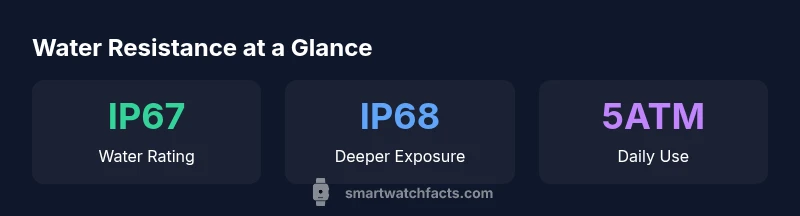
Water resistance ratings translate laboratory tests into practical guidance for daily life. The most common standards you’ll see are IP ratings (like IP67 or IP68) and ATM ratings (often written as 3ATM, 5ATM, etc.). An IP67 device can withstand immersion in water up to a certain depth for a limited time, while IP68 is typically deeper immersion. ATM ratings communicate how well a device handles pressure from water at depth during activities such as swimming. It’s important to note that water resistance is not permanent: seals and gaskets can wear over time, and performance can degrade if a watch is damaged. Always verify the exact rating and consult the user manual for intended activities.
IP ratings explained: IP67, IP68, 5ATM, and more
IP ratings measure protection against solids and liquids. For water exposure, IP67 and IP68 are the most common consumer-facing labels. IP67 means the device can handle temporary immersion in water, while IP68 generally implies greater depth and longer exposure tolerance. ATM ratings provide another reference point, describing how many meters of water pressure the watch can tolerate. Remember: IP ratings address static lab tests; real-world activities like swimming in chlorinated water, saltwater, or hot water can challenge seals differently. Always align your use with the rating and avoid assuming universal waterproofing.
Safe activities by rating: what’s okay and what isn’t
Not all water exposure is created equal. Many watches tolerate rain, sweat, and light splashes, but prolonged submersion or high-velocity water can cause moisture to breach seals if the rating isn’t sufficient. For casual wear, a watch rated IP67 or IP68 is generally adequate for daily moisture and shallow immersion, but swimming or diving typically requires a higher standard or a dedicated sports watch. Hot water can also affect seals and adhesives, so reserve intense exposure for rated scenarios. If you’re unsure, err on the side of caution and remove the watch around steam rooms or saunas.
Practical care after water exposure
If your watch gets wet, start by turning it off if possible and patting it dry with a clean microfiber cloth. Rinse it with fresh water if you’ve been in saltwater or chlorinated water, then dry thoroughly. Do not use heat sources like hairdryers, which can warp seals or damage displays. After drying, check that charging contacts and ports are completely dry before reconnecting the charger. Regular maintenance, including gasket checks and periodic professional inspections, helps preserve water resistance over time.
How to test water resistance safely (and when to skip it)
Never perform aggressive water tests at home. Rely on the manufacturer’s stated ratings rather than aggressive trials. A simple, safe approach is to expose the watch to gentle moisture (e.g., rain or hand-washing) and observe for any signs of leakage or fogging within the device. If you notice condensation inside the screen or around the seals, stop using the watch in wet conditions and seek professional service. Routine checks by a trained technician can help maintain seal integrity over the device’s lifetime.
Choosing a model for water exposure: buying-guide tips
When shopping, filter for watches with official water resistance ratings that match your activities. If you swim or snorkel, look for watches rated for swimming or higher, and confirm whether the rating applies to hot water or saltwater exposure. Consider the watch’s materials and gasket design, as these influence how seals respond to repeated moisture. Always review warranty terms related to water exposure and be prepared to follow manufacturer care instructions diligently.
Common myths and mistakes to avoid
A popular myth is that water resistance means the watch can be taken anywhere without care. In reality, damage from water exposure is often not covered if seals are compromised or the rating is exceeded. Another mistake is assuming that submerging the watch in water will not affect performance if it’s a newer model. Conditions such as temperature changes, soap exposure, and direct exposure to steam can degrade seals over time. Treat water resistance as a feature that requires ongoing care and respect.
Water resistance concepts and practical tips
| Aspect | What it covers | Practical tip |
|---|---|---|
| Water resistance rating | Official IP/ATM rating | Always check the rating listed in the manual or product page |
| Exposure scenarios | Rain, sweat, accidental splashes | Test with gentle moisture before extended exposure |
| Maintenance after exposure | Rinse with fresh water if needed; dry thoroughly | Avoid heat sources; ensure ports are dry before charging |
| Warranty considerations | Damage from water exposure may void coverage | Follow manufacturer guidelines to avoid voiding warranty |
People Also Ask
Is every smartwatch waterproof, or is it just water-resistant?
Most watches are water-resistant, not waterproof. Ratings like IP and ATM indicate limits for moisture exposure. Always rely on the official rating and manufacturer guidance for real-world use.
Most watches resist water but aren’t truly waterproof. Check the official rating and follow the manufacturer’s care instructions.
What is the difference between water-resistant and waterproof?
Water-resistant means the device can resist water to a certain degree under test conditions. Waterproof is not a standard term for most consumer watches; instead, refer to the rating to determine safe use.
Water-resistant means some water exposure is allowed; waterproof isn’t a typical label for watches. Check the rating to know what’s safe.
Can I swim with my smartwatch?
Only if the watch is rated for swimming or higher. Verify the exact rating and follow the manufacturer’s guidance; avoid saltwater or hot water unless explicitly rated for those conditions.
Only swim with a watch that’s rated for swimming; check the rating and follow the guidance.
Should I wear my smartwatch in the shower?
Most watches aren’t recommended for hot showers. Steam and soap can compromise seals. If your rating explicitly covers shower use, follow those guidelines precisely.
Avoid showers unless the rating specifically allows it.
What should I do if water gets inside the device?
Power off the device if possible, dry the exterior, and seek professional service if you notice condensation or persistent fogging. Do not attempt aggressive drying or charging when wet.
Turn it off, dry it gently, and contact support if you see condensation.
“Water resistance is a practical safety feature, not a guarantee against all water exposure. Always verify the rating and follow care steps.”
Key Points
- Check official ratings before water exposure.
- Know the difference between water resistance and waterproof terms.
- Avoid hot showers and saltwater unless rated for them.
- Rinse and dry after water contact and avoid heat.
- Follow manufacturer instructions to protect your device.