Smart Watch 50mm: A Practical Guide to Large-Sized Wearables
Explore the implications of the 50mm smartwatch size, from readability and comfort to durability and value. A practical buying guide from Smartwatch Facts.


A 50mm smartwatch refers to the case diameter and sits at the upper end of mainstream sizes. It yields a bigger, easier-to-read display and more room for features, but may feel bulkier on smaller wrists. This article explains the trade-offs, practical use cases, and how to decide if a 50mm model fits your needs.
Size and Ergonomics: What a 50mm Case Means
When people search for the phrase smart watch 50mm, they’re often trying to understand how the size affects daily wear. A 50mm case diameter sits at the upper end of mainstream smartwatch sizing and heavily influences the watch’s silhouette, wrist coverage, and perceived heft. For many wearers, a 50mm model delivers a bold, statement-making presence, while others may feel the scale is excessive for smaller wrists. Wrist circumference and strap design matter, so consider trying on models with quick-release bands or adjustable lugs. The goal is to balance visual impact with comfort for extended wear. In practice, a 50mm watch will dominate the face when you glance at notifications, health metrics, and app grids, especially if you frequently glance at maps or workouts during runs or cycles.
Display and Readability: The Trade-off of a Bigger Dial
A larger dial doesn’t just look bigger: it translates to more real estate for apps, widgets, and text. In bright outdoor lighting, the bigger screen often remains clearly legible, reducing squinting and zooming. However, the trade-off is bezel width and edge curvature, which can affect how you interact with side ports and physical crowns. Consumers should assess font sizing options and always test brightness at outdoor levels. For developers, this means designing UI elements that scale gracefully and avoid clutter.
Comfort and Fit: Wrist Size and Strap Considerations
Size anxiety aside, the practical comfort question is strap fit and weight distribution. A 50mm case can feel heavy if the watch sits high on the wrist or if the strap applies uneven pressure. Choose models with lighter alloys or ceramic options and consider adjustable bands that accommodate a wide range of wrist circumferences. If you routinely type on a keyboard or drive long distances, try models with slimmer profiles and low-profile lugs to minimize interference with movement.
Durability and Build: Materials to Expect
Large watches often deploy robust materials to offset bulk. Expect strengths like stainless steel or titanium bezels, reinforced glass, and water resistance suitable for swimming. Build quality matters as you leverage the larger form factor for rugged activities. Look for scratch-resistant coatings, secure crown mechanisms, and reinforced case backs. Proper care—clean bands, avoiding extreme heat, and keeping seals intact—extends durability for heavy-use scenarios.
Health Tracking and Sensors: Does Size Affect Accuracy?
Sensor accuracy isn’t determined solely by case diameter, but the hardware layout matters. A 50mm model can house larger sensors or additional radios (GPS, GLONASS, BLE) more easily, potentially improving signal reception. That said, fit and skin contact also influence readings for heart rate or SpO2 sensors. Ensure the watch sits snugly above the wrist bone and has well-distributed sensor coverage. Regular firmware updates can optimize algorithms for your body geometry and activity profile.
Battery Life and Charging: Power Demands of a Larger Screen
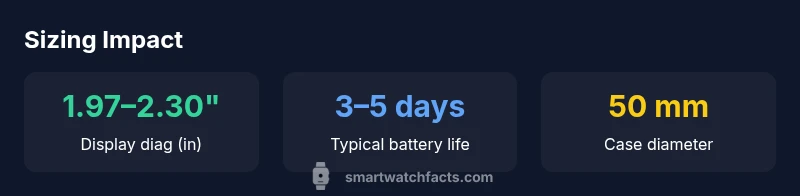
Power consumption scales with brighter displays and more features, so a larger display often carries a modest battery impact. Manufacturers balance this with more efficient panels, adaptive brightness, and smarter power profiles. Expect 3–5 days of typical mixed use on mid-range models, though full-sun workouts or always-on displays can trim that range. Investing in a fast charger or wireless charging cradle can reduce downtime between sessions.
Software Experience: OS, Apps, and UI on Bigger Screens
Larger screens provide more space for on-wrist interaction, but software must adapt to avoid cramped or clumsy layouts. Favor watches with responsive UI scaling, legible typography, and well-curated app ecosystems. App layouts should feel intuitive without excessive zooming. The extra display real estate is valuable for navigation, fitness coaching, and glanceable dashboards, especially for users who rely on quick status checks during workouts or on the move.
Real-World Use Scenarios: When a 50mm Watch Excels
The 50mm size shines in use cases demanding quick readability and comprehensive dashboards. Long workouts, outdoor adventures, and productivity-heavy days benefit from larger widgets and maps. It’s also a strong choice for users who wear gloves or want to minimize eye strain when checking notifications. For office wear, balance matters—pair with a sleek band and choose a finish that matches your overall attire to avoid looking oversized. The model’s software and health features can maximize the value of the larger display.
Buying Guide: How to Decide If a 50mm Model Is Right for You
If you’re deciding whether a 50mm smartwatch fits your needs, start with wrist measurements and preferred use cases. Try on multiple models to compare comfort, weight, and strap options. Evaluate display readability at various brightness levels, power modes, and app layouts. Consider the environmental context—outdoor runners may benefit from larger screens, while those with formal attire needs might prioritize a slimmer silhouette. Research the OS ecosystem, band compatibility, and after-sales support to ensure long-term satisfaction.
Display size and battery life by case diameter
| Model Type | Display Size (in) | Battery Life | Case Diameter |
|---|---|---|---|
| Standard | 1.8–2.0 | 3–5 days | 38 mm |
| Large (50mm) | 2.0–2.3 | 3–4 days | 50 mm |
People Also Ask
Is a 50mm smartwatch comfortable for daily wear?
Comfort varies by wrist size and band design. If you have a smaller wrist, try models with lighter materials and adjustable bands. Always test wearability to ensure long-term comfort.
It depends on your wrist size and the band. Try a few options to find a comfortable fit for daily wear.
Will a 50mm model fit smaller wrists?
Smaller wrists can wear 50mm models, but you may notice bulk and strap visibility. Look for models with compact lugs and slim profiles or consider models that offer 50mm as a variation rather than a fixed size.
Smaller wrists can wear it, but check for compact lugs and lighter materials.
Does the 50mm size improve health tracking?
Larger devices can accommodate bigger sensors and more precise placement, potentially improving readings. However, accuracy still depends on fit, skin contact, and software algorithms.
Bigger can help sensors sit better, but fit and software matter too.
What should I look for in a 50mm smartwatch?
Look for durable build, screen brightness, battery life, responsive OS, and strap options. Check water resistance, sensor quality, and software updates, plus comfort for long wear.
Durability, battery life, and a good OS matter—test fit and features.
Are 50mm watches better for outdoors or business use?
Outdoors and fitness scenarios benefit from larger displays, but formal settings may prefer slimmer silhouettes. Consider your primary context and choose accordingly.
Great for outdoors and workouts, but consider your daily dress code.
How do I measure wrist size for a 50mm model?
Use a cloth or flexible measuring tape to measure your wrist circumference just below the wrist bone. Compare with manufacturer sizing guides and try models with adjustable bands.
Measure around your wrist and check the brand’s size guide.
“Size alone doesn’t guarantee value; a well-balanced 50mm smartwatch blends readability, comfort, and software quality.”
Key Points
- Choose 50mm if readability and feature density matter most.
- Ensure comfortable fit with adjustable bands and tested weight.
- Expect similar battery life to other large-screen watches; manage brightness.
- Prioritize OS ecosystem and app quality for a large display.
- Test on your wrist before buying to confirm comfort and usability.