How to Tell Smartwatch Size: A Practical Guide for a Perfect Fit
Learn how to tell smartwatch size with practical wrist measurements, case diameter guidance, strap width, and fit testing. A comprehensive, beginner-friendly guide to choosing the right size for comfort and readability.


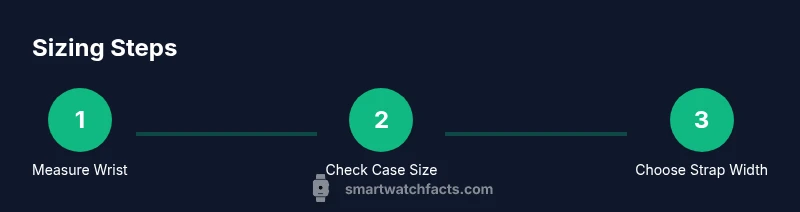
To pick the right smartwatch size, start with measuring your wrist, then compare case diameter and strap width to your wrist proportions. A balanced fit means the watch sits comfortably without sliding, and the face remains easy to read during daily tasks. This guide walks you through measuring, interpreting sizes, and testing fit before buying.
Understanding Wrist Sizing and Its Impact on Smartwatch Comfort
Your wrist size is the foundation of a comfortable smartwatch fit. Even a technically perfect watch will feel awkward if it sits too tight or flops around on a small wrist. Start with a reliable wrist measurement and use it as a baseline when comparing case size and strap width. The Smartwatch Facts team emphasizes that comfort isn’t just about the number on the box; it’s about how the watch sits on your skin in real-life movement. Measure with a flexible tape or a strip of paper, then translate that measurement into a representative size category (small, medium, or large). When you know your baseline, you can quickly filter options without trying on every model. Remember, wrists can differ between your dominant and non-dominant hand, so measure both when possible. Finally, consider how you wear your watch—snug for workouts, looser for casual wear—and adjust your target range accordingly. Having a clear starting point saves time and helps you avoid buying a size that will irritate or annoy you throughout the day.
Tools I rely on when sizing include a flexible measuring tape, a soft ruler, and a notebook to track measurements. If you don’t have a tape at hand, a string or paper strip will work in a pinch; you can measure the length with a ruler later. Writing down measurements ensures you can compare models side by side and revisit your choice later if your wrist changes with temperature or activity.
According to Smartwatch Facts, the most important thing is a balanced feel on your wrist, not a perfect numeric match to a brand’s size chart. Real-world testing—moving your wrist, typing, and grabbing objects—reveals whether a given size truly fits your daily routine. This section helps you establish that foundation before you start comparing specific models.
Decoding Case Size and Shape: What the Numbers Mean
Case size is the most visible dimension of a smartwatch, and it often shows up as a number in millimeters (mm). The common middle-ground sizes tend to range from roughly 38–46 mm. On smaller wrists, 38–40 mm cases usually feel lighter and less obtrusive; on larger wrists, 42–46 mm cases can look more proportional and provide better readability. Shape also matters: round faces can feel subtler on small wrists, while square or rectangular faces can appear larger due to bezel geometry. Bezel width and screen-to-body ratio influence perceived size—the same case diameter can look bigger or smaller depending on the screen’s edge treatment. If you’re unsure, aim for a watch that sits at or just below the width of your wrist while still leaving a comfortable margin to avoid the watch digging into the side of your hand when you bend your wrist. Remember, numbers offer a baseline, but your comfort is the ultimate test.
For most shoppers, a mid-range case size offers flexibility across activities. If you want to prioritize portability, a smaller case can reduce fatigue on long days. If you need maximum legibility for fitness tracking or apps, a larger case improves visibility and ease of use. When evaluating, try to imagine how you’ll use the watch in your daily routine and pick a size that won’t crowd your other accessories or feel out of place in meetings.
Strap Width, Lug-to-Lug, and Fit: Fine-Tuning Comfort
The interaction between case size and strap design matters almost as much as the case diameter itself. Lug-to-lug is the distance from one end of the watch’s lugs to the other across your wrist. If the lug-to-lug is too wide for your wrist, the strap may feel loose or shift during movement, and the watch can slide around. Strap width is typically measured in millimeters and should harmonize with the lug width to prevent awkward angles on your wrist. A wider strap on a small wrist can look and feel bulky, while a too-narrow strap on a large watch may feel insecure. Common strap widths range from 18 mm to 22 mm, with some models offering 24 mm options. When possible, select a strap that bridges the case smoothly and aligns with the natural width of your wrist.
Also consider material and buckle design. A heavier metal bracelet or a very stiff strap can add bulk, while a flexible silicone or leather band can feel lighter and conform better to movement. If you’re between widths, opt for the wider strap only if the lug-to-lug and case diameter still feel balanced on your wrist; otherwise, choose the narrower option and adjust with a comfortable fit.
Practical tip: before committing to a model, try swapping bands to see how different strap widths affect the overall silhouette and feel on your wrist. This can dramatically change how large or small a watch appears and how comfortable it is during daily tasks.
Screen Real Estate and Legibility: Choosing Size for Daily Use
Readability is a practical, everyday concern tied to watch size. Larger cases naturally host bigger watch faces, but the actual usable area depends on bezels, font size, and interface layout. If you read a lot of notifications or use map apps, a bigger screen with a generous font can reduce eye strain and improve navigation. On the flip side, a very large face on a tiny wrist can feel clumsy or heavy. If you’re shopping online, look for user images showing the watch worn on real wrists to gauge scale relative to hand size. When possible, compare font sizes in the smartwatch’s settings to see how readable the display will be in daylight and at different brightness levels.
UI considerations matter too. Some platforms scale content differently across sizes, and some apps optimize layout for small or large faces. A 42–44 mm size often provides a balanced compromise: it offers clear readability without dominating the wrist. If you’ll rely on the watch for precise workouts or heart-rate data during runs, a readable display with strong brightness and legibility in sunlight becomes crucial. Overall, choose a size that makes it effortless to glance at information and respond quickly while keeping wrist movement comfortable.
Practical Sizing Methods: Measuring Your Wrist at Home
A reliable at-home sizing method starts with a precise wrist measurement. Use a flexible measuring tape to wrap around your wrist where the watch would sit, keeping the tape snug but not tight. If you don’t have a tape, use a piece of string or a narrow strip of paper. Mark where the end overlaps, then lay the string on a ruler to read the circumference. Record this measurement for comparison with brand size charts. Repeat the measurement on both wrists to determine if there’s a notable difference, then decide which wrist you’ll wear the watch on most often and use that as your baseline.
Next, estimate your ideal case size using your wrist circumference. As a general rule, smaller wrists (roughly 5.5–6.5 inches in circumference) usually pair well with 38–40 mm cases, while medium wrists (6.5–7.5 inches) often suit 40–44 mm cases. Larger wrists (7.5 inches and up) may feel most comfortable with 44–46 mm cases or larger, depending on personal preference and activity. Use a sizing chart from the manufacturer or a trusted buying guide to map your wrist measurement to a recommended range. Finally, verify lug-to-lug and strap width in person when possible, since these measurements can dramatically affect comfort and fit even if the case size seems right.
If you’re between sizes, prioritize comfort over strict numerical alignment with charts. A slightly larger case with a thinner strap can feel more balanced than a smaller case with a thick, heavy strap. Remember that the goal is not only to fit your wrist but also to support your daily tasks with clear readability and secure wear.
How to Choose Size for Different Scenarios: Exercise, All-Day Wear, and Formal Settings
Different activities may call for different sizing considerations. For exercise, prioritize a case size that feels lighter and a strap that’s highly breathable and secure. A smaller case reduces weight on the wrist during runs or workouts, and a rugged strap helps it stay in place during vigorous movement. For all-day wear,-focus on a comfortable balance between display visibility and wrist support. A mid-range case often performs well across daily tasks while remaining unobtrusive during meetings. For formal settings, a sleeker silhouette can matter; a slightly smaller or mid-sized case paired with a refined strap can blend with dressier attire while still offering essential smart features.
If you expect to use the watch across multiple activities, aim for a size that transitions well. You may choose a model with interchangeable bands so you can swap for sport bands during workouts and dressier bands for events. The right size should feel natural in your daily life and not draw attention for the wrong reasons. Remember that comfort and readability beat brand claims about exact mm measurements when real-life wear is considered.
In-Store Fitting and Virtual Try-Ons: Testing Before You Buy
Whenever possible, try on watches in-store with your usual daily activities. Move your wrist, type on a keyboard, and mimic common tasks to assess comfort and readability. If you don’t have a store nearby, many brands offer virtual try-on or 3D models you can rotate to gauge scale. Bring your wrist measurement and ask staff to help compare a couple of size options side by side. When trying on, wear the watch with a typical band you’d use daily to see how it sits during motion and daily tasks. If you have a favorite strap, test it on the watch model to confirm the overall silhouette.
Be mindful of the return policy. If you’re between sizes, choose the one with the better comfort feel and readability, then confirm you can exchange if needed after a trial period. In-store experiences can prevent sizing mistakes that feel minor at first but become uncomfortable after hours of wear.
For all buyers, virtual or in-store testing should focus on three metrics: comfort, readability, and perceived balance on your wrist. A size that checks these boxes will likely become a daily go-to rather than a cumbersome accessory.
Sizing Pitfalls and Common Mistakes to Avoid
Avoid relying solely on a model’s listed mm size without trying it on your wrist. Size charts can be helpful, but personal comfort matters most. Don’t assume a smaller or larger size will automatically meet your needs; test with your preferred strap and in typical lighting to ensure readability. Also beware of very thick bezels or bulky cases that visually overwhelm a small wrist, even if the case diameter falls within a recommended range. Remember that your wrist can change slightly with temperature, hydration, and activity, so verify your choice under different conditions, such as after a workout or in a cooler room. Finally, be mindful of band tightness; a very snug strap may feel secure but can restrict circulation over long periods. Use adjustable bands and consider additional strap options to optimize fit across the day.
Taking the time to size properly has lasting benefits: reduced irritation, improved readability, and a more balanced look that complements your overall style. A thoughtful, tested choice is better than chasing a numerical perfect match that doesn’t feel right when you wear the watch.
Quick Reference Sizing Cheat Sheet
- Small wrists: 38–40 mm cases with a flexible strap. - Medium wrists: 40–44 mm cases for versatility. - Large wrists: 44–46 mm cases or larger for readability and presence. - Lug-to-lug should be proportional to wrist width; avoid cases that overhang or pinch. - Strap width should align with lug width for a clean silhouette. - Always test with real-life movements and lighting before buying.
Tools & Materials
- Flexible measuring tape(Wrap around wrist where the watch would sit; snug but comfortable)
- String or paper strip(Alternative if no measuring tape is available)
- Ruler or caliper(Useful for precise strap width and lug-to-lug checks)
- Notebook and pen(Record wrist measurements and chosen size range)
- Existing watch or reference model(Use as a feel-reference when comparing sizes)
Steps
Estimated time: 25-40 minutes
- 1
Measure both wrists
Wrap a flexible measuring tape around each wrist just below the wrist bone. Record the snug measurement on both sides to capture any difference between wrists. Use the larger measurement as your baseline for sizing decisions.
Tip: If you don’t have a tape, use string/paper and then measure with a ruler. - 2
Identify your target case size range
Compare your wrist baseline to common size ranges (e.g., small wrists tend to suit 38–40 mm; medium wrists 40–44 mm; large wrists 44–46 mm). Start with the middle of the range and adjust based on comfort.
Tip: Remember, readability and comfort beat the exact mm number. - 3
Check lug-to-lug and strap width
Measure the distance across your wrist where the watch will sit (lug-to-lug) and note the strap width. Ensure the strap width matches or is slightly narrower than the lug width to avoid awkward gaps.
Tip: A wider strap on a small wrist can look bulky and feel restrictive. - 4
Consider display readability
Think about how often you use the watch in bright light and at a glance. If you rely on large fonts and clear icons, prefer a slightly larger case with a readable UI.
Tip: UI layout can affect perceived size more than the physical mm size. - 5
Test with band on your wrist
If possible, try the watch with the actual band you plan to wear daily. A metal bracelet behaves differently from silicone or leather straps in terms of bulk and flexibility.
Tip: A test run with your daily band is the most realistic fit test. - 6
In-store try-on or virtual try-on
Whenever feasible, try on in person or use a virtual try-on feature to compare sizes side by side. Assess comfort, balance, and readability on your own wrist.
Tip: Ask staff for a second option to compare side-by-side quickly. - 7
Evaluate during daily activities
Wear the watch during writing, typing, cooking, and exercising to ensure it stays in place and remains comfortable through typical movements.
Tip: If it slides or binds during activities, it's likely not the right size. - 8
Make a decision and keep the receipt
Choose the size that feels most balanced and comfortable across activities. Ensure the retailer’s return window allows for a post-purchase test.
Tip: A flexible return policy reduces sizing risk.
People Also Ask
What is the best case size for a small wrist?
For small wrists, consider cases around 38–40 mm and test with a comfortable strap. Comfort and readability trump strict adherence to a single mm figure.
For small wrists, look for about 38 to 40 millimeters and test with a comfortable strap to ensure readability.
How do I measure my wrist accurately at home?
Wrap a flexible measuring tape around your wrist where the watch would sit, snug but not tight. Record the measurement and repeat on the other wrist if possible. Use the larger measurement as your sizing baseline.
Wrap a flexible tape around your wrist where the watch sits, snug but not tight, and read the measurement. Do this on both wrists if you can.
Do I need to consider strap style or color when sizing?
Yes. Strap width and material affect comfort and perceived size. A bulky metal bracelet can feel heavier; silicone or leather bands often feel lighter and more adjustable.
Strap width and material change how big the watch feels and how comfortable it is, so test different straps if possible.
Can I size a smartwatch if I already own a regular watch?
Yes. Use your existing watch as a reference, but remember smartwatches have different strap standards and crown placements. Match the overall feel and readability rather than color or brand.
You can reference your regular watch, but remember smartwatches may use different bands and setups, so focus on comfort and readability.
What if I’m between sizes?
Choose the larger size for comfort and adjust with a suitable strap. If possible, try both sizes in-store or within the return window.
If you’re between sizes, pick the larger one for comfort and try it with different bands.
How important is legibility on a smartwatch display?
Legibility matters for quick glances. Prioritize a size that allows large, clear fonts and easy navigation in daily lighting conditions.
Legibility is key—pick a size that makes font and icons easy to read at a glance.
Watch Video
Key Points
- Measure wrists accurately and use baseline to guide size.
- Case diameter and strap width must harmonize with wrist proportions.
- Test fit with real bands and during typical daily activities.
- Choose comfort and readability over chasing a perfect mm number.