Which Size of Smart Watch Is Best: A Practical Guide
Learn how to choose the best smart watch size. Measure your wrist, compare common case sizes, test fits, and balance readability with comfort for small and large wrists.


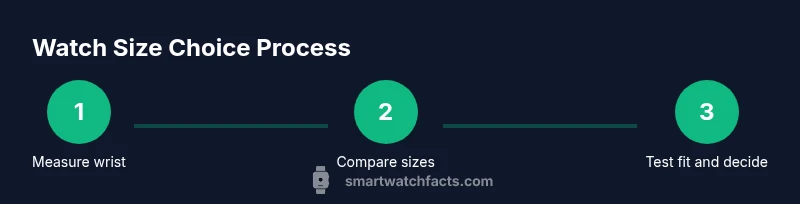
To pick the best smartwatch size, start by measuring your wrist, then compare common case sizes and test fits in person when possible. Favor comfort, weight, and strap style. For smaller wrists, 38-42mm is typically comfortable; for larger wrists, 42-46mm often works well. If possible, try models before buying.
Why size matters
According to Smartwatch Facts, the question of which size of smart watch is best hinges on wrist dimensions, skin sensitivity, and how you plan to wear the device. A size that sounds appealing in a spec sheet can feel invisible on your arm if it overpowers your line of sight or rubs uncomfortably against the skin. The Smartwatch Facts team emphasizes that readability, airflow beneath the band, and overall wearability are the core drivers of a satisfying purchase. When you optimize size, you reduce the temptation to remove the watch mid-day and increase daily usage time. If you’re asking which size of smart watch is best, the answer starts with measuring your wrist and evaluating personal comfort.
Beyond personal comfort, consider how you use the watch. Active outdoors, you may prefer a larger display for quick glances, while at the office a slimmer silhouette can look sharper and still offer essential features. Smartwatches designed with curvature and compact lugs can offer a better fit on a range of wrists. According to Smartwatch Facts analysis, sizing guidance generally improves wearability and long-term satisfaction, mirroring how users rate usability when a device feels right from moment one.
A final note: size is always a balance. A slightly larger display can improve readability outdoors and for those with vision challenges, but it comes with added weight and potential bulk. This is why we advocate testing multiple sizes and aiming for a fit that looks balanced and feels natural.
For readers seeking a practical shortcut, think of size in two bands: smaller wrists tend to benefit from compact cases, while larger wrists can accommodate bigger displays with fewer compromises. The goal is a watch that disappears into your routine, not one that demands constant attention.
noteOverrideCount":null},
How to measure your wrist for sizing
Measuring your wrist accurately sets the foundation for choosing the right watch size. Start with a flexible measuring tape or a piece of string. Place it around the wrist at the point where you would wear the watch, just above the wrist bone. If you use a string, lay it flat against a ruler to read the measurement in millimeters. Take the measurement with your dominant wrist, then repeat on the other wrist if you plan to wear the watch on both sides.
Next, assess the circumference where the watch will sit. Some people prefer a snug fit with little wiggle room, while others want just a touch of movement for comfort. Remember to account for the thickness of the watch case and the band style when you compare measurements to model sizes. If you don’t have a measuring tape, you can estimate by wrapping a string around the wrist, then laying the string against a ruler to get a approximate figure.
Finally, consider your typical daily sleeve length and whether you wear long sleeves that could press against the watch. If you regularly wear jackets or coats, you may want a slightly looser fit to accommodate layers. This approach helps ensure that your watch sits comfortably and remains readable without constant adjustment.
noteOverrideCount":null}
Understanding case sizes and design tradeoffs
Watch case sizes are commonly discussed in millimeters, with the diameter of the face and the thickness of the body both contributing to the perceived size. In practice, people often categorize sizes as small, mid, and large. Small wrists typically feel more comfortable with cases in the 38-42mm range, while mid to larger wrists can accommodate 42-46mm without appearing oversized. The tradeoffs aren’t purely about inches: a larger case can offer a bigger display for quick glances and easier button operation, but it may add weight and reduce airflow under the band. The weight distribution matters, especially with metal bracelets and rugged sport bands.
Material and design influence how large a watch feels. A very thin, flat case can appear smaller than a chunkier, thicker model with a domed display. Curved or beveled edges help reduce perceived bulk, while square faces can look more prominent on similar dimensions. For outdoor or exercise use, larger displays can be beneficial for visibility in sunlight and during activity tracking. The Smartwatch Facts team notes that, when sizing, you should evaluate legibility, button placement, and edge-to-edge display real estate in addition to the numeric size.
Understanding the tradeoffs helps you pick a size that aligns with your priority: readability, comfort, or all-day wearability. If you value one-hand operation, you may favor a size that fits comfortably on your non-dominant wrist and allows easy access to crown or side buttons. In addition, consider how your clinic, office, or gym routines may affect wear, as a watch that constantly slips or digs in will reduce overall satisfaction.
noteOverrideCount":null}
Matching size to wrist width and activity
Your wrist width influences the perceived size more than any marketing claim. For most people, smaller wrists benefit from 38-42mm cases because they keep the display legible without dominating the wrist’s silhouette. Medium wrists usually find 40-44mm comfortable, striking a balance between display area and comfort. For larger wrists, 44-46mm or even slightly larger cases can be a good fit if the watch remains unobtrusive and the strap sits flush against the skin.
Activity level also matters. If you frequently exercise, a larger display can help with glance-able metrics during movement, while a smaller case can be more comfortable during long wear. If you often wear long sleeves, ensure the crown and bezel don’t poke at fabric. Consider models with curved lugs and adjustable bands to accommodate different use cases and clothing layers.
Remember, the goal is a cuff that feels natural and allows you to use the device without distraction. The best size for you reflects your wrist dimensions and lifestyle rather than a universal standard.
noteOverrideCount":null}
##Lifestyle considerations: band options and lug width
Band width and lug geometry directly affect how a watch sits on your wrist. Common band widths range from 18mm to 22mm; wider straps distribute weight more evenly and can look more balanced on larger wrists, while narrower bands suit small wrists better. If possible, choose a watch with swappable bands to experiment with different widths. Lug width dictates which strap styles you can use and helps determine how the watch sits against your wrist. Heavier metal bands add weight but can improve durability, whereas flexible silicone and fabric options keep the watch lighter and more breathable when active.
Another practical factor is the overall thickness of the case. A thick case on a small wrist may feel bulky and may push the display slightly away from your line of sight. Lighter materials and thinner profiles can improve comfort, especially during long wear or sleep tracking. When evaluating sizes, try to maintain a balance between display readability and the physical profile on your wrist.
noteOverrideCount":null}
Test-fitting and decision tips
Whenever possible, visit a store to try on multiple sizes. If your options are limited, use virtual try-on tools or home trial programs offered by brands or retailers. When trying on, rotate your wrist to simulate daily movement and check the fit around the underside of your wrist bone. Ensure the watch is not tight enough to impede blood flow and not so loose that it shifts with every movement. Pay attention to how the crown and buttons sit relative to your hand; they should be accessible without needing to bend your wrist awkwardly. If you cannot try models in person, read user reviews focusing on comfort and fit, and use approximate measurements to guide your selection.
Time-saving tip: bring a small ruler or measuring tape with you to stores so you can quickly compare model diameters against your measured wrist size.
tipOverrideCount":null}
Future-proofing and upgrading considerations
As you consider future use, think about how your wrists may change with age, or how you might adapt to new features. If you anticipate wanting larger, more legible displays later, a model in the 42-46mm range provides room to grow without a dramatic jump in bulk. Conversely, if you expect your needs to shrink or you have a very small wrist, prioritizing a smaller case now can save regret later. Consider models that offer easily swappable bands, adjustable clasp mechanisms, and a slim profile in the chosen size. Finally, check return windows and try-on opportunities so you can exchange sizes after a hands-on assessment. This approach aligns with best practices from Smartwatch Facts for choosing a size that remains comfortable as your usage evolves.
Tools & Materials
- Measuring tape or flexible ruler(At least 150 mm (6 inches) and markings in mm for accuracy)
- String or non-stretch cord(Use if you don’t have a tape measure; then measure length with a ruler)
- Mirror or reflective surface(Helpful to check fit from different angles)
- Smartwatch sizing guide app or retailer size charts(Optional for virtual try-ons or future comparisons)
Steps
Estimated time: 15-25 minutes
- 1
Measure your wrist
Wrap the measuring tape around your wrist at the point where a watch would normally sit. Keep it snug but not tight, and record the measurement in millimeters. If you’re using string, mark the point where it fits and then measure the string with a ruler.
Tip: Record both wrists’ measurements to compare symmetry. - 2
Compare standard case sizes
Review common sizes (roughly 38-42mm for smaller wrists, 42-46mm for larger wrists) and note which feels most comfortable when held at eye level. Consider how much display area you want for readability in sunlight.
Tip: Don’t rely on diameter alone; thickness and curvature matter. - 3
Try on or simulate the fit
If possible, try on both sizes in person. If not, use retailer specs and AR try-on tools, then evaluate how the watch rests on your wrist with both standing and seated postures.
Tip: Make sure the crown is accessible and doesn’t press into your hand. - 4
Evaluate weight and strap feel
Assess the watch’s weight distribution with the strap you prefer. Heavier metal bands can feel bulkier, while lightweight silicone bands may feel more comfortable for all-day wear.
Tip: Move your arm naturally to check how the weight shifts during daily tasks. - 5
Check readability and glare
Inspect the display at various angles and under bright light. A larger display helps, but you should still be able to read information without tilting your wrist unnaturally.
Tip: Test brightness and contrast in outdoor lighting. - 6
Decide and secure the fit
Choose the size that best balances readability, comfort, and daily practicality. Ensure your band is adjusted to sit snugly and that you can easily adjust later if needed.
Tip: If in doubt, start with a slightly looser strap and tighten as needed.
People Also Ask
What is the most common smartwatch size?
Mid-sized cases around 40-44mm are commonly encountered, but the best size depends on your wrist and use case.
Most people end up with mid-sized watches, but fit is what matters most.
Can I wear a large smartwatch on a small wrist?
It’s possible, but it may look oversized and feel bulky. If you want a large display, look for models with curved design and narrower lug width.
You can, but it might feel bulky; better to test before buying.
Does screen readability drive size choice?
Yes. A larger display improves readability, especially in sunlight, but you may trade comfort and weight.
Readability matters, but don’t sacrifice comfort.
How does strap material affect fit?
Metal bands add weight and a different feel than silicone or leather. Choose a strap that balances comfort with durability for your activities.
Strap material changes how the watch sits and feels.
Should I prioritize weight over size?
Weight often affects daily comfort more than the exact size. A lighter watch with a slightly larger display can be preferable for all-day wear.
Weight matters for comfort across a day of wear.
What role does display shape play in size perception?
Rounded versus square displays can change how big the watch looks. Perceived size isn’t only about diameter.
Display shape changes how large the watch appears.
Watch Video
Key Points
- Measure your wrist accurately before choosing
- Smaller wrists: 38-42mm is common; larger wrists: 42-46mm works for many
- Prioritize comfort and readability over trend
- Test with straps and bands you’ll actually use