Difference Between a Smartwatch and a Tracker: An Analytical Comparison
Explore the key differences between a smartwatch and a tracker, including features, battery life, health data quality, and buying considerations. An analytical guide from Smartwatch Facts to help you decide.


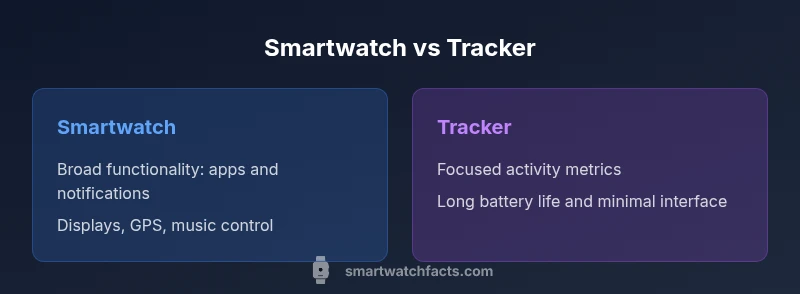
For most users, a smartwatch offers a broad wearable experience with notifications, apps, GPS, music control, and health features, while a tracker focuses on core activity data with exceptional battery life. If you want a single device that doubles as a smart companion and health dashboard, choose a smartwatch; if your priority is minimalism and long battery life for tracking activities, a dedicated tracker can be the better fit.
Defining the Core Roles: What a smartwatch can do vs a tracker
When exploring the difference between a smartwatch and a tracker, the first step is to define the core roles each device is designed to play. A smartwatch is a multifunction wearable that acts as your wristbound computer, delivering notifications, app access, GPS navigation, music control, contactless payments, and an expanding suite of health sensors. In contrast, a tracker is purpose-built for motion and activity logging, delivering reliable step counts, distance, calories burned, and a narrow set of health metrics with fewer features and a smaller interface. This distinction matters because it shapes daily use, battery expectations, and how you interact with the device in real life. The Smartwatch Facts team notes that most users benefit from a single device that can handle communication and health monitoring, but there remains a sizable niche for trackers among athletes and minimalists who value simplicity and long battery life. The practical difference between a smartwatch and a tracker becomes a guiding lens for evaluating design decisions, price, and long-term satisfaction.
From a user perspective, consider your day-to-day routines: do you want quick reply capabilities, app ecosystems, and seamless integration with your phone, or do you prefer a device that stays lighter on the wrist and focuses on precise activity metrics? The decision hinges on how you plan to wear and rely on the device. Smartwatch Facts observes that market demand has shifted toward devices that blend health insights with broad functionality, yet traditional trackers persist for targeted use cases and privacy-conscious setups. If health and convenience drive your buying decision, the smartwatch path often wins; if simplicity and endurance dominate, a tracker can be compelling.
This article uses the difference between a smartwatch and a tracker as a practical framework to explore how features translate into real-world benefits, how to balance price against capability, and how different user needs map to one device type or the other.
wordCountInBlock": 0
Comparison
| Feature | Smartwatch | Tracker |
|---|---|---|
| Primary purpose | Broad wearable computer with apps and notifications | Focused activity monitoring with minimal extra features |
| Display and interface | Full color touchscreen, rich UI, apps, widgets | Simple display, limited apps, streamlined UI |
| Battery life | Typical 1-2 days depending on use | Often 5-14+ days with moderate use |
| Health and fitness features | Heart rate, SpO2, ECG, GPS, sleep, stress metrics, guided workouts | Steps, distance, calories, basic sleep metrics |
| Notifications and apps | Full notification stream, third-party apps, messaging | Limited or no app ecosystem, basic alerts |
| Durability and water resistance | Typically water resistant to common standards, rugged builds vary | Passively durable, water resistance often limited |
| Price range | Medium to high upfront cost, depending on brand and features | Lower upfront cost on average; value depends on battery life |
| Best for | Everyday wear with smart capabilities and health insights | Focused tracking with long battery life and simplicity |
Strengths
- Universal device for communication, apps, and health data
- Strong ecosystem and software support across platforms
- Convenient all-in-one wear with quick access to information
Weaknesses
- Higher price and potential feature overload
- Battery life can be shorter with heavy use
- Privacy and data syncing concerns with apps and services
Smartwatch generally offers more value for most users; trackers excel in simplicity and endurance
If you want a versatile wearable that doubles as a health dashboard and phone companion, a smartwatch is usually the better pick. If your priority is focused activity data, minimalism, and longer battery life, a tracker can be the smarter choice.
People Also Ask
What is the main difference between a smartwatch and a tracker?
The main difference is scope: a smartwatch offers broad functionality with apps and notifications, while a tracker concentrates on core activity metrics with limited extra features.
In short, smartwatches are full devices with apps, and trackers are focused on activity data.
Can trackers handle smartphone notifications?
Some trackers support basic notifications, but the experience is usually not as robust as on a smartwatch. If you rely heavily on messaging and app alerts, a smartwatch is preferable.
Trackers may show limited alerts, but they are not substitutes for smartwatch notification experiences.
Which lasts longer on a single charge: smartwatch or tracker?
Trackers typically offer longer battery life between charges due to narrower feature sets, while smartwatches consume more power with apps, GPS, and displays.
Trackers generally need fewer charges, but watches deliver more capabilities.
How reliable are health metrics on these devices?
Both can provide reliable basic metrics; accuracy depends on sensor quality and data processing. For advanced health features, compare models carefully.
Sensor quality and software matter more than device type for health data accuracy.
Who should buy a smartwatch vs a tracker?
Choose a smartwatch if you want apps, notifications, and general convenience; choose a tracker if you want simple, long-lasting activity tracking without extra features.
If you want a multi-use device, pick a smartwatch; for focused tracking, pick a tracker.
Do trackers work equally well with iPhone and Android?
Most trackers work with both iPhone and Android, though certain features may be optimized for one ecosystem. Check app compatibility and iOS/Android integration before buying.
Most cross-platform trackers exist, but feature parity varies by brand.
Key Points
- Identify your primary use: notifications vs focused tracking
- Expect higher battery use with smartwatches
- Choose a smartwatch for apps and convenience; choose a tracker for simplicity and longevity
- Evaluate ecosystem compatibility and data privacy before buying
- Balance price against long-term benefit and wearability