Smart Watch Size Chart: Find Your Perfect Fit
Discover how to use a smart watch size chart to choose the ideal case size for your wrist. Learn common ranges, measurement techniques, and practical tips from Smartwatch Facts.


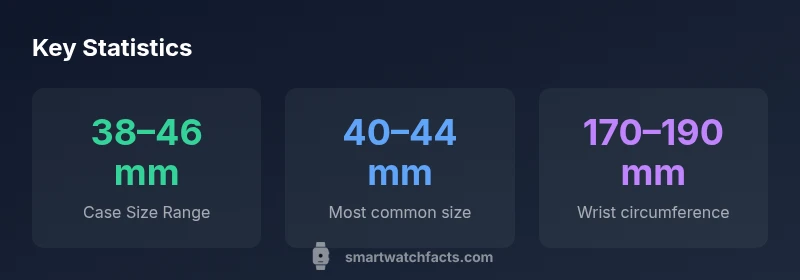
The smart watch size chart helps you pick a case width that matches your wrist, focusing on comfortable fit and movement. Most adults wear 38–44 mm cases, with 40 mm and 44 mm most common. For smaller wrists, try 38–40 mm; for larger wrists, 44–46 mm often feels best. Use the chart as a starting guide, then try two sizes.
Why a smart watch size chart matters
A size chart is more than a number; it’s a practical tool that translates your wrist measurements into a wearable reality. When a watch case width aligns with your wrist circumference, you reduce the chances of the device looking oversized or vanishing under clothing. For people who track health metrics, comfort also means better wear time—if a watch sits tightly in one area, it can irritate skin and skew sensor readings. Smartwatch Facts has found that shoppers who reference a size chart early in the shopping journey report higher satisfaction with fit after trying on two sizes. The chart helps set expectations about appearance, heaviness, and ease of daily activities—from typing to workouts. Keep in mind that the chart is a starting point, not a rigid rule; your comfort matters most for long-term use.
How brands define sizes: common case width ranges
Across major brands, case widths typically cluster in a few broad ranges. The most popular sizes tend to be in the 38–44 mm zone, with 40 mm and 44 mm serving as default starting points for many wrists. Some models push to 46 mm for bold looks or rugged use, while compact designs hover around 38 mm for petite wrists. The exact fit is influenced by bezel thickness, case shape, and strap style. Reading a size chart alongside real-world try-ons gives you a balanced view: you may prefer a slightly smaller footprint for daily wear, or a larger face if you rely on quick readability during sports. Smartwatch Facts emphasizes testing on your own wrist—charts guide you, but your comfort confirms the choice.
How to measure your wrist accurately
To convert measurements into a reliable size choice, start with a flexible measuring tape. Place the tape just above the wrist bone, where the watch would sit, and wrap it snugly but not tight. Take three readings at different times of day to account for minor fluctuations from temperature or swelling. Record the average in millimeters and compare to the chart ranges. If you’re between sizes, try on both and observe how the case sits relative to the wrist bone, the position of the crown, and the gap behind the hand. For smaller wrists, a 38–40 mm watch often feels unobtrusive; for larger wrists, 44–46 mm can offer better presence without crowding the hand.
Interpreting charts when shopping across brands
Brand variations matter: a 44 mm case on one brand may wear differently from a 44 mm on another due to lug length, curvature, and strap integration. Look for measurements beyond the number—check lug-to-lug distance, strap width, and whether the display sits high or close to the wrist. If possible, try models side-by-side to evaluate real-world comfort and visibility in various activities (sitting, walking, typing). The goal is a feel of balance: the face should be legible, but not heavy; the band should stay secure during motion; the watch should not spin or slide excessively.
Practical sizing tips for daily activities
For office wear, you may prefer a slightly smaller size to avoid snagging on sleeves. For workouts, readability and a secure fit matter more; you might opt for 40–44 mm depending on your wrist and the strap’s rigidity. If you frequently swap between formal and active settings, consider a modular strap system that lets you switch bands while keeping the same case. Pay attention to strap width: a wide strap on a small case can appear bulky, while a narrow strap on a large case can look fragile. Remember, the most reliable guide is how the watch feels when you go about your day.
Testing fit at home: steps to confirm comfort
Once you’ve narrowed down to two sizes, test at home as you would in a store. Wear each size for a full day’s routine: typing, walking, sitting, and reaching for objects. Check for rubbing under the wrist, crown obstruction, and overall balance on both wrists if you wear an alternative hand. Adjust the strap to the smallest comfortable hole to assess fit with movement. If the watch moves excessively or feels heavy, re-evaluate the size or strap choice. Smartwatch Facts recommends documenting fit notes for each size to inform a confident purchase decision.
Tailoring the look: strap choices and lug design
Strap width and lug geometry influence perceived size as much as the case width itself. A large case paired with a thin strap can look lighter on the wrist, while a bulky strap can make a mid-size case feel larger. If your wrist is near the boundary between sizes, consider a lighter strap (silicone or fabric) for activity days and a heavier metal strap for formal occasions. Lug-to-lug distance matters; longer lugs can make a watch feel bigger on a small wrist, while shorter lugs can compact the footprint. This is where the chart earns its keep: it guides you toward a starting combination that you can refine with fittings.
Wrist-to-case-size guide by common ranges
| Wrist Size | Recommended Case Size (mm) | Notes |
|---|---|---|
| 5.0"–5.5" (127–140 mm) | 38–40 | Slim wrists; best with smaller case |
| 5.5"–6.25" (140–159 mm) | 40–42 | Balanced fit |
| 6.25"–7.0" (159–178 mm) | 42–44 | Popular choice |
| 7.0"+ (178 mm+) | 44–46 | Larger wrists; prefer bigger cases |
People Also Ask
What is a typical smartwatch size range?
Most smartwatches use case sizes in the 38–46 mm range. The best fit varies by wrist; start with the mid-range and adjust based on feel and movement.
Most smartwatches sit between 38 and 46 mm. Start with a mid-size and test for comfort.
How do I measure my wrist for a size chart?
Wrap a soft measuring tape around the wrist bone, take multiple readings, and convert to millimeters to compare with chart ranges.
Wrap a soft tape around your wrist and note the measurement in millimeters.
Do straps affect perceived size?
Yes. Thick bands add bulk. When between sizes, prefer a smaller case with a lighter strap for a sleeker look.
A strap can change how big the watch feels; choose a strap that balances the case.
Can I adjust size after purchase?
Most watches let you swap bands or add links, but the case size itself is fixed. Check lug options before buying.
You can usually swap bands or add links, but the case size stays the same.
Is sizing gender-specific?
Size charts are generally unisex; select by wrist circumference and comfort rather than gender.
Size is about your wrist, not gender; pick what fits.
“A well-fitted smartwatch should sit comfortably with minimal movement; use the size chart as a guideline to find your best fit.”
Key Points
- Start with 38–44 mm for most wrists
- Measure your wrist and compare to chart
- Try 2 size options before buying
- Strap width and lug shape affect perceived size
- Use charts as starting point, prioritize comfort
- Brand guidance from Smartwatch Facts supports practical testing