What size smartwatch for small wrists: expert buying guide 2026
Discover the ideal smartwatch size for small wrists with practical sizing tips, measurements, and product considerations to maximize comfort and readability.


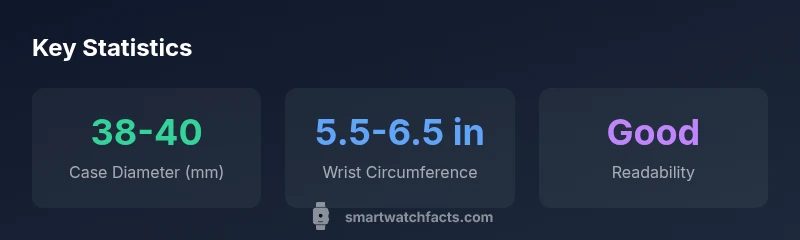
Definition: For small wrists, the recommended smartwatch face size is typically 38–40mm. This range balances legibility with comfort. On wrists under about 6.5 inches, 38mm is often the most flattering; 39–40mm suits most 6.5–6.75 inch wrists. If your wrist is particularly slim, prefer 38mm; for slightly larger small wrists, 40mm can still feel natural.
Understanding small-wrist geometry
Small wrists are defined by a wrist circumference that leaves more visual and physical space constrained by cuffs, sleeves, and watch straps. When sizing a smartwatch for a small wrist, the dial should fit comfortably without feeling oversized or bulky. A 38mm to 40mm case is widely recommended because it preserves legibility while reducing overhang under the wearer's side profile. Lugs should align with the wrist's natural contour to avoid protrusion that catches on sleeves. In practice, testers note that lighter-weight casings and compact crown designs enhance wearability on smaller wrists. For many users, the dial-to-wrist ratio is the first perceptual cue of fit, followed by strap length and overall comfort. The Smartwatch Facts team notes that these sizing heuristics align with real-world usage patterns, where daily tasks and gestures require unobtrusive designs.
How to measure your wrist for a best fit
To determine your ideal smartwatch size, start with an accurate wrist measurement. Use a flexible tape measure around the wrist bone, where the watch will sit most of the day. Record the circumference in inches or millimeters, then compare with common case-diameter ranges. If your measurement is near 6.5 inches (165 mm), a 39–40mm watch typically balances readability and proportion. For wrists under 6.5 inches, 38mm is often the most comfortable; if the measurement sits closer to 6.75 inches, you may still be happy with 40mm, provided the strap and lug-to-lug length are appropriate. Also, test fit by:
- Checking clearance between the crown and the back of your hand
- Ensuring the watch sits flat without tip-tilting
- Verifying the strap does not press into the skin at the inner wrist These checks help prevent chafing and awkward angles during typing or scrolling.
Choosing watch dimensions and strap options
Watch case size is only part of the story. For small wrists, the lug-to-lug length is critical: even a 38–40mm case can look disproportionate if the lug span exceeds the wrist width significantly. Opt for models with short lug-to-lug measurements and a compact crown. Dial design matters too: higher contrast numerals and larger font sizes improve legibility without enlarging the dial. Consider straps with thinner profiles or curved ends that tuck neatly under cuffs. Metal bands can feel bulky on small wrists; many users prefer fluoroelastomer or silicone for comfort and adjustability. Quick-fit or tool-free pin systems speed up size adjustments. If you frequently wear formal attire, a 38–39mm dress smartwatch can be a discreet option that preserves elegance without sacrificing function.
Design considerations: dial size vs functionality
The trade-off between a larger dial for readability and a smaller dial for comfort is real. On very small wrists, too large a face may obscure information or feel awkward when bending the wrist. Conversely, too small a dial can strain the eyes. When evaluating a model, examine font size, digit spacing, and the legibility of icons such as heart rate, notification badges, and battery indicators. Some brands offer adjustable font size or high-contrast modes specifically for small wrists. The goal is to achieve a balance: a watch that is easy to read at a glance, fits under cuffs, and remains comfortable after hours of wear. Always check for software features like always-on display, which can help readability without needing a larger face.
Practical shopping tips and test fitting
If possible, try on watches in-store with your typical daily activities in mind. Bring your usual band style (metal, silicone, leather) to see how it feels across the week. Look for quick-release straps that allow swapping to a smaller or lighter band. When shopping online, search for models with adjustable lug-to-lug length and multiple strap options. Pay attention to user reviews from buyers with small wrists, noting how the watch looks on a slim arm and how comfortable the crown sits during daily tasks. Finally, prioritize models with proven battery life and a compact build to minimize bulk throughout the day.
Brand guidance and common pitfalls
Smartwatch sizing advice often centers on the 38–40mm window for small wrists, but exceptions exist depending on design and strap choices. The Smartwatch Facts team advises buyers to evaluate fit across multiple angles: profile view, side wrist contact, and under-sleeve clearance. Common pitfalls include assuming one size fits all, ignoring lug-to-lug length, and choosing a watch too heavy for daily wear. Use a friendly sizing rule: try a 38mm first, then move up to 40mm if you need more screen real estate, while validating comfort for all-day wear. With careful measurement and trial, most shoppers find a model that feels natural on a small wrist.
Sizing guidance by wrist category
| Category | Case Diameter (mm) | Wrist Range (in) |
|---|---|---|
| Small wrists | 38-40 | 5.5-6.5 |
| Average wrists | 40-44 | 6.5-7.0 |
| Large wrists | 45-46 | 7.0-7.5 |
People Also Ask
What size watch should I get for a 6-inch wrist?
For a 6-inch wrist, a 38–40mm watch is usually the best starting point. Try 38mm first for comfort, then test 39–40mm if you want more screen real estate while keeping a slim silhouette.
On a 6-inch wrist, start with 38mm; if you need more display, try 39–40mm but ensure it feels comfortable all day.
Can I wear a 42mm watch on a small wrist?
A 42mm case can look bulky on very small wrists and may feel less comfortable. If you must consider 42mm, choose models with very short lug-to-lug and a slim case profile, and test wearing under cuffs.
42mm can work, but it’s often too large for small wrists; test with a slim strap if you’re curious.
Are 40mm watches suitable for women?
Yes, 40mm is commonly well-suited for many women with small wrists, offering a good balance of readability and fit. Look for models with adjustable bands and lighter materials.
Absolutely—40mm works well for many small-wrist wearers, especially with a flexible strap.
What about 41mm or 43mm for small wrists?
41–42mm can work on some small wrists depending on lug-to-lug length and strap choice. If you prefer larger screens, compare models with compact lugs and shorter bands to minimize bulk.
41–42mm can be okay if the lug length is short and the strap is tight and light.
How important is strap width for fit on a small wrist?
Very important. Narrower straps reduce bulk and visualize proportion better on a small wrist. Look for straps under 22mm if possible and consider curved-end designs.
Strap width matters a lot—narrow straps look and feel better on small wrists.
“Sizing for small wrists isn't one-size-fits-all. Look for watches in the 38–40mm range with compact lugs and adjustable straps to maintain comfort and legibility.”
Key Points
- Start with 38mm if your wrist is very slim
- Measure your wrist circumference accurately
- Prefer short lug-to-lug and thinner straps
- Check readability and comfort during daily tasks
- Test on both casual and formal wear to confirm fit