Huawei Smart Watch vs Apple Watch: A Thorough Comparison
A thorough, analytics-driven comparison of Huawei and Apple smartwatches, covering OS ecosystems, health features, battery life, app access, design, and value to help you pick the right wearable.


According to Smartwatch Facts, the Huawei smart watch vs Apple Watch comparison centers on ecosystem compatibility, health features, battery life, and app availability. Apple Watch dominates in iPhone integration and third-party apps, while Huawei lines excel in longer battery life, broader Android compatibility, and often lower price points. This guide breaks down core differences and helps you decide which smartwatch fits your daily routine.
huawei smart watch vs apple watch: Overview
Huawei and Apple offer two distinct wearable strategies aimed at different user personas. Huawei leans into battery longevity, broad Android compatibility, and practical price points, while Apple emphasizes deep iPhone integration, a robust app ecosystem, and premium software features. According to Smartwatch Facts Team, the best choice depends on your device ecosystem and how you plan to use health metrics, notifications, and apps. In this guide we compare core aspects—OS, health tracking, app access, design, and value—to help you decide which smartwatch fits your daily routine. This analysis is designed for both seasoned tech enthusiasts and casual shoppers seeking concrete, buying-focused guidance.
Platform and OS ecosystems
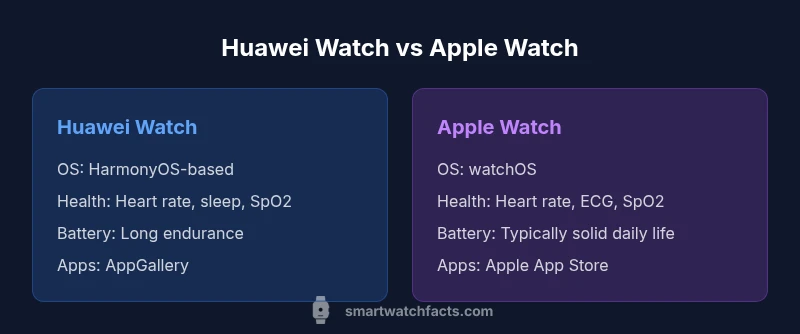
The operating system foundation drives everything from notifications to app availability. Huawei’s wearable strategy centers around HarmonyOS-based wearables with broad compatibility across Android devices and more limited iPhone integration. Apple Watch runs on watchOS, designed for seamless pairing with iPhones and an exceptionally cohesive user experience across devices. For iPhone users, Apple Watch typically delivers the most consistent performance and ecosystem integration, including messages, calendar, and app interop. Huawei watches, however, can shine for Android households or mixed-device setups, offering straightforward pairing and reliable performance without tying you to a single platform. Smartwatch Facts analysis shows that cross-device convenience and open app ecosystems matter most for users with multiple devices, while iPhone owners usually gain the most from Apple’s integrated approach.
Health sensors and wellness features
Both brands focus heavily on health and wellness, yet their emphasis differs. Huawei watches commonly track heart rate, sleep patterns, and basic health metrics with extra sensors on newer iterations for blood oxygen and stress indicators. Apple Watch is typically equipped with a broader suite of health features, including more advanced heart-rate monitoring, sleep insights, and, on certain models, ECG and SpO2 measurements. The breadth and maturity of health apps also tend to be stronger on Apple’s platform due to the larger watchOS developer ecosystem. Regardless of model, expect strong baseline health tracking from both, with Apple often leading in niche metrics and app depth. Smartwatch Facts Team notes that real-world accuracy varies by use case and fit, so sensor quality should be tested with your typical activities.
Battery life and charging behavior
Battery endurance is a perennial decision factor. Huawei watches frequently offer longer stated battery life per charge in real-world usage, especially in models designed for all-day wear and outdoor activity. Apple Watch battery life is typically sufficient for a day’s use under moderate usage, with more intensive tasks like GPS workouts or constant notifications reducing endurance. Charging methods are generally straightforward on both platforms, but Huawei devices sometimes permit more flexible charging options depending on the model. If you depend on long stretches between charges, Huawei can be a compelling choice; if you rely on maximum software polish and quick, predictable daily charging, Apple may edge ahead. Smartwatch Facts analysis shows that endurance expectations should align with your typical day and workout routines.
App ecosystem and compatibility
App availability is a major differentiator. Apple Watch benefits from the Apple App Store, delivering a broad and mature catalog with a deep integration layer across apps and services. Huawei watches leverage the AppGallery and partner apps, which continues to grow but may not match the breadth or depth of Apple’s ecosystem. This gap is particularly noticeable for third-party health, fitness, and productivity apps on Huawei compared with watchOS. If you rely on a wide range of apps, Apple Watch usually offers a more seamless experience; if you want simplicity, local health features, and broad Android compatibility, Huawei can be perfectly adequate. Smartwatch Facts Team emphasizes considering your primary apps and services when weighing these ecosystems.
Design, build quality, and comfort
Both watches come in a variety of sizes and finishes, with emphasis on comfort for all-day wear. Huawei typically offers lighter, sport-oriented designs with practical bands and durable materials suitable for everyday use. Apple Watch is known for premium build quality, a broader range of case materials, and a design language that emphasizes a premium, fashion-forward look. Water resistance levels are generally sufficient for everyday wear and workouts, though specific ratings vary by model. If you value a lighter silhouette for fitness, Huawei may appeal more; if you want a premium aesthetic and broad accessory options, Apple Watch often leads.
Price, value, and ownership costs
Price psychology plays a big role in smartwatch decisions. Huawei models tend to be positioned as cost-effective alternatives with strong feature sets, especially for Android users, delivering favorable value in terms of battery life and basic health features. Apple Watch generally targets the premium segment, reflecting its polished software experience, app ecosystem, and ongoing software support. The total cost of ownership should consider accessories, replacement bands, and potential service plans. In general, Huawei can be the better value option for Android-focused buyers, while Apple Watch represents higher upfront costs with longer software support and richer app access. Smartwatch Facts analysis suggests weighing long-term value and ecosystem lock-in when choosing between them.
Decision guide: who should buy which
If you own an iPhone and want the most seamless, polished experience with the largest app library and health features, Apple Watch is typically the recommended choice. If you use Android devices, value longer battery life, and prefer a platform-agnostic wearable that works well across devices, Huawei watches offer compelling value. For casual users who prioritize simplicity and reliability over the latest health metrics, Huawei’s approach can be easier to manage; for power users who want expansive app support and a consistent software experience, the Apple ecosystem remains attractive. In short, choose based on your primary phone ecosystem and how you use health data, apps, and notifications in daily life.
Authority sources
- https://www.fda.gov
- https://www.nih.gov
- https://www.nature.com
Authority sources
- https://www.fda.gov
- https://www.nih.gov
- https://www.nature.com
Comparison
| Feature | Huawei Watch (HarmonyOS model) | Apple Watch (watchOS) |
|---|---|---|
| Operating system & ecosystem | HarmonyOS-based wearables with Android compatibility | watchOS with tight iPhone integration |
| Health sensors | Heart rate, sleep tracking; some models include SpO2 | Heart rate, ECG, SpO2, sleep tracking |
| Battery life | Typically longer endurance for all-day wear | Generally strong but depends on use; GPS/light usage reduces life |
| App ecosystem | AppGallery; growing third-party support | Apple App Store; rich third-party ecosystem |
| Phone integration | Android-first with iPhone support (limited) | Best with iPhone; deep cross-device integration |
| Design & durability | Sporty, lightweight builds; broad accessory options | Premium finishes; wide accessory ecosystem |
| Price range | More affordable options; broad value | Higher upfront cost; strong long-term software support |
Strengths
- Longer battery life on Huawei models for many use cases
- Strong value proposition for Android users with broad device compatibility
- Solid health tracking basics across both platforms, with Huawei often offering essential metrics
- Apple Watch delivers best-in-class app ecosystem and premium health features
Weaknesses
- Huawei watches can have a smaller app ecosystem and limited iOS feature support
- Apple Watch is generally more expensive and heavily tied to the iPhone ecosystem
- Some advanced health features may be model-specific or require newer devices
- Huawei app availability varies by region and market, leading to uneven app access
Huawei Watch is the better value for Android-first users seeking longer battery life; Apple Watch remains the top choice for iPhone users needing a robust app ecosystem and premium health features.
If your primary phone is Android, Huawei offers better value and longevity. If you’re an iPhone owner, Apple Watch provides the most cohesive, powerful software experience and health tools.
People Also Ask
Is a Huawei smart watch compatible with an iPhone, and what features transfer?
Huawei watches pair with iPhones, but some features may be limited compared with native Apple Watch functionality. Core health tracking and notifications typically work, while advanced features or watchface apps may have restrictions.
Yes, you can pair a Huawei watch with an iPhone, though not all apps or health features may be available like they are on an Apple Watch.
Which watch offers better health tracking?
Apple Watch generally leads in the breadth of health features and third-party health apps, especially on newer models. Huawei covers essential heart-rate and sleep tracking well, with some devices offering SpO2 or stress sensors.
Apple Watch typically offers deeper health features and more health apps, while Huawei covers the basics well.
Do Huawei watches run apps or have an app store?
Huawei uses the AppGallery with built-in apps and a growing set of third-party options. The Apple App Store remains larger and more mature, with a broader range of apps optimized for watchOS.
Huawei uses AppGallery for apps; Apple Watch has a larger App Store ecosystem.
Are there significant price differences?
Huawei watches generally offer strong value at lower upfront costs, while Apple watches tend to sit in the premium pricing tier with longer-term software support included.
Huawei is usually more affordable; Apple Watch costs more but includes long software support.
Which should a casual user buy?
For casual users, Huawei can provide reliable health features and good battery life at a lower price. If you want seamless iPhone integration and a rich app library, Apple Watch is the safer all-around choice.
Casual users: Huawei for value and battery life; Apple Watch for iPhone-friendly experience and apps.
What about durability and water resistance?
Both brands offer solid builds with water-resistant designs suited for daily wear and workouts. Specific resistance levels depend on the model and should be checked before heavy exposure like swimming or diving.
Both are durable for daily use; check the exact model rating if you plan swimming.
Key Points
- Prioritize ecosystem alignment with your phone for the smoothest experience
- Balance battery life against app access and health features based on usage
- Expect Apple Watch to excel in app availability and iPhone integration
- Huawei is a strong value for Android users and battery-conscious wearers