Smart Watch vs Apple Watch: A Comprehensive Side-by-Side Guide
Compare smart watch and Apple Watch across ecosystems, health features, battery life, and price to determine the best fit for your needs in 2026.


For many buyers, the Apple Watch remains the benchmark for health tracking, notifications, and iPhone integration. However, not everyone uses an iPhone, and several Android-first smartwatches offer compelling value, longer battery life, or broader compatibility. This quick comparison of smart watch vs apple watch highlights platform ecosystems, health features, battery performance, price ranges, and your best-use scenarios to help you decide quickly which route fits your needs.
The Core Question: What separates smart watch vs apple watch in practice?
The decision between a smart watch and an Apple Watch is less about a single feature and more about the ecosystem you want to live in. According to Smartwatch Facts, the landscape has evolved into a three-way decision: (1) lean into Apple’s tightly integrated ecosystem for iPhone users, (2) embrace Android-first options for broader compatibility and often better value, or (3) choose a multi-platform smartwatch that tries to balance features across both worlds. The phrase <em>smart watch vs apple watch</em> is widely used to frame this choice, but the most actionable guidance starts with your smartphone, your favorite apps, and your daily routines. The Smartwatch Facts Team emphasizes that there is no one-size-fits-all answer; the best device integrates with how you work, exercise, and stay connected.
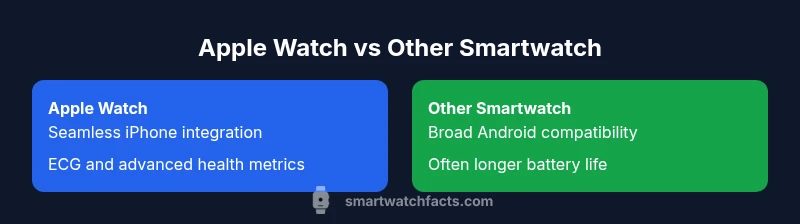
Apple Watch excels when you own an iPhone: deep integration with iOS, Health, and Fitness data, plus ECG, fall detection, and a broad app ecosystem. It’s especially strong for tasks tied to Apple services, like iMessage and Apple Pay. On the other hand, non-Apple smartwatches—often running Wear OS or vendor-specific software—offer broader Android compatibility, independent GPS, longer software support timelines, and a wider price spectrum. The comparison should start with the phone you own, then move to what you actually do with the watch, such as workouts, sleep tracking, or smart home control. In 2026, the best choice is the one that disappears into your day, not the one that demands you adapt to it.
Platform Ecosystems: iOS parity, Android flexibility, and cross-compatibility
Choosing between smart watch vs apple watch hinges on platform ecosystems. Apple Watch is designed to pair seamlessly with iPhone, sharing data through the Health app and leveraging iOS-specific features like Siri, Apple Pay, and Handoff. The Apple-exclusive benefits include very smooth notifications, a consistent app experience, and strong integration with services you already use. For Android users, or those who want a cross-platform experience, many smartwatches run Wear OS or other platforms that support a mix of apps from Google Play, Samsung, Fitbit, and more. While these options generally provide solid health tracking, the app quality and update cadence can vary by model and manufacturer. The Smartwatch Facts team notes that this ecosystem emphasis matters more than any single sensor, because the value you derive is shaped by app availability, notification fidelity, and how often you rely on features like Google Assistant or Samsung Pay.
Platform maturity matters: if you want the broadest third-party app support and the most flexible hardware options, a non-Apple option may serve you better. If you want a polished, highly reliable experience with the richest set of native health features on a single platform, Apple Watch is typically the smarter pick. In practice, this decision reduces to whether your phone and your preferred apps align with one ecosystem, because this alignment minimizes friction and maximizes the benefit of features like activity rings, sleep tracking, and workout data. Smartwatch Facts’s guidance is to map the phone you own and the apps you love to the watch you wear, since the ecosystem is the largest driver of long-term satisfaction.
Health Features, Sensors, and Data Quality
Health tracking is a major selling point for most smartwatches, including the Apple Watch and its rivals. The Apple Watch has long offered heart rate monitoring, ECG, SpO2, sleep tracking, and advanced fall detection, all synchronized with Apple Health. Other brands offer competitive sensors as well, including blood oxygen monitoring, barometer-based altitude tracking, and multi-sport tracking. When you compare smart watch vs apple watch, consider how data is captured, stored, and shared with other apps or services. Some users value Apple Health data as a single source of truth, while others prefer watches that export data to third-party platforms or allow offline analysis. Quality varies by model and year, but the general trend is toward more accurate heart-rate readings, more reliable sleep staging, and richer workout metrics across newer devices. The Smartwatch Facts Team highlights that consistent heart-rate zones, GPS accuracy, and sensor fusion are critical for long-term insights, especially for fitness goals or medical-style monitoring. Your choice should reflect what you plan to measure and how you plan to use the data in daily life.
App Ecosystem, Customization, and Watch Faces
One of the practical differences in the smart watch vs apple watch debate is app ecosystem breadth and customization. Apple Watch benefits from a large, curated App Store, highly polished watch faces, and a consistent experience across devices. It is easy to customize complications, install apps, and tailor the watch to daily tasks such as reminders, payments, and transit updates. Non-Apple watches vary in app ecosystems: some use Wear OS, some rely on brand-specific stores, and others rely on a mixed approach. In many cases, you’ll find excellent fitness apps, third-party watch faces, and customizable widgets, but some apps may feel less polished or require extra setup steps on non-Apple platforms. The trade-off often comes down to control versus convenience: Apple’s controlled environment delivers reliability, while Android-first ecosystems offer flexibility and broader hardware choices. The Smartwatch Facts Team recommends evaluating the apps you use most, the speed at which updates arrive, and how freely you can customize notifications, shortcuts, and watch faces across your preferred platform.
Battery Life, Charging, and Durability
Battery life and charging speed are practical, everyday considerations that often drive the decision in the smart watch vs apple watch comparison. Apple Watch models typically emphasize a balance between screen brightness, always-on features, and battery life, with many users aiming for a full day of use. Non-Apple watches often push longer battery life, especially in models designed for extended workouts or everyday wear without charging mid-day. Consider charging speeds and whether wireless charging is important for you, since many Android-ready watches offer faster or more flexible charging options. Durability—water resistance, screen protection, and scratch resistance—also varies by model. If you plan to swim with your watch or use it in rugged environments, check the IP and WR ratings, as well as the screen’s glass technology. In 2026, improvements in display efficiency, adaptive brightness, and power management have narrowed the gap, but your choice will still hinge on how often you charge, how you use always-on features, and how much you depend on precise activity data during the day.
Price, Value, and Total Cost of Ownership
Price is a practical factor that often makes or breaks a decision between smart watch vs apple watch. Apple Watch models tend to sit at the higher end of the price spectrum, especially when new features or premium materials are involved. However, Apple Watch owners may experience stronger resale value and longer software support, which can affect total cost of ownership positively over several years. Android-ready watches typically offer a broader price range and more frequent discounts, with some models delivering very good value while offering robust health and connectivity features. The total cost of ownership should account for accessories, bands, and potential service plans. The Smartwatch Facts analysis shows that evaluating long-term value—software updates, accessory ecosystems, and compatibility with your phone—often reveals that the cheapest upfront option is not always the most economical over time. If your priority is a premium, tightly integrated experience on iPhone, Apple Watch commonly justifies the price. If budget or device flexibility is paramount, a well-chosen non-Apple wearable can deliver similar health capabilities at a lower upfront cost and broader compatibility.
Real-World Scenarios: Which One Should You Buy?
To translate the smart watch vs apple watch decision into a real purchase, consider your daily routines and the smartphones you own. If you own an iPhone and rely on Apple services, the Apple Watch is typically the most seamless option, delivering effortless pairing with iMessage, Apple Music, and Apple Fitness+. If you use Android or want a device with broad compatibility and potentially longer battery life, a non-Apple smartwatch with Wear OS or a rival OS can align better with your phone’s features and your budget. Standout use cases include fitness enthusiasts who value accurate sensors and GPS, professionals who require quick access to notifications, and casual users who want a comfortable, stylish wearable without sacrificing essential features. The goal is to choose a device that integrates naturally into your phone’s ecosystem and your everyday tasks, not one that creates extra steps or friction in your day.
How to Decide: A Simple Framework for Your 2026 Purchase
Create a quick matrix in your mind or on paper: (1) which phone you own, (2) which apps you rely on daily, (3) how important health tracking is, and (4) your tolerance for price and charging. If your answers point toward iOS, the Apple Watch is often the best fit, especially for health features and reliable software support. If your answers lean toward Android or cross-platform flexibility, a capable non-Apple smartwatch with robust health sensors and longer battery life may be the smarter choice. Finally, consider the long-term value: software support, resale potential, and the breadth of accessories can swing the decision even after a year or two. By anchoring your decision to these practical factors, you’ll avoid the trap of chasing the latest spec sheet and instead buy a device that genuinely improves your daily life. Smartwatch Facts’s pragmatic approach helps you align hardware with human habits, not the other way around.
Comparison
| Feature | Apple Watch | Other Smartwatch |
|---|---|---|
| OS & App Ecosystem | iOS-centric with strong App Store integration | Android/other platforms with Wear OS or brand app stores |
| Health Features & Sensors | ECG, SpO2, heart-rate, sleep tracking, advanced metrics | Comparable health sensors with varying app quality |
| Battery Life (typical usage) | Typically a full day with smart features on | Often longer battery life depending on model |
| Price Range | varies by model and configuration | varies by model with wider affordability options |
| Best For | iPhone users seeking seamless integration | Android users or budget-conscious buyers seeking flexibility |
Strengths
- Strong health tracking and ecosystem integration for iPhone users
- Extensive app ecosystem and long software support
- Premium build quality and widespread accessory options
- Good resale value on flagship models
Weaknesses
- Higher upfront cost compared to many rivals
- Limited compatibility with non-iPhone devices
- Apple Watch model variations can be confusing for buyers
Apple Watch is the strongest overall choice for iPhone users; non-Apple watches win on Android compatibility and value.
If you use an iPhone and want best-in-class health features with seamless services, Apple Watch is usually the safer bet. If you’re Android-based or budget-conscious, a capable non-Apple smartwatch may deliver similar health metrics at a lower price and with broader compatibility.
People Also Ask
Is Apple Watch compatible with Android phones?
No. Apple Watch is designed to pair with iPhones and relies on iOS for most features. You may be able to connect using limited functions via third-party apps, but the experience will be constrained. For full functionality, use an iPhone with Apple Watch.
Apple Watch pairs with iPhone only for the full feature set.
Do non-Apple smartwatches offer similar health features?
Yes, many Android-compatible watches offer ECG, heart-rate, sleep tracking, and activity metrics. Availability and accuracy can vary by model, but several rivals provide competitive health tracking and sensors.
Many non-Apple watches track health metrics well, though the exact features vary.
Which has better battery life between Apple Watch and competitors?
Battery life varies by model. Some non-Apple watches offer longer endurance in standby or workout modes, while Apple Watch focuses on a balanced daily experience with reliable charging.
Battery life depends on usage; some rivals last longer between charges.
Is the price of Apple Watch justified for most buyers?
For users deeply invested in Apple services, the value of seamless health data and ecosystem makes the price reasonable. If you don’t need top-tier integration, a non-Apple watch can deliver similar features for less upfront.
Value depends on ecosystem and how you’ll use the features.
What should i consider if I own an iPhone?
If you own an iPhone, Apple Watch usually provides the smoothest experience, best notifications, and most reliable health data. Consider storage, model choice, and band preferences to optimize daily use.
iPhone owners typically get the best experience with Apple Watch.
Do all smartwatches have GPS and independent music storage?
Most modern smartwatches include built-in GPS and some storage for music, but features vary by model. Check the exact specs for GPS accuracy and how music is managed on the device you’re considering.
Many watches offer GPS and music, but verify the model’s specifics.
Key Points
- Match your phone to your smartwatch for best integration
- Prioritize health features if fitness tracking is your main goal
- Account for ecosystem lock-in when evaluating long-term value
- Expect broader price options outside the Apple ecosystem