Apple Watch vs Smart Watch: A Thorough Comparison
Compare Apple Watch with generic smartwatches across ecosystems, health features, battery life, and price to choose the best wearable for your needs.


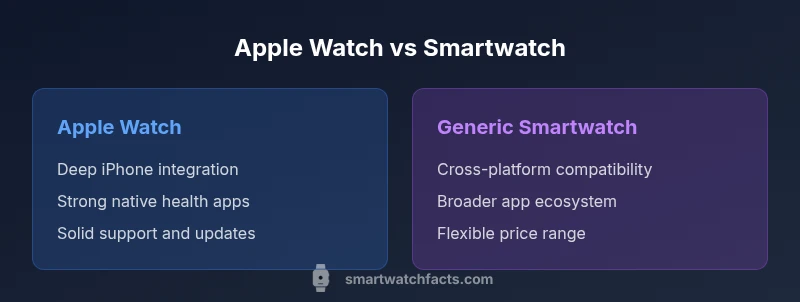
Apple Watch vs smart watch boils down to ecosystem, health features, and everyday use. If you’re fully in the Apple ecosystem, the Apple Watch delivers seamless integration and polished health apps. For broader device compatibility, a generic smartwatch offers wider app choices and cross‑platform support. This comparison outlines core differences to guide your decision.
Overview: The core distinction between apple watch vs smart watch
When evaluating apple watch vs smart watch, the first considerations are ecosystem alignment and intended use. The Apple Watch operates within a tightly controlled ecosystem, while other smartwatches run on platforms such as Wear OS, Samsung's Tizen, or vendor-specific OS. This difference affects app availability, data portability, and the way devices sync with phones and tablets you already own. If you own an iPhone, iPad, and Mac, the Apple Watch offers seamless pairing, quick unlock, and synchronized health dashboards that feel native across apps and services. For Android users or households with multiple platforms, a more generic smartwatch tends to deliver broader compatibility with messaging apps and cross-platform cloud services. The apple watch vs smart watch comparison is not merely about features; it’s about whether your daily routines, habits, and data flows are built around one ecosystem or distributed across several. This matters for notifications, exercise tracking, and even how notifications appear on your wrist. According to Smartwatch Facts, ecosystem maturity often drives long-term satisfaction.
section
Comparison
| Feature | Apple Watch | Generic Smartwatch |
|---|---|---|
| Ecosystem alignment | Best with iPhone/Mac, seamless sync | Broad compatibility across Android and iOS |
| App ecosystem | Rich native apps and services | Wider cross-brand app options |
| Health features | Advanced metrics on select models | Solid health basics with third-party options |
| User experience | Polished interface and optimized workflows | Open experience with varied UX by brand |
| Price range | Higher upfront cost for flagship models | More price variety depending on brand and features |
| Best for | Apple device owners seeking cohesion | Android or multi-device homes seeking flexibility |
Strengths
- Strong ecosystem integration with iPhone and Mac
- Market-leading health/fitness features on flagship models
- Excellent after-sales support and long software updates
- Resale value remains solid for popular models
Weaknesses
- Limited cross-platform features on Apple Watch
- Higher price brackets for premium options
- Requires iPhone for full functionality in many cases
- Some apps and features depend on model year
Apple Watch is the clear winner for iPhone users; generic smartwatches win for cross-platform versatility.
If you own Apple devices, the Apple Watch delivers unrivaled integration and refined health features. If you need broad compatibility and a wider app ecosystem, a non‑Apple smartwatch offers better flexibility across platforms.
People Also Ask
What is the main difference between Apple Watch and other smartwatches?
The Apple Watch integrates tightly with Apple's ecosystem, offering polished health features and seamless device syncing. Other smartwatches vary by platform, delivering broader compatibility and a wider range of apps. Your choice hinges on ecosystem preference and how you use apps daily.
The main difference is ecosystem. Apple Watch works best with Apple devices and health apps, while other smartwatches support more cross-platform use and a wider app variety.
Can an Apple Watch pair with an Android phone?
Apple Watches are designed primarily for iPhones. Some basic notifications may work with Android, but core features like setup, messaging, and health data syncing require an iPhone.
An Apple Watch works best with an iPhone; with Android you’ll miss core features.
Are generic smartwatches as accurate for health tracking as Apple Watch?
Health tracking quality varies by brand and model. Apple Watch models tend to offer strong heart-rate and activity metrics, while other brands may excel in niche sensors or open-platform apps.
Health tracking quality varies; Apple Watch usually leads in consistency, but other watches offer solid options too.
How does battery life typically compare?
Battery life depends on use and model. In general, more feature-rich models may require more frequent charging, while simpler wearables can last longer between charges.
Battery life varies by model; heavier use means more frequent charges.
Is there a significant price gap I should expect?
Price ranges are broad across both categories. Apple Watch variants tend to sit in the higher tier, while generic smartwatches include budget and premium options.
Price varies a lot; Apple Watch tends to be pricier, with more affordable non-Apple options available in the market.
Which is best for fitness tracking and workouts?
For workouts, both can track fundamental metrics; Apple Watch excels with integrated fitness apps on iPhone, while other watches offer versatile sensors and third-party app support for diverse routines.
Both track workouts well; Apple Watch integrates tightly with iPhone apps, others offer broader third-party options.
Key Points
- Choose Apple Watch for seamless iPhone integration and health focus.
- Pick a generic smartwatch if you need cross-platform compatibility.
- Consider price and update cadence when evaluating value.
- Account for ecosystem comfort and data privacy in your decision.