Is Smart Watch the Same as Apple Watch? A Practical Comparison
Discover whether a generic smart watch differs from the Apple Watch. This analytical guide explains ecosystems, compatibility with iPhone, features, pricing, and buying guidance.


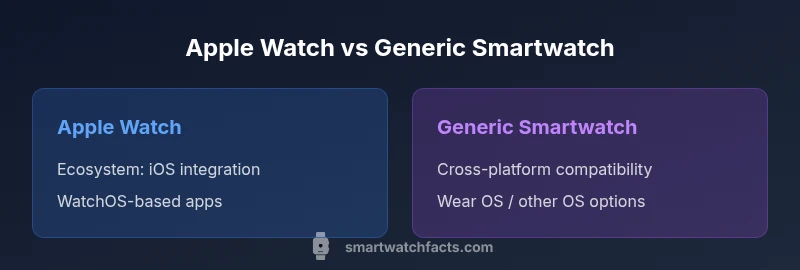
No. A smart watch is a broad category of wearable devices that tells time, tracks activity, and runs apps, while the Apple Watch is a specific product line with its own watchOS, tight iPhone integration, and a curated app ecosystem. This distinction matters for compatibility, features, and value depending on your smartphone and usage goals.
is smart watch and apple watch the same
The short answer to is smart watch and apple watch the same is no. Smart watches describe a broad category of wearable tech that pairs with smartphones to display notifications, track fitness, and run apps. The Apple Watch, by contrast, is a single product line with its own operating system (watchOS), a curated app ecosystem, and a deep, device-specific set of features designed to work best with an iPhone. According to Smartwatch Facts, the distinction between a general smartwatch and Apple Watch is meaningful for ecosystem lock-in, software updates, and the type of experiences you can expect. Keep in mind that even within the broad category, there are many models and brands, each with its own strengths and compromises. This nuance is essential when evaluating whether to buy an Apple device or a more platform-agnostic smartwatch.
As you weigh your options, consider how you use your phone daily, whether you value seamless iPhone integration, and how important health metrics, third-party apps, and accessories are to your routine. The Smartwatch Facts team emphasizes that the ecosystem you pick will shape not only your device’s capabilities but also your long-term satisfaction. The goal is to align the device with your everyday habits rather than chasing a generic label of “smartwatch.”
What counts as a smartwatch?
At its core, a smartwatch is a wearable device that displays time and offers more than a traditional watch. Practically, it should pair with your phone, present notifications, support health and fitness tracking, and run apps or widgets that extend its usefulness. But the breadth matters: some smartwatches focus on fitness and health sensors, while others emphasize app ecosystems, battery life, or fashion. When evaluating options, separate the hardware hardware specs (screen type, durability, sensors) from software experience (operating system, app selection, and updates). Within this framework, Apple Watch represents a polished, tightly integrated experience that is optimized for iPhone users, while generic smartwatches provide broader cross-platform compatibility and a wider price range. For shoppers, the key is to identify which traits matter most: health metrics, app quality, or platform flexibility.
Apple Watch's ecosystem and iPhone tie-in
Apple Watch is designed to be a pillar of the Apple ecosystem. Its watchOS platform delivers integrated experiences like unlocking your iPhone with a glance, seamless handoffs between apps, and synchronized health data with the Health app. Fitness features—such as guided workouts, advanced metrics, and Fitness+ integration—appear as a cohesive package, and the App Store on watchOS offers a curated set of apps optimized for a wrist-based interface. This deep integration translates into predictable performance, consistent updates, and a high level of reliability if you own other Apple devices. However, this tight coupling also means limited functionality if you don’t use an iPhone or prefer cross-platform software. Smartwatch Facts’s analysis notes that the Apple Watch excels in consistency and user experience on Apple hardware, which is a central reason many buyers stick with the brand.
From a practical standpoint, Apple Watch’s value comes from longevity within Apple’s hardware ecosystem, not necessarily from universal compatibility or broad third-party support. If you rely on iMessage, Apple Pay, or Fitness+ in your daily workflow, the Apple Watch can be a compelling choice that feels like a natural extension of your phone. For those who favor non-Apple devices, the limitations are more obvious and should be weighed against potential convenience gains elsewhere.
Other popular smartwatch ecosystems
Beyond Apple, the smartwatch landscape is diverse. Wear OS, Samsung’s former Tizen-based watches, Fitbit OS, and Garmin OS represent a range of design philosophies, app ecosystems, and sensor packs. Wear OS emphasizes Google services and broad Android compatibility, offering deep integration with Google Maps, Google Assistant, and a wide array of third-party apps. Apple Watch’s closest non-Apple competitor, in terms of app availability and health-focused features, often lands on Wear OS devices or Fitbit OS watches, though the experience will feel different due to the underlying OS and app design.
Smartwatches from multiple brands often feature different strengths: longer battery life on some models, more rugged durability, or specific sport-focused sensors. Brand-wide differences matter for app availability and software updates. Consumers should weigh whether cross-platform compatibility, battery longevity, or specific health metrics are more valuable in their daily routine. Smartwatch Facts notes that the best choice frequently hinges on a person’s smartphone platform, preferred apps, and the kinds of workouts or notifications they care about most.
Design, pricing, and durability differences
Design language and price are powerful buying cues. Apple Watch models typically lean toward premium materials, refined finishes, and a premium price tier, reflecting the external hardware and the software experience bundled with the ecosystem. Generic smartwatches occupy a wider price spectrum, from budget-friendly options to feature-rich models, enabling a broader range of budgets and style goals. Durability also varies by model; some watches emphasize ruggedness for outdoor use, while others prioritize fashion and comfort for daily wear. Battery life can differ dramatically across platforms; many Android-friendly watches offer longer life on lighter usage, but heavy health-tracking and always-on displays can shorten endurance. When shopping, compare not only price but also included sensors (heart-rate, SpO2, GPS), build quality, and the availability of replacement bands. The goal is to find a balance between cost, durability, and the features essential to your day-to-day activities.
From a consumer perspective, you should assess whether the longer-term software support and perceived resale value of an Apple Watch justify the higher upfront price, or whether a broader hardware ecosystem and potentially lower costs of a non-Apple alternative better suit your needs.
Operating systems and app ecosystems
The software layer is the heartbeat of any smartwatch. Apple Watch runs watchOS, designed to deliver polished notifications, a curated app store, and deep integration with iPhone hardware and services. Generic smartwatches may run Wear OS, Fitbit OS, Garmin OS, or Samsung’s previous platforms, each with distinct app stores, developer ecosystems, and update cadences. Wear OS emphasizes Google services, while Garmin and Fitbit focus on health and athletic performance with different levels of third-party app support. Regardless of OS, you should consider how easy it is to install apps, find reliable updates, and access on-device features such as weather, maps, or music control. The choice impacts your daily experience, including how smoothly devices sync with your phone and how easy it is to access your preferred apps while you’re on the move.
Compatibility and use-case scenarios
If you own an iPhone, an Apple Watch provides the most seamless experience, especially for fitness, payments, and notifications. If you use an Android phone—or want to keep options open—the best general approach is to pick a smartwatch that runs Wear OS or another OS that prioritizes cross-platform compatibility. For fitness enthusiasts, Apple Watch offers robust health features, but a non-Apple watch may offer longer battery life, more rugged durability, or sport-specific sensors that match your workouts. For professionals who rely on a wide app library, a general smartwatch with broader app support could be the better choice, as it won’t lock you into a single ecosystem. When assessing models, create a short list of must-have apps and verify cross-platform compatibility and data portability.
Smartwatch Facts’s guidance in 2026 highlights that practical usage matters more than brand allegiance. Align your purchase with daily routines, ecosystem compatibility, and the kinds of apps and services you rely on most.
How to choose based on budget and needs
Your budget helps narrow down the field quickly, but value is not only price. Start by listing non-negotiables: do you need ECG or SpO2 monitoring? Is cross-platform compatibility a must? Do you want deep iPhone integration or a flexible ecosystem that works with Android as well? From there, set priorities: app availability, health metrics, battery life, or fashion and comfort. If you value a seamless, polished experience and own an iPhone, the Apple Watch is often the default choice. If you want broader device compatibility, lower price points, or tailored sport features, a generic smartwatch may deliver better value. Finally, consider accessory ecosystems, such as bands and chargers, which can influence long-term satisfaction.
In applying these criteria, Smartwatch Facts recommends a practical, needs-first approach rather than chasing headlines about “the best smartwatch.” The right device is the one that integrates well with your everyday life and your preferred apps.
Real-world examples and buyer personas
Consider three common personas. The Apple-leaning user prioritizes flawless iPhone integration, premium hardware, and Fitness+ style experiences; they’re often willing to pay a premium for a cohesive ecosystem. The Android-first user appreciates cross-platform flexibility, broader app support, and longer battery life in some models; they may trade some Apple-specific polish for versatility. The health-focused buyer values comprehensive sensors, clear data management, and reliable metrics, which can be found across brands but with varying levels of data portability. In practice, your daily tasks—notifications, health tracking, workouts, and app usage—shape which platform feels most natural. By mapping tasks to features, you’ll make a more confident choice than simply following brand prestige.
Across these examples, the overarching lesson from Smartwatch Facts in 2026 is that the decision is less about a generic label and more about ecosystem alignment, data portability, and the kinds of experiences you want to have on your wrist.
Practical takeaways and final checks
- Align your choice with your smartphone ecosystem to maximize integration.
- Prioritize health metrics and app ecosystems that match your routines.
- Consider battery life and maintenance needs when comparing models.
- Check data portability and cross-platform compatibility for future-proofing.
- Inspect build quality, comfort, and strap availability for long-term satisfaction.
Additional considerations: future-proofing and updates
Technology evolves rapidly in wearables. Look for devices with a solid update cadence, strong developer support, and clear pathways for data access and export. Apple typically provides long-term updates for its devices, while third-party platforms may vary in how long they receive major software upgrades. If future-proofing is important, consider how your preferred ecosystem is likely to evolve over the next several years and select a platform that can adapt to new health features, app categories, and security updates.
Comparison
| Feature | Apple Watch | Generic smartwatch |
|---|---|---|
| Ecosystem & compatibility | Tightly integrated with iPhone; best on Apple devices | Cross-platform or Android-first; varies by brand |
| Operating system | watchOS (Apple) | Wear OS / Fitbit OS / Garmin OS depending on model |
| App ecosystem | Curated App Store with Apple-tuned experiences | Wide range; quality varies by platform, some apps limited on non-Apple watches |
| Health sensors | ECG, SpO2, heart-rate, advanced metrics | Heart-rate and basic sensors; some models add SpO2 but feature set varies |
| Battery life | Typically a day or two with moderate use | Depends on model; some offer longer life with lighter features |
| Price range | Higher upfront cost; premium tier | Wide range; often more affordable options available |
| Phone compatibility | Best with iPhone; limited functionality on Android | Cross-platform; often works best with Android and iPhone depending on brand |
| Durability & water resistance | High-end materials; water resistance typically good | Varies by model; many offer solid water resistance |
| Customization & bands | Premium bands; strong resale value | Broad third-party options; price and availability vary |
Strengths
- Strong health tracking and polished software on Apple Watch
- Excellent iPhone integration and ecosystem reliability
- Extensive accessory and app ecosystem for Apple devices
- Wide range of generic watches with competitive features and price
- Cross-platform flexibility can reduce ecosystem lock-in
Weaknesses
- Higher price and ecosystem lock-in with Apple Watch
- Limited cross-platform functionality on Apple-dominated devices
- Battery life can be shorter with feature-heavy use
- Quality and app availability vary for non-Apple platforms
Apple Watch is best for iPhone users seeking seamless integration; generic smartwatches offer cross-platform flexibility and more budget options
If you own an iPhone and value polished software, health features, and a cohesive ecosystem, the Apple Watch stands out. If you want broader compatibility across Android devices, longer battery life, or more affordable choices, a generic smartwatch can deliver strong performance without locking you in.
People Also Ask
Are Apple Watch and other smartwatches equally compatible with iPhone?
Apple Watch offers the most seamless compatibility with iPhone and Apple services. Other smartwatches may pair with iPhone, but some features and apps are limited or optimized for their native ecosystems.
Apple Watch pairs most smoothly with iPhone. Other smartwatches can work with iPhone, but expect feature limitations.
Can you use a non-Apple smartwatch with an iPhone?
Yes, many non-Apple smartwatches work with iPhone, but you’ll typically gain best results with an Apple device. App availability and feature parity vary by model and OS.
You can use non-Apple watches with iPhone, but expect some features to be limited compared to Apple Watch.
Do smartwatches work with Android, iOS, or both?
Most generic smartwatches run Wear OS or other OSes that support Android and iOS to varying degrees. Apple Watch, however, only runs on Apple devices and is not designed for Android use.
Wear OS and other non-Apple systems work with Android and sometimes iOS; Apple Watch is designed for iPhone only.
Is ECG or advanced health tracking available on all watches?
Advanced health features like ECG are common on premium models but are not universal. Availability depends on the OS and model, so verify spec lists for each device.
ECG features vary by model; check the exact health sensors listed in the product specs.
What should I consider when buying a smartwatch?
Consider your phone ecosystem, preferred apps, health-tracking needs, battery life, and budget. Read reviews about software updates and data portability to avoid future regret.
Think about your phone, apps, health needs, battery life, and budget when buying.
How long do smartwatches typically last?
Durability and software support influence longevity. Apple Watch models tend to receive longer OS support, while third-party watches vary; battery health also declines over time with usage.
Longevity depends on software support and battery health; Apple generally has longer update cycles.
Key Points
- Identify your phone ecosystem first to guide the choice
- Prioritize health sensors and app quality for your use case
- Expect higher price and ecosystem lock-in with Apple Watch
- Explore cross-platform wearables for flexibility and budget
- Consider future-proofing via data portability and updates