Noise Smart Watch vs Apple Watch: A Comprehensive Comparison
A detailed, objective side-by-side look at Noise Smart Watch and Apple Watch, focusing on ecosystem, health features, battery life, and value to help you decide in 2026.


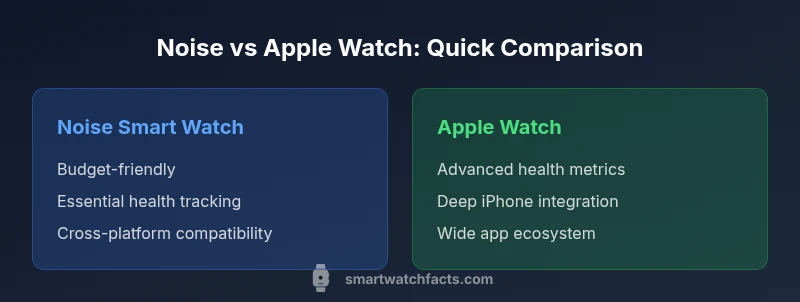
noise smart watch vs apple watch present two different philosophies for wearable tech. noise targets affordability and essential health tracking, while apple watch emphasizes deep health metrics, iPhone integration, and premium build. for most users, noise is best for budget wearables; apple watch shines for iPhone users who want advanced sensors and a seamless ecosystem.
Ecosystem and audience fit
noise smart watch vs apple watch frames the major decision you will make as a shopper. The choice often comes down to ecosystem, price tolerance, and how deeply you want health data integrated into daily routines. According to Smartwatch Facts, noise watches are designed for budget-minded buyers who want reliable activity tracking, notifications, and basic health features without locking into a single platform. In 2026, the gap between the two camps is still pronounced: Apple Watch is best for iPhone users who value seamless app support and a refined software experience, while Noise targets value-conscious buyers who want essential features without paying a premium. If you rely on an iPhone, expect closer integration with Apple services; if you use Android, Noise offers a friendlier entry point with broad compatibility. When you weigh noise smart watch vs apple watch, consider whether app breadth and long-term OS updates matter as much as upfront price.
Design, build, and display choices
Design language and hardware choices influence daily comfort, durability, and perceived value. Noise typically offers a square or rounded aesthetic with lightweight materials aimed at all-day wear and affordability. The display tends to provide decent brightness and legibility for outdoor use, though it may fall short of the Apple Watch in peak-quality visuals. Apple Watch emphasizes premium materials, tighter bezels, and refined crown navigation, yielding a more premium handfeel. When you compare the two, think about screen protection, watch straps, and longevity with daily wear. Noise often relies on standard glass and aluminum bodies that survive everyday use, while Apple Watch uses stronger materials and tighter tolerances. In practical terms, Noise is comfortable for all-day wear and casual workouts, whereas Apple Watch communicates luxury and prestige along with a robust assembly that customers expect from a flagship product.
Health sensors and tracking capabilities
Health tracking is a critical differentiator. Apple Watch has long been associated with ECG, SpO2, fall detection, and VO2 max metrics, along with an extensive workout catalog. Noise devices offer heart rate monitoring, sleep tracking, and blood oxygen sensing on many models, plus menstrual tracking on some variants. The breadth of features on Noise is solid for everyday fitness, but it does not always match the depth and official medical-grade claims of Apple Watch. Smartwatch Facts Analysis, 2026, indicates that users typically value ECG and advanced metrics more on iPhone-heavy workflows, and that the reliability of sensors scales with software support and updates. For the average user, Noise covers the basics effectively, while Apple Watch remains the leader for advanced health insight and third-party health apps.
Software experience and app ecosystem
Software experience drives day-to-day productivity and long-term satisfaction. Apple Watch runs watchOS with tight iPhone integration, including Handoff, Messages, and a thriving app ecosystem. Noise uses its own lightweight OS and relies on curated apps and cloud-based services; the experience is simpler, smoother on budget devices, and easier to maintain on older phones. If you prize deep app compatibility and a polished interface, Apple Watch is clearly ahead. If you prefer quick setup, fewer compatibility headaches, and easy maintenance, Noise sticks to a straightforward approach that many users appreciate. In the noise smart watch vs apple watch comparison, the value of ecosystem depth versus simplicity becomes evident when you consider app speed, notification reliability, and privacy controls.
Battery life and charging philosophy
Battery life is often cited as a practical differentiator. Apple Watch models typically require daily charging under normal usage, especially with GPS workouts and rich notifications. Noise devices, by design, often offer longer apparent on-wrist time for similar daily tasks, thanks to more conservative display settings and fewer resource-intensive features. Real-world usage, however, depends on screen brightness, always-on display, GPS usage, and health-tracking intensity. If you work long shifts or train without frequent charging, Noise may deliver more endurance; Apple Watch compensates with faster wireless charging and efficient background tasks in newer software iterations. In the noise smart watch vs apple watch frame, battery strategy matters as much as the hardware you choose.
Smartphone compatibility and integration
Smartphone compatibility is one of the most consequential factors. Apple Watch is designed for iPhone owners who want seamless notifications, messages, and app delivery. Noise watches aim to bridge ecosystems, offering decent compatibility with iOS and Android but with a caveat: some features require the companion app on iPhone or an Android phone for full functionality. If your day-to-day uses include maps, voice assistants, and third-party fitness apps, Apple Watch has the advantage in polish and uptime. For Android-first users, Noise provides a more flexible experience, but you may miss some iOS-only features. The noise smart watch vs apple watch comparison highlights how device ecosystems shape potential use cases and investment value.
Notifications, calls, and on-wrist smart features
Notifications and calls on the wrist are a key daily touchpoint. Apple Watch supports robust messaging, calling, Apple Pay, and deep app integration that many users rely on. Noise watches offer quick notifications, music control, and basic call handling, but the experience might feel more limited without a broad app ecosystem. If you frequently respond to messages on the go, Apple Watch tends to perform more reliably, with richer notification controls. Noise remains a strong choice for quick glance interactions and lightweight control, particularly when paired with a compatible phone. In the ongoing noise smart watch vs apple watch debate, the question is whether you want the most polished communication experience or a lean, fast-access wearable.
Durability, water resistance, and daily wearability
Durability plays a role in how you will wear and store your watch. Apple Watch Series models offer substantial water resistance and rugged designs, along with a long-term software support window that keeps devices secure for several years. Noise watches emphasize everyday resilience and light water exposure resistance, aiming for affordability without sacrificing basic IP ratings. For swimmers or hikers, Apple Watch’s more proven water handling and stronger case designs may matter more. If you expect rough treatment or frequent outdoor use, the premium build of Apple Watch is worth the extra cost, but Noise remains a practical option for casual wearers who value comfort and simplicity.
Price, value, and total cost of ownership
Pricing remains a primary factor. Noise watches sit in the budget to mid-range tier, delivering essential features at a fraction of the price of flagship wearables. Apple Watch sits in the premium tier, justified by deeper health features, broader app ecosystem, and stronger resale value. In practice, total cost of ownership depends on accessories, warranty terms, and software updates. Smartwatch Facts analysis suggests that the longer you plan to keep the device and the more you rely on health and ecosystem services, the more the value of Apple Watch compounds; however, Noise can offer compelling value for first-time smartwatch buyers or budget upgrades. The noise smart watch vs apple watch decision hinges on your willingness to pay for ecosystem depth versus initial price.
Real-world usage scenarios and usage patterns
For commuters, travelers, and active users, the choice often reduces to which ecosystem aligns with daily routines. Noise watches work well for everyday activity tracking, phone notifications, and casual workouts, while Apple Watch shines in guided workouts, precise health metrics during intense training, and quick access to iOS features. In the context of noise smart watch vs apple watch, the best fit depends on how much you rely on third-party health apps, long-term software support, and the ease of pairing across devices.
Setup, privacy, and data handling considerations
Initial setup is straightforward on both devices but the security and data handling models differ. Apple emphasizes strong privacy controls and transparent data usage within the iOS ecosystem. Noise takes a more open approach with cloud-based services and cross-platform support, which can be convenient but requires mindful permission management. For users who value privacy and data control, Apple Watch and iPhone integration offer a clear advantage, while Noise provides a flexible approach for multi-device households. In the noise smart watch vs apple watch comparison, you will want to review consent prompts, data sharing options, and app permissions before diving in.
Decision framework and quick-start plan
The concluding framework is practical: map your devices, weight ecosystem depth against upfront cost, and test feature needs. If you own an iPhone and want the strongest health suite with a premium software experience, go with Apple Watch. If you want a budget-friendly wearable with solid health basics and broad cross-platform compatibility, Noise is a strong contender. Start by listing must-have features, decide on ecosystem constraints, and then test both devices hands-on if possible.
Comparison
| Feature | Noise Smart Watch | Apple Watch |
|---|---|---|
| Operating system & ecosystem | Noise OS with curated apps; cross-platform support | watchOS with tight iOS integration and broad app store |
| Display quality | Decent brightness; good readability | High-quality OLED with vibrant colors and always-on option |
| Health sensors and metrics | HR, SpO2, sleep tracking; basic metrics | ECG, SpO2, VO2 max, sleep stages, advanced metrics |
| Battery life (typical day) | Longer on-wrist time for basic usage | Typically requires daily charging with GPS usage |
| Price range and value | Budget to mid-range; strong value for essential features | Premium pricing; ecosystem advantages and health depth |
Strengths
- Lower upfront cost and easy onboarding
- Cross-platform compatibility with Noise
- Solid health basics for everyday users
- Apple Watch delivers deep health metrics and iPhone integration
Weaknesses
- Noise may have a smaller app ecosystem and fewer advanced metrics
- Apple Watch price premium; best experience with iPhone
- Some features depend on platform-specific apps or subscriptions
Apple Watch generally offers a deeper health suite and best iPhone integration; Noise delivers strong value for budget-conscious buyers.
Choose Apple Watch if you want top-tier health features and seamless iPhone synergy. Choose Noise for affordability and broad cross-platform usability.
People Also Ask
Is Noise Smart Watch compatible with iPhone and Android?
Noise watches are designed to work with both iOS and Android, but some features may be optimized for one platform. Expect the best results from the Noise companion app on your preferred device.
Noise watches work with both iPhone and Android, but features vary by platform.
Does Apple Watch work without an iPhone?
Apple Watch requires an iPhone for setup and ongoing functionality; some offline features may be available, but the full experience relies on iPhone pairing.
No, Apple Watch needs an iPhone for setup and full use.
Which is better for health tracking?
Apple Watch generally offers deeper health metrics, including ECG and VO2 max, while Noise covers essential health tracking suitable for everyday use.
Apple Watch has more advanced health features.
Can Noise support many third-party apps like Apple Watch?
Noise has a curated app ecosystem with fewer third-party options compared to watchOS; experiences depend on app availability and permissions.
Noise has fewer apps than Apple Watch.
Is there a significant price difference?
Noise watches are budget-friendly; Apple Watch is premium-priced with broader health features and ecosystem advantages.
Yes, Noise is cheaper upfront.
Which should I buy if I use Android?
Noise tends to offer a more flexible experience on Android; Apple Watch works best with iPhones.
Android users usually get a smoother experience with Noise.
Key Points
- Define your ecosystem before buying
- Noise = strong budget-friendly option with essential features
- Apple Watch = best for health depth and iPhone users
- Expect daily charging on Apple Watch; Noise varies by model
- Test devices hands-on if possible to confirm fit