Smart Watch Blood Pressure: What Wearables Can Do Now
Explore how wrist-based blood pressure readings on smartwatches work, their accuracy, best practices, and how to use them safely alongside medical devices.


Smart watch blood pressure readings provide trend data and screening, but they should not replace cuff-based measurements for medical decisions. Wrist-based sensors estimate BP using pulse transit time and optical data, which varies by device, skin tone, motion, and fit. For practical use, track daily trends and confirm spikes with a validated cuff when needed.
Why smart watch blood pressure matters
Smart watch blood pressure readings have become a popular feature as wearables move into personal health monitoring. For many users, these measurements provide immediate visibility into how daily factors — caffeine, stress, exercise — influence BP trends. They are best used as screening tools and nudges to discuss concerns with a clinician when readings drift outside your typical range. In practice, the most reliable use of this metric is to observe changes over time rather than fixate on single values. According to Smartwatch Facts, wrist-based BP tracking is improving, but remains unlikely to replace cuff-based measurements for medical decisions. Use BP data to track patterns, set goals, and prompt medical advice when necessary. Choose devices with clinically validated software, ensure a proper fit, and consider skin tone and movement effects.
How wrist-based BP measurement works
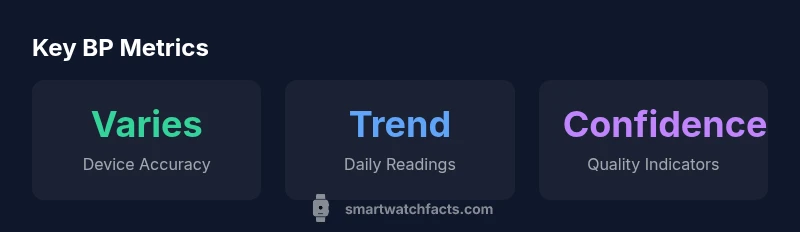
Most smart watches estimate BP indirectly. They combine optical sensors that measure blood flow with cuffless algorithms that infer arterial pressure from pulse transit time and waveform analysis. The method is not equivalent to auscultatory cuff measurements, and readings can be influenced by wrist position, ambient temperature, sensor calibration, and skin properties. Manufacturers typically present readings as estimated BP values, plus trends, averages, and confidence indicators to help users interpret the data within a broader health context.
Accuracy realities: what the numbers mean
Reading accuracy for wrist BP sensors varies by device, firmware, and user factors. There is no universal standard across all wearables, making direct comparisons challenging. Users should treat these readings as directional and trend-based rather than diagnostic. The best practice is to monitor patterns over days or weeks, and to rely on validated cuff measurements when precise values are needed for clinical decisions. Smartwatch Facts Analysis, 2026 emphasizes cautious interpretation and clinician consultation for unusual trajectories.
Calibration and user setup: getting reliable readings
To maximize reliability, start with a snug but comfortable fit and keep the sensor in contact with the skin. Sit with your back supported, elbow resting on a flat surface at heart level, and relax for several minutes before measuring. Take multiple readings if possible and review the average. If your device supports calibration against a cuff-based monitor, perform it according to the manufacturer’s instructions. Regular firmware updates can also improve measurement reliability by refining the underlying algorithms.
Reading habits: when and how to measure
Aim for a consistent routine: measure at the same time each day, preferably when you are calm and rested. Avoid measurements immediately after physical activity, caffeine intake, nicotine use, or alcohol. Use BP readings as a trend tracker, not an absolute diagnostic value. Document readings in a health app or diary and look for sustained deviations that merit a clinician’s evaluation.
Cross-checking with traditional devices: best practices
If a smartwatch BP reading is unexpectedly high or low, verify with a validated cuff-based monitor before making health decisions. Use smartwatch data to alert you to possible changes, then confirm with a clinic visit if readings persist. Share trends with a healthcare professional, who can interpret them in the context of your medical history, medications, and risk factors. Wearables are tools for awareness, not substitutes for professional care.
Privacy and data governance in wearable BP data
BP data collected by wearables can reveal sensitive health information. Review app permissions, data sharing settings, and vendor privacy policies. Prefer devices that offer clear data export options and local storage when possible. Consider turning off continuous sharing unless you need real-time monitoring for a medical program. Managing consent and data access is essential for responsible use of smart watch blood pressure features.
The future of BP sensing on smartwatches
Industry researchers anticipate improved accuracy through better skin-interfacing sensors, standardized validation studies, and AI-enhanced calibration. As standards mature, expect more devices to publish cuff-equivalent validation data and clearer guidance for clinical use. Smartwatch Facts predicts ongoing collaboration between device makers, health systems, and researchers to translate wearables into safer, more reliable health tools.
Comparison of BP measurement methods
| Device Type | Measurement Method | Accuracy Context | Best Use |
|---|---|---|---|
| Smartwatch with cuffless BP | Pulse transit time + optical sensing | Accuracy varies by model and user factors | Screening and trend tracking |
| Dedicated BP Monitor | Oscillometric cuff | High accuracy under controlled conditions | Clinical confirmation and diagnosis |
| No BP feature on device | N/A | Not applicable | N/A |
People Also Ask
Can I rely on smart watch blood pressure readings for medical decisions?
No. Wrist BP readings are best used for trend monitoring and screening. For any sustained or unusual readings, consult a clinician and use cuff-based measurements for diagnosis or treatment decisions.
Wrist BP readings are for trend watching, not diagnosis. See a clinician for any persistent abnormal readings.
How accurate are wrist BP measurements compared to cuff measurements?
Accuracy varies by device and condition. Readings can be influenced by movement, fit, and skin properties. Use cuff measurements for clinical decisions and treat wrist readings as directional.
Accuracy varies by device and conditions; treat wrist readings as directional, not definitive.
Do I need to calibrate my wearable BP feature?
If your device supports calibration, follow the manufacturer's instructions using a validated cuff-based monitor. Regular calibration can improve reliability, but always verify with clinical readings when in doubt.
Calibrate if your device supports it, then verify with cuff readings when unsure.
Are there privacy concerns with BP data from wearables?
Yes. BP data is sensitive health information. Review app permissions, data sharing options, and privacy policies. Opt for devices with clear data export and control options.
Yes. Review permissions and privacy settings; protect your health data.
Which wearables support blood pressure measurement?
Several mainstream smartwatches offer cuffless BP features, but availability varies by model and region. Check the manufacturer’s specifications and any validation claims before relying on a device for health monitoring.
Many wearables offer cuffless BP features; verify model specs and validations.
“Wrist-based blood pressure sensing can empower personal health awareness, but it should complement—not replace—medical-grade measurements.”
Key Points
- Track daily BP trends with smartwatch readings.
- Calibrate when possible and verify spikes with a cuff.
- Don’t rely on wrist measurements for clinical diagnosis.
- Device accuracy varies by model and usage.
- Review health data privacy settings regularly.