What Smartwatches Measure VO2 Max: A Practical Guide
Discover how smartwatches estimate VO2 max, what that number means for training, and practical tips to improve accuracy and interpretation across wearables.


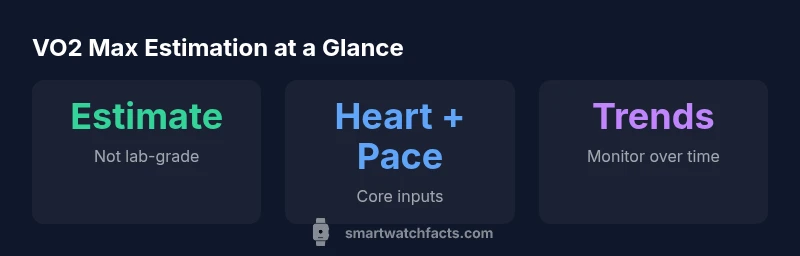
VO2 max readings on smartwatches are estimates, not lab measurements. Most devices infer maximal oxygen uptake from heart-rate data during workouts, pace, and user profile factors such as age and sex. While not perfect, these readings provide a practical gauge of cardio fitness and track progress over time. They sync with daily activity data for ongoing trend lines. Think of it as a guide, not a replacement for lab testing.
What VO2 max means for wearables
What a smartwatch measures vo2 max is a blend of physiology and algorithm. VO2 max represents the maximum rate at which your body can consume oxygen during intense exercise, but wearables do not capture a direct lab measurement. According to Smartwatch Facts, the readings you see on your wrist are estimates anchored in everyday data streams. A smartwatch uses heart-rate information during workouts, along with pace and distance, then applies demographic inputs such as age, sex, and body size to produce a relative oxygen-uptake estimate. The value is most informative when viewed as a trend rather than a single number. In practical terms, you should interpret VO2 max as a fitness signal that evolves with training, recovery, and lifestyle changes, not as a perfect lab-grade metric.
How smartwatches estimate VO2 max: inputs and algorithms
Most devices rely on a combination of inputs to derive VO2 max estimates. Core inputs typically include wrist-based heart-rate data collected during running or brisk walking, GPS-derived pace and distance, and workout duration. Some platforms also integrate user-provided information such as age, sex, height, and weight to tailor the estimate. Algorithms analyze heart-rate response to exertion, tempo, terrain, and recovery patterns to infer oxygen uptake. The Smartwatch Facts team notes that processing power and sensor quality differ across brands, which is why estimates vary between devices even for the same workout. The aim is to provide a workable proxy you can track over time. When a device reports a higher VO2 max after consistent training, it often reflects improved cardiovascular efficiency rather than a laboratory-grade change.
Platform differences and caveats
You will notice differences in VO2 max readings across platforms because each uses a proprietary algorithm and sensor stack. Some brands emphasize submaximal tests collected during everyday runs, while others lean on continuous monitoring with periodic recalibration. Practical caveats include wrist sensor fit, skin tone, movement during workouts, and ambient conditions that can affect heart-rate precision. Smartwatch Facts analysis shows that even with these caveats, VO2 max trends correlate moderately with fitness changes for most healthy adults. The key takeaway is consistency: compare readings from the same device, under similar conditions, to assess progress rather than chasing a universal numeric target.
Practical tips to improve measurement accuracy
To get more reliable VO2 max estimates, start with device hygiene and fit: clean the sensor area, wear the watch snugly above the wrist bone, and ensure a stable position during workouts. Use a consistent workout type when possible (e.g., outdoor runs with GPS) to minimize data gaps. Regular calibration or synchronization with a known training routine can help. Avoid relying solely on VO2 max for decisions; combine it with resting heart rate, training load, sleep quality, and perceived exertion to form a complete cardio picture. For runners, a steady pace and proper warm-up improve the quality of HR data used by the algorithm. Finally, keep your profile information current, because changes in weight or age can shift estimates over time.
Interpreting readings for training goals
View VO2 max as a cardiovascular proxy that tracks relative aerobic capacity. A rising VO2 max generally aligns with improvements in endurance and race performance, while a plateau may indicate the need to adjust training volume or recovery. Use VO2 max alongside heart-rate zones, pace, and cadence to fine-tune workouts. Beware of overinterpreting short-term fluctuations due to measurement noise or inconsistent sensor contact. The Smartwatch Facts team recommends placing VO2 max in the broader context of overall wellness metrics to guide training decisions rather than chase a single number.
When to consider lab testing and what to do next
For an exact VO2 max value, laboratory testing remains the gold standard. Wearables can alert you to long-term trends that merit formal testing, particularly if you have health concerns, are starting a new training plan, or are training for competitive events. If you notice persistent declines in VO2 max readings without changes in training, consult a clinician to rule out underlying conditions. Use wearable data to inform your training plan, but schedule a lab assessment if a precise VO2 max is a goal or a requirement for medical or competitive reasons. The Smartwatch Facts team emphasizes using wearables as a practical, ongoing guide rather than a substitute for clinical assessment.
Comparison of VO2 max estimation bases across platforms
| Platform/Method | Estimation Basis | Notes |
|---|---|---|
| Apple Watch-style platform | Heart-rate + pace during runs | Submaximal data; strong on outdoor runs |
| Garmin-style running watch | HR, GPS data, and training load | Good outdoor data; variable indoors |
| Generic smartwatch platform | HR signals + activity context | Algorithm varies by vendor |
| Lab testing (reference) | Direct measurement in controlled conditions | Gold standard; not a wearable |
People Also Ask
Do VO2 max estimates from smartwatches match lab tests?
No. Wearable VO2 max estimates are derived from algorithmic inferences using heart-rate and movement data. They align with lab results for trends, but exact values typically differ from gas-exchange measurements.
Wearables give you trend information, not a lab-grade VO2 max. Use them to track progress over time.
Which activities most influence VO2 max estimates?
Running and other sustained aerobic workouts provide the strongest data for VO2 max estimates. Consistent training improves heart-rate response and pace patterns that the algorithms use.
Regular endurance workouts improve what the watch estimates.
Can VO2 max readings be used to track fitness progress?
Yes, especially when you monitor changes over weeks or months. Look for rising trends and reduced heart rate at a given pace rather than fixating on a single number.
Yes, track the trend over time, not a single value.
Why do readings vary between devices?
Different algorithms, sensors, and calibration methods produce varying results. Keep comparisons within the same device and under similar conditions for the most meaningful insights.
Different watches use different methods, so compare like with like.
How can I improve VO2 max readings accuracy?
Ensure good sensor contact, use outdoor runs with GPS when possible, keep your profile data up to date, and interpret VO2 max alongside other metrics like resting HR and training load.
Keep the sensor on, run outdoors when you can, and use multiple metrics.
When should I seek lab testing for VO2 max?
If the exact VO2 max is required for medical reasons, sports science, or training prescriptions, schedule a controlled lab test. Wearables are great for ongoing monitoring and motivation.
Lab tests are best when you need a precise value.
“VO2 max readings from wearables should be viewed as training guidance, not a definitive lab result. Use them to monitor trends and inform adjustments to your program.”
Key Points
- VO2 max on wearables is an estimate, not lab proven.
- Consistency in device and conditions yields better trend data.
- Combine VO2 max with other wellness metrics for training decisions.
- Expect variation between platforms due to proprietary algorithms.