Apple Watch vs Other Smart Watches: An In-Depth Comparison
Compare Apple Watch with other smart watches to understand ecosystem, health sensors, battery life, price, and real-world use cases to pick the best wearable.


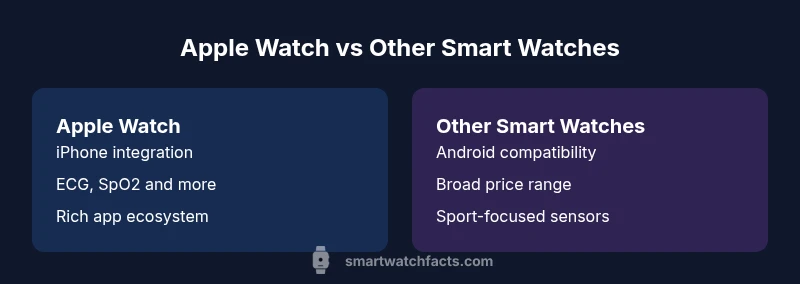
Across the smartwatch market, the Apple Watch delivers unmatched iPhone integration, health features, and a polished app ecosystem. Other smart watches broaden Android compatibility, price options, and niche features, but may lag on seamless notifications or iOS-specific health metrics. When weighing apple watch vs other smart watches, your choice mainly depends on whether you prioritize ecosystem harmony, budget, or specialized fitness tracking like advanced GPS or sleep features.
Apple Watch vs the Market: Context for Buyers
The smartwatch category has matured into distinct ecosystems rather than a single universal standard. At a glance, Apple Watch dominates conversations about health tracking, app quality, and seamless iPhone integration. However, several non-Apple options excel on Android compatibility, price variety, battery life, or sport-focused sensors. When you weigh apple watch vs other smart watches, you should start with your phone platform, your primary use cases (health metrics, GPS, or sleep tracking), and your budget. According to Smartwatch Facts, the market movement favors users who value ecosystem coherence and dependable software updates, while Android-friendly models attract buyers seeking cross-platform flexibility and lower upfront costs.
- Apple Watch: strong ecosystem ties, polished software, and robust health metrics.
- Competitors: broader Android compatibility and often more affordable options.
- Decision driver: ecosystem preference and core health features will shape the best pick.
Ecosystem and App Quality: iPhone-first vs cross-platform
When comparing apple watch vs other smart watches, ecosystem alignment is the decisive factor for most buyers. The Apple Watch is engineered to work best with iPhone devices, enabling features like on-wrist unlock, iMessage integration, seamless app handoffs, Apple Health syncing, and tight integration with Apple services. This coherence makes notifications smoother and fitness data easier to consolidate. In contrast, many non-Apple smart watches aim for cross-platform compatibility across Android and iPhone, offering portable app ecosystems, Google Fit or Samsung Health integration, and broader third-party app support. While these options can deliver strong fitness tracking and notification parity, some iOS-exclusive features may be limited or delayed on non-Apple wearables. For people who own multiple devices or prefer Android, these watches provide compelling value with broader compatibility and flexible pricing.
Health Sensors and Fitness Capabilities: What truly matters
Health features often determine the most value in a wearable. The Apple Watch is frequently highlighted for its ECG, SpO2, heart-rate monitoring, and sleep-tracking capabilities, combined with software-driven health insights. Competitors may emphasize alternative sensors or sport-centric data, including advanced GPS, VO2 max, or multi-band tracking suitable for endurance athletes. When evaluating health sensors, consider how the metrics translate into practical actions: activity coaching, reminders, recovery insights, and data export options. The Smartwatch Facts team notes that sensor accuracy and the ease of interpreting results matter as much as the raw data, since actionable insights drive real-world outcomes.
Display, Interface, and User Experience: Smoothness matters
Display quality and interface design influence everyday use. The Apple Watch delivers a high-resolution display with tight haptics, consistent watch faces, and intuitive gesture controls. Its app ecosystem and notifications feel refined, contributing to a frictionless user experience. Other brands often propose larger displays, different bezel treatments, or unique navigation metaphors designed to cater to sport and health enthusiasts. While some rivals offer faster boosts in certain tasks or more robust outdoor readability, the Apple Watch ecosystem generally provides a more cohesive, polished experience, especially for iPhone users who rely on consistent updates and cross-device continuity.
Battery Life and Charging Realities: Daily use expectations
Battery life remains a practical constraint for many buyers. Apple Watches typically require daily charging with varying results based on usage, display brightness, and health-tracking intensity. Other smart watches may promise longer endurance or faster charging, particularly models designed for all-day activity tracking or rugged environments. When choosing, weigh how much you prioritize a single daily charging routine versus optional features like continuous heart-rate monitoring or always-on displays. Real-world use tends to show a trade-off between richer features and battery longevity, with Apple’s continuous improvements aiming to optimize both.
Durability, Design, and Comfort: Wearability matters
Design and materials influence long-term satisfaction. Apple Watch offers premium finishes, a wide band ecosystem, and water resistance sufficient for daily wear and workouts. Rival devices frequently push sport-leaning materials, greater bezel protection, or more rugged certifications. Comfort matters: a lighter model with an adjustable band can significantly affect daily wearability, especially during workouts. In many cases, the right balance of comfort, durability, and personal style will determine which device you reach for first in the morning.
Price, Value, and Total Cost of Ownership: Getting value for money
Price alone rarely tells the full story. Apple Watch models command premium pricing but are often supported by a robust ecosystem and longer software lifecycles. Competitors can undercut upfront costs and offer compelling bundles or sport-focused features. When evaluating apple watch vs other smart watches, consider the total cost of ownership, including accessories, band replacements, service plans, and software updates. A lower upfront price may become more expensive over time if features or compatibility are limited, while a higher initial cost can pay off through lasting ecosystem value and support.
Customization, Bands, and Face Ecosystems: Personalization as a differentiator
The wearable market thrives on customization. Apple Watch provides a broad selection of bands, faces, and personalization options that make it easy to tailor the device to life moments, workouts, or professional settings. Other brands offer diverse designs and third-party faces, sometimes with more aggressive hardware customization or sport-specific interfaces. Your emotional connection with a device often comes down to the aesthetic and personalization options, which can influence daily engagement and long-term satisfaction.
Buying Scenarios: Who should buy what, when
For iPhone owners focused on seamless health insights, quick acknowledgments, and strong app parity, Apple Watch is usually the best match. Android users or those seeking lower upfront costs may prefer non-Apple wearables that work well with Google services or Samsung ecosystems. If sleep quality and recovery metrics are critical, evaluate each device’s sleep-tracking approach and its integration with your preferred health apps. Consider future-proofing by evaluating OS commitments, software updates, and the breadth of third-party fitness apps available to you.
Practical Verification Before You Buy: A quick checklist
- Check your phone ecosystem and whether full features require a specific platform.
- Compare health sensors and how easily you can interpret data.
- Evaluate display quality, always-on options, and readability in bright light.
- Review battery life expectations and charging convenience.
- Inspect durability and comfort for your daily activities and workouts.
- Account for accessory costs and the longevity of software support.
Comparison
| Feature | Apple Watch | Other Smart Watches |
|---|---|---|
| Ecosystem and App Quality | iPhone-centric with deep app integration | Cross-platform with variable app depth |
| Health Sensors | ECG, SpO2, advanced activity metrics | Varied sensors; some models excel in GPS or sleep tracking |
| Display and UX | High-res, polished UI, strong haptics | Diverse displays, interface approaches; often sport-focused UX |
| Battery Life & Charging | Daily charging typical; optimized for daily use | Wide range; some offer longer life or faster charging |
| Compatibility | Best with iOS; limited features on Android | Broad Android support; iOS features may be limited |
| Price Range | Premium pricing with strong ecosystem value | Broader price spectrum; cheaper options available |
| Durability & Water Resistance | Premium materials; adequate water resistance | Rugged variants available; durability varies by model |
Strengths
- Seamless iPhone pairing and notifications
- Advanced health sensors and metrics
- Rich app ecosystem and continuity features
- Strong ecosystem reliability and resale value
Weaknesses
- Requires iPhone for full functionality
- Higher price versus many rivals
- Limited Android integration for some features
- Proprietary accessories can add cost
Apple Watch excels for iPhone users; rivals offer Android compatibility and lower upfront costs
Choose Apple Watch if you want best-in-class iPhone integration and health features. If you need broad Android support or lower initial cost, explore other smart watches aligned with your phone ecosystem.
People Also Ask
Is Apple Watch compatible with Android phones?
No, Apple Watch works best with iPhone. Setup and full features are limited or unavailable on Android devices. If you’re an Android user, explore non-Apple wearables for better cross-platform support.
Apple Watch works best with iPhone. On Android, features are limited, so you’ll want a different smartwatch for full compatibility.
What is the main advantage of Apple Watch over rivals?
The strongest advantage is seamless iPhone integration, combined with mature health tracking and a rich app ecosystem. This makes everyday use smoother for iPhone owners.
Apple Watch shines with perfect iPhone pairing and robust health features.
Do all smartwatches have the same app quality?
No. Apple’s App Store offers a curated, high-quality experience, while Android-based watches may rely on broader app ecosystems with varying depth and support.
App quality varies by platform; Apple typically has more consistent app support.
Which smartwatch is best for fitness tracking?
Fitness performance depends on sensors and software. Apple Watch provides comprehensive health metrics, while some rivals excel in multisport or endurance tracking.
It depends on your sport—Apple offers broad health features, others may suit specific activities better.
How important is battery life when choosing?
Battery life is a practical consideration. If you dislike daily charging, you’ll want to compare endurance and charging speed across models.
Battery life affects daily usability; look for models that fit your charging routine.
Are there budget options that still pair well with iPhone?
Yes, several non-Apple wearables offer good health features and iPhone compatibility, though some iOS-specific features may be limited.
There are budget-friendly watches that work well with iPhone, with a few feature trade-offs.
Key Points
- Prioritize ecosystem alignment when buying
- Health features drive strong value for many users
- Consider total cost, including bands and updates
- Android users have compelling, affordable options
- Test comfort and display readability before purchase