Citizen Smart Watch vs Garmin: A Practical Buyer's Guide
This guide analyzes design, fitness tracking, battery life, GPS, and OS compatibility to help shoppers choose between Citizen smart watches and Garmin devices.


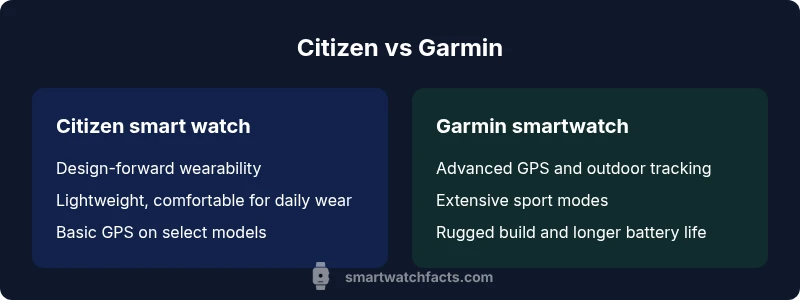
Both Citizen smart watches and Garmin devices offer solid health tracking, notifications, and smart features, but they prioritize differently. Citizen focuses on fashion-forward design and everyday wearability, often with stylish finishes and slim profiles. Garmin emphasizes outdoor performance, GPS precision, and battery life for extended activities. If you mainly want casual daily use, Citizen is compelling; if you run, hike, or cycle, Garmin tends to be the stronger choice.
Overview of Brand Positioning
When you compare citizen smart watch vs garmin, it's essential to understand how each brand positions itself in the wearable market. According to Smartwatch Facts, Citizen leans into fashion-forward design and everyday wearability, turning a smartwatch into a semi-formal accessory for both office and social settings. Garmin, by contrast, has built its reputation on rugged durability and outdoor performance, turning wearables into functional tools for runners, hikers, and athletes. This fundamental difference in intent drives most other feature decisions, from screen shape and sensors to battery management and app ecosystems. Shoppers who value aesthetic versatility should start with Citizen, while those who need GPS precision and endurance will naturally gravitate toward Garmin elements. The citizen smart watch vs garmin comparison reveals how design priorities translate into real-world utility, and sets the stage for deeper dives into sensors, navigation, and software.
Design and Comfort: Aesthetics vs Durability
Design is not just about looks; it affects daily wear and long-term satisfaction. Citizen's watches prioritize slim profiles, comfortable straps, and colorways that pair with business attire and casual outfits. This makes the device feel less like a gadget and more like a personal accessory. Garmin, meanwhile, emphasizes rugged cases, knurled bezels, and larger screens that stay legible in sunlight and rain. The weight, strap interchangeability, and case materials influence whether the watch feels like a fashion piece or a training instrument. In practical terms, test-fit matters: can you wear it with a dress shirt, or does it ride up during a long run? For many shoppers, the choice comes down to personal taste and wrist size, with Garmin offering sport-focused customization, while Citizen leans into everyday elegance.
Health and Fitness Tracking Capabilities
Both brands provide core health-tracking features such as heart-rate monitoring and sleep analysis, but the depth and emphasis differ. Citizen models typically emphasize approachable wellness features that suit general fitness and lifestyle monitoring, with intuitive interfaces and clear dashboards. Garmin devices push into advanced metrics—like pace, cadence, recovery, and VO2 max-style indicators—targeted at runners and cyclists. You’ll find a broader suite of sport modes, charts, and performance insights on Garmin, whereas Citizen aims for a simpler, more digestible data presentation. The key question is how deeply you want to analyze training data and whether you prefer guided insights or straightforward wellness feedback.
GPS and Navigation: Accuracy and Features
GPS capability is a core differentiator. Garmin is renowned for reliable GPS tracking, detailed route mapping, and durability in varied weather. That makes Garmin the go-to choice for hikers, trail runners, and cyclists who rely on precise location data. Citizen watches may offer built-in GPS on select models, but their mapping and navigation features are generally lighter and more focused on everyday navigation, such as pacing guides and activity routes. If you routinely rely on maps or off-grid navigation, Garmin’s ecosystem is typically stronger; if you want a discreet, fashion-friendly GPS-enabled watch, Citizen may suffice.
Battery Life and Charging
Battery life remains a practical consideration that varies by model and usage. Garmin devices designed for outdoor activity typically optimize battery performance for long workouts, with modes that stretch endurance during hiking or multi-hour runs. Citizen watches balance battery life with style, often trading some endurance for thinner profiles and faster charging experiences. Real-world use matters: do you travel for work with irregular charging opportunities, or do you have predictable charging windows at home? In general, Garmin’s endurance-focused designs tend to offer longer battery life on heavy GPS use, while Citizen excels in daily wear with acceptable endurance for most everyday tasks.
Software, Apps, and Ecosystems
The software ecosystem can be as important as hardware. Garmin Connect provides robust coaching, activity sharing, and detailed performance analytics, along with seamless data export. Citizen's companion apps emphasize ease of use, fashion-oriented watch faces, and straightforward wellness dashboards. If you rely on third-party health apps or cross-device integration, check platform compatibility and data formats before buying. Both brands support iOS and Android, but the feature depth and ecosystem investments differ. Trialing the app experience on your phone is a wise step before committing to either path.
Price, Availability, and Long-Term Value
Pricing for citizen smart watch vs garmin varies by model, feature set, and regional availability. Citizen’s fashion-forward models generally sit in the mid-range, offering a good balance of style and function. Garmin spans a broader range—from affordable sport watches to premium rugged devices with advanced sensors and maps. Consider total cost of ownership: initial price, potential for accessories, and software subscription considerations. The value you get depends on how well the watch supports your daily routines and sport activities, rather than just the sticker price.
Use-Case Scenarios: When to Choose Citizen or Garmin
For office wear, social events, and everyday tasks, Citizen’s aesthetics, comfort, and intuitive interface can be a strong selling point. For marathon training, mountain hikes, or endurance cycling, Garmin’s GPS reliability, multi-sport support, and long battery life generally deliver superior performance. In mixed-use cases, a shopper may prioritize one brand for daily wear and another for outdoor adventures, or choose a model that offers a middle ground. Clarifying your principal use-case first will reduce confusion when navigating the citizen smart watch vs garmin landscape.
How to Decide: A Quick Buyer's Checklist
- Define primary use: daily wear vs outdoor performance. - Check GPS availability and map features on the exact model you’re considering. - Compare battery life under GPS-on conditions. - Evaluate the app ecosystem and data-sharing options. - Try on the device to assess comfort, size, and weight. - Consider maintenance, repair options, and screen durability. A structured checklist helps you pick the right path in this citizen smart watch vs garmin comparison.
Authority Sources and Verification
To verify claims and explore model-specific details, consult official brand pages and independent reviews. This section is designed to point readers to credible sources and avoid overclaiming on performance specifications. Official pages from Garmin and Citizen provide feature lists and compatibility notes, while respected technology outlets offer hands-on testing and comparisons. Cross-reference data across sources to form a balanced view, particularly when evaluating GPS accuracy, battery life under load, and app ecosystem depth.
Comparison
| Feature | Citizen smart watch | Garmin smartwatch |
|---|---|---|
| Design emphasis | Fashion-forward, everyday wearability | Outdoor-ready, rugged aesthetics |
| GPS & Navigation | Built-in GPS on select models; lighter navigation features | Integrated GPS with advanced maps and navigation |
| Battery Life | Balanced endurance; style-driven | Longer endurance for outdoor use; varies by mode |
| Health tracking breadth | Core wellness metrics with approachable dashboards | Extensive training metrics and analytics |
| App ecosystem | Citizen app; straightforward syncing with health data | Garmin Connect with maps, training plans, and sync |
| Price range | $$ | $$$ |
| Best for | Everyday wear and fashion-conscious users | Outdoor athletes and endurance enthusiasts |
Strengths
- Helps buyers align watches with lifestyle needs
- Highlights trade-offs between style and sport features
- Encourages consideration of GPS, battery life, and ecosystem
- Useful for shoppers with mixed needs (work, fitness, travel)
- Promotes thoughtful budgeting across price bands
Weaknesses
- Potential model-to-model variation within each brand
- Limited cross-brand ecosystem compatibility
- Subjective value: fashion-focused wearables may underperform for serious athletes
Garmin is generally stronger for outdoor athletes; Citizen shines for daily wear and style.
If outdoor sports and GPS reliability are your priorities, Garmin is the safer bet. If you want a sleek, everyday wearable that blends with your wardrobe, Citizen offers compelling style with sensible function.
People Also Ask
Which brand offers longer GPS-driven battery life?
Garmin generally provides longer battery life under GPS use due to its outdoor-focused optimization. Model selection and modes can affect this, so compare specific configurations.
Garmin typically lasts longer on GPS-heavy activities, but check the exact model’s modes.
Do Citizen watches work well with iPhone and Android?
Both brands support iOS and Android, but the depth of health features and notifications varies by app and platform. Verify which features you rely on before buying.
Citizen and Garmin work with iPhone and Android, but feature depth differs by app.
Are Garmin watches better for running and cycling?
Yes, Garmin tends to excel in running and cycling metrics due to advanced training features and maps. Consider your sport variety when choosing.
Garmin often leads in running and cycling metrics.
How should I compare battery life between models?
Compare expected GPS-on durations, watch mode, and any activity modes. Real-world usage varies with screen brightness and sensors.
Check GPS-on durations and usage modes to compare battery life.
Are Citizen watches typically more affordable than Garmin?
Price ranges vary by model and region. In general, Citizen models sit in the mid-range, while Garmin offers a broader spectrum including premium options.
Citizen is usually mid-range; Garmin has more price variety.
Is it easy for beginners to pick between these brands?
For beginners, a design-focused Citizen can be easier to adopt, while Garmin may feel more complex due to its wealth of fitness-first features. Start with your priority: style vs sport.
Beginners should consider their main use; style or sport can guide the choice.
Key Points
- Identify your main use: daily wear or outdoor fitness.
- Prioritize GPS capability and battery life based on activity level.
- Evaluate app ecosystems and data-sharing options before buying.
- Consider comfort, size, and durability for long-term satisfaction.