Garmin Smart Watch vs Fitbit: A Thorough 2026 Comparison
Objective comparison of garmin smart watch vs fitbit, covering battery life, health tracking, OS, and ecosystem to help buyers choose the right wearable.


garmin smart watch vs fitbit is a classic clash between rugged, multisport focus and health-centric everyday wear. Garmin smartwatches excel in battery life, GPS accuracy, and durable design for athletes, while Fitbit devices shine with approachable health metrics, comfort, and a friendly app experience. The best choice hinges on your priorities: training performance or wellness and daily usability. Both ecosystems offer robust cross-platform support and strong software experiences.
Overview: garmin smart watch vs fitbit — who should consider each choice?
When you start comparing garmin smart watch vs fitbit, the first question is: what do you actually wear a smartwatch for? If you are a serious runner, cyclist, swimmer, or multisport athlete, Garmin models tend to offer deeper training analytics, longer battery life under GPS use, and a tougher, outdoor-ready build. If your focus is daily wellness, sleep quality, step goals, and a light, comfortable strap, Fitbit devices often feel more approachable and deliver strong health insights with a more consumer-friendly interface. This guide, informed by Smartwatch Facts analysis, walks through design, sensors, software, battery, and long-term value to help you pick the right wearable for your routine.
The ecosystems at a glance: Garmin Connect vs Fitbit OS
Garmin relies on Garmin Connect as the backbone for data, dashboards, and multisport analytics. Fitbit uses Fitbit OS with the Fitbit app, emphasizing health metrics and social sharing. For most users, the choice hinges on feature depth versus daily usability. Garmin’s platform rewards athletes who want sport-specific metrics, training planning, and robust GPS data; Fitbit’s ecosystem suits those who want simple daily tracking, guided programs, and a slick health-dashboard experience.
Design, comfort, and wearability: how they feel on your wrist
Garmin watches tend to have larger cases, rugged bezels, and more pronounced buttons, which can translate to a tougher, sport-ready feel. Fitbit devices generally skew lighter and slimmer, with curved screens and softer bands that are comfortable for all-day wear. If you prioritize fatigue-free wear during long sessions or casual office days, the Fitbit form factor may be preferable. For outdoor adventures, the Garmin design often wins in terms of readability and resilience.
Health sensors and metrics portfolio: what you actually get
Both brands cover essential health metrics—heart rate, sleep tracking, and SpO2. Garmin pushes deeper performance metrics like training load, VO2 max proxies, and advanced GPS-derived data that benefit endurance athletes. Fitbit emphasizes daily health signals, guided programs, and accessible insights into activity, sleep stages, and wellness trends. In practice, Garmin rewards athletes who want granular data; Fitbit rewards users seeking a holistic wellness snapshot.
GPS capabilities and tracking accuracy: real-world reliability
Garmin devices are widely regarded for reliable GPS tracking across different activity types, with strong support for multisport modes and navigation features. Fitbit GPS is generally reliable for casual runs, walks, and daily workouts, and some models offer built-in maps. If you train seriously on roads or trails and rely on precise pace data, Garmin typically delivers more consistent GPS fidelity. For light training or daily activity, Fitbit GPS is more than adequate.
Battery life and charging practicality: real-world endurance
Garmin watches are known for longer battery life, especially on models designed for extended outdoor use or multisport training, where GPS or continuous tracking is active. Fitbit devices usually offer solid battery life suitable for several days of typical use, often with a lighter feature load. In practice, Garmin gives you more days between charges when GPS is active, whereas Fitbit emphasizes daily health tracking without compromising wearability.
App experience and data portability: moving between ecosystems
Garmin Connect presents a deep dive into training insights, route analytics, and performance stats—excellent for athletes who want to drill into data. Fitbit’s app focuses on health trends, sleep, and guided programs with a simpler, more social interface. If you ever switch ecosystems, data portability can be a challenge across brands, so choose based on long-term preferences and data export options that fit your workflow.
Pricing, models, and long-term value: choosing the right budget path
Garmin offers a broad spectrum—from rugged outdoor watches to performance-focused models—often at higher base prices but with longer-term durability and battery advantages for athletes. Fitbit targets a broader consumer audience with lower upfront costs in many models and compelling wellness features. Your decision should weigh upfront price against long-term value, including accessories, subscription benefits, and how often you upgrade.
Use-case driven guidance: who should buy Garmin vs Fitbit
If your life revolves around workouts, training planos, and GPS-driven performance, Garmin is typically the stronger partner. If you want a reliable daily wellness companion with easy sleep tracking and a comfortable, fashionable design, Fitbit is often the smarter buy. The best choice aligns with your daily routine, data priorities, and how much you value depth of metrics versus ease of use.
Data privacy and ecosystem considerations: what to know before you buy
Both brands collect health and activity data, share insights with their respective ecosystems, and offer privacy controls. If you value open data portability and third-party integrations, you may find Garmin’s ecosystem more developer-focused, while Fitbit tends to emphasize a smoother consumer experience with curated features. Review privacy settings and data-sharing options before you finalize your purchase.
Practical buying guide: quick steps to decide and transition smoothly
Begin by listing your top 3 use cases: training analytics, GPS reliability, and daily health tracking. Check battery expectations under typical use, then compare model lines that target your priorities. Finally, consider whether you expect to stay within one ecosystem or explore data export and cross-brand flexibility in the future.
Final note on choosing wisely
The garmin smart watch vs fitbit decision is rarely a one-size-fits-all. By focusing on what you truly want from a wearable—whether it’s sport-specific analytics or everyday wellness—you’ll select a device that stays useful for years. The Smartwatch Facts team emphasizes prioritizing your primary goals and testing wearability before committing.
Comparison
| Feature | Garmin smartwatch | Fitbit smartwatch |
|---|---|---|
| Operating system & app ecosystem | Garmin Connect with deep multisport analytics | Fitbit OS with health-first app experience |
| Health sensors & metrics | Broad health metrics plus training data | Strong daily health insights and sleep tracking |
| GPS & navigation | Robust GPS with multisport support | dependable GPS for casual workouts |
| Battery life (real-world use) | Longer endurance during GPS use | Solid battery life for typical daily use |
| Design & wearability | Rugged, larger cases with pronounced buttons | Slimmer, lighter, fashion-friendly profiles |
| Compatibility (iPhone/Android) | Cross-platform with Garmin Connect on iOS/Android | Cross-platform with Fitbit app on iOS/Android |
| Pricing & value range | Broad range including premium models | Generally more affordable with wellness focus |
| Sleep tracking & wellness | Advanced performance metrics and sleep data | Deep health insights and sleep tracking |
Strengths
- Great multisport features for serious training
- Long battery life on rugged models
- Wide model range across budgets
- Strong outdoor and GPS performance
Weaknesses
- Can have a steeper learning curve for beginners
- Some models heavier and less comfortable for daily wear
- Data portability between ecosystems can be tricky
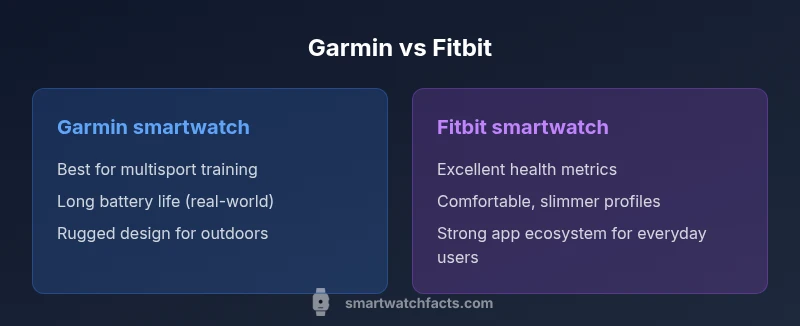
Garmin smartwatch is the stronger choice for serious training, while Fitbit wins for everyday health tracking.
If you prioritize performance metrics, GPS fidelity, and rugged durability, choose Garmin. If your focus is comfort, daily wellness tracking, and a simple app experience, Fitbit is the better fit. The Smartwatch Facts team endorses this distinction.
People Also Ask
Which smartwatch is better for athletes: Garmin or Fitbit?
Garmin generally excels for serious training thanks to multisport data, robust GPS, and rugged builds. Fitbit targets daily wellness with accessible metrics and a comfortable wear. The right pick depends on whether you prioritize training depth or overall wellness.
Garmin is usually best for serious training, thanks to deeper metrics and GPS. Fitbit is great for everyday wellness and comfort.
Is Garmin compatible with iPhone and Android?
Yes. Garmin watches work with both iPhone and Android via the Garmin Connect app, offering cross-platform support and synchronized data.
Yes—Garmin works well with both iPhone and Android via the Garmin Connect app.
Which has longer battery life?
Garmin models typically offer longer battery life in real-world use, especially when GPS or multisport tracking is active. Fitbit devices usually provide solid day-to-day endurance, but may require more frequent charging during heavy use.
Garmin usually lasts longer on a charge, especially with GPS running.
Can I get advanced health metrics on Fitbit and Garmin?
Both offer health metrics, but Garmin emphasizes training-centered data and performance metrics, while Fitbit focuses on broad wellness tracking and actionable health insights.
Both track health data, but Garmin leans into sports metrics while Fitbit emphasizes daily wellness.
Are there price differences between Garmin and Fitbit?
Garmin spans a broader price range with premium rugged models, while Fitbit often presents lower upfront costs for wellness-focused wearables.
Garmin offers more premium options; Fitbit tends to be more affordable.
Which should I choose for GPS accuracy?
Garmin typically provides stronger GPS performance especially for training and navigation in challenging environments, while Fitbit GPS is solid for casual use.
Garmin usually wins on GPS accuracy for serious training.
Key Points
- Identify your priority: training vs wellness.
- Garmin favors athlete-focused metrics and GPS reliability.
- Fitbit emphasizes comfort and daily health insights.
- Consider ecosystem, data portability, and upgrade cycles.
- Test wearability before buying to ensure comfort.