DIY Smart Watch Stand: Step-by-Step Build Guide
Discover how to craft a durable, stylish diy smart watch stand using common materials. This beginner-friendly guide covers design, cutting, assembly, and finishing for a personalized desk display.


This guide shows you how to create a functional diy smart watch stand from everyday materials. You’ll learn to choose a design, cut the parts, assemble securely, and finish with padding for a clean, stable display. By the end, you’ll have a personalized stand that fits your desk and charging needs.
Why a DIY Smart Watch Stand Brings Organization and Style
A dedicated stand keeps your smartwatch within reach, protects charging cables, and adds a personal touch to your desk. According to Smartwatch Facts, a well-designed stand reduces desk clutter and improves charging reliability. A diy smart watch stand also offers customization for size, angle, and materials to match your setup. This isn’t just about aesthetics; a deliberate stand can improve charging stability and prevent cable wear over time. If you’re new to DIY projects, starting with a simple, sturdy base sets you up for success. As you gain confidence, you can experiment with angles, finishes, and cable routing to tailor the stand to your space.
Design Options: Minimal to Premium
From a simple wedge to a multi-piece dock, there are design paths for every skill level. Basic stands use a single base and angle notch, while premium versions add cable management, padding, and a laser-cut profile. The Smartwatch Facts analysis shows that a clean silhouette often blends best with modern office spaces, while tactile materials like wood feel warmer and more durable. For a minimalist look, consider a single angled panel with a small lip to cradle the watch; for a premium feel, add a floating shelf effect with hidden cable routes and a velvet-lined cradle. Remember, the goal is a stable, accessible display that keeps the watch safe while charging.
Size, Angles, and Stability
Measure your watch with its charging cable in place. Aim for a base width at least 1.5x the watch width and a front edge that keeps the screen at a readable angle (30–40 degrees is common). A lightweight stand should still avoid wobble by using a low center of gravity and a non-slip bottom. If you have a larger smartwatch or a bulky charging setup, extend the base and add a secondary support leg to reduce tipping risk. Trial-fit with your actual device and charger to confirm clearance for the crown or side buttons.
Materials: Wood, Acrylic, or Cardboard
Wood offers durability and a premium feel; acrylic provides a transparent, elegant look; cardboard keeps costs down and is great for quick prototypes. For all materials, ensure cut edges are smooth and sanded, and plan for padding where the watch will rest. If you’re outdoorsy or prefer a rugged look, use stained pine or hardwood; if you want a transparent aesthetic, choose clear acrylic. Cardboard is great for a one-night build and for testing form-factor before committing to a longer-lasting material.
Finishing Touches: Padding, Padding, and Protecting Surfaces
Add a thin layer of felt or silicone where the watch contacts the stand to prevent scratches. Apply a protective finish to wooden pieces and consider a non-slip pad on the base. Clean edges and neat joins improve both aesthetics and stability. A light oil, wax, or clear varnish can enhance durability, while a matte finish minimizes glare on the screen. If you plan to move the stand often, consider a modular design with interchangeable pads to accommodate different watch bands and charger types.
Brand and Fit: Practicalities for Charging and Display
Plan for the charging cable to exit at the back or side without pinching. A small channel or groove keeps the cord tidy and reduces tangling. The Smartwatch Facts team recommends testing with your actual charger and watch to ensure a secure fit. If you’re using wireless charging, ensure the cradle area is level and free of obstruction so the charger can operate efficiently. A well-thought-out design minimizes cable wear and keeps your workspace tidy.
Tools & Materials
- Ruler or caliper(Precise measurements for cuts and angles)
- Wood board or acrylic sheet(Base material, thickness 6-12 mm recommended)
- Saw or laser cutter(Cut pieces to final dimensions)
- Sandpaper (120-220 grit)(Smooth edges and surfaces)
- Glue (wood glue or acrylic glue)(Strong joints; clamp while drying)
- Clamps(Hold parts while glue sets)
- Foam or felt padding(Protect watch and prevent slipping)
- Non-slip feet or rubber pads(Stability on desks)
- Optional finish (oil, varnish, or acrylic paint)(Enhance look and durability)
Steps
Estimated time: 60-120 minutes
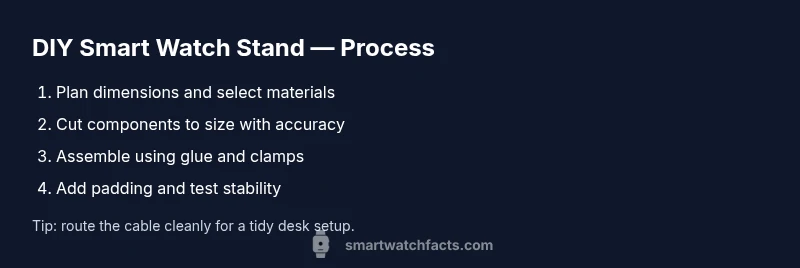
- 1
Define dimensions and design
Sketch the stand shape and decide the base size, angle, and cord exit. This ensures all parts fit together and the watch sits at a comfortable viewing angle.
Tip: Draw a quick template on kraft paper before cutting. - 2
Cut base and support pieces
Use the ruler to mark parts accurately and cut them to size. Deburr edges with a file or sandpaper.
Tip: Keep off-cuts as reference for future tweaks. - 3
Sand all edges
Smooth every edge to prevent scratches on the watch and to ensure glue adheres properly.
Tip: Wipe dust between sanding passes. - 4
Assemble with glue and clamps
Glue joints and clamp until dry. Use padding between contact surfaces to protect the watch.
Tip: Check alignment before glue sets. - 5
Add padding and feet
Attach felt or silicone pads to the contact surfaces and base feet for grip.
Tip: Test stability on your desk before placing the watch. - 6
Test and finish
Place the watch and charger, verify cable routing, and apply a finish if desired.
Tip: Walk away 15 minutes after finishing to prevent smudges.
People Also Ask
What materials are best for a diy smart watch stand?
Wood, acrylic, and sturdy cardboard are common choices. Wood feels premium and is durable; acrylic looks sleek; cardboard is great for quick prototypes.
Common materials include wood, acrylic, and sturdy cardboard.
Will a diy stand fit different watch sizes?
Design with adjustable angles or a slot-style notch to accommodate various watch widths; test with your devices.
Make the stand adaptable to different watch sizes.
Do I need a built-in charger on the stand?
A dedicated cable exit and groove is usually sufficient; built-in charging adds complexity and cost.
A built-in charger is optional but useful for neat cables.
How long does it take to build a stand?
Most basic stands take 1–2 hours, with finishing adding additional time.
Typical time is about one to two hours, plus drying time for finishes.
Is a DIY stand as sturdy as a commercial option?
A well-cut, glued, and padded stand can be very sturdy; avoid cheap materials to ensure durability.
A well-made DIY stand can be quite sturdy if you use solid materials.
Watch Video
Key Points
- Plan dimensions before cutting
- Choose a stable base for wobble-free use
- Padding protects watch surfaces
- Test with real charger before final finish
- Finish materials for durability and aesthetics