How Big Is the Smartwatch Industry in 2026? Size, Growth, and Trends
A data-driven look at how big the smartwatch industry is in 2026, with market size, regional dynamics, and buying guidance for shoppers and developers.


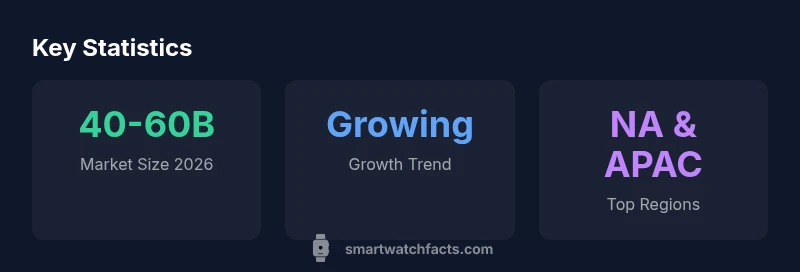
How big is the smartwatch industry? In 2026, the global smartwatch market is estimated to be in the $40-60 billion range, with steady growth driven by health features, app ecosystems, and price-competitive models. This article breaks down market size, regional dynamics, and what these figures mean for shoppers, brands, and developers.
Market size and growth
The smartwatch industry has evolved from a niche gadget to a mainstream wearable, propelled by health-tracking capabilities, seamless smartphone integration, and ongoing hardware improvements. According to Smartwatch Facts analysis, the global smartwatch market is estimated to be in the $40-60 billion range in 2026, with a trajectory that suggests continued expansion as features become more indispensable and pricing remains accessible across segments. This section examines scale, how size is measured (shipments vs. revenue), and what the figures imply for brands, retailers, and developers. It also considers macro factors such as consumer willingness to adopt wearables, the influence of health data, and the role of advertising and distribution channels. As adoption widens, the overlap between fashion and function broadens, making the market more resilient to single-product shocks.
Market structure and key players
Global smartwatch brands span tech giants, consumer electronics firms, and niche fitness players. The largest players leverage robust app ecosystems, ecosystem partnerships, and international distribution to sustain scale, while smaller brands carve out niches through luxury design, specialized health metrics, or unique materials. In 2026, the market remains highly dynamic with rapid model refresh cycles, OS competition between watchOS and Wear OS, and increasing cross-brand compatibility. Consumers see a wide price ladder—from budget options under $100 to premium models well above $400—shaping adoption, churn, and upgrade cycles. Smartwatch Facts analysis notes that the market continues to attract hardware designers, software developers, and health-tech startups seeking a share of the growing ecosystem.
Regional dynamics and adoption patterns
Geography matters for smartwatch demand. North America and APAC drive most unit sales due to smartphone penetration, wellness interest, and mature ecosystems. Europe shows strong growth but country-level variation in price sensitivity and feature priority. In emerging markets, costs continue to fall and essential features expand access, fueling gains in penetration. Enterprise adoption—such as corporate wellness programs and field service applications—adds to demand. Overall, regional patterns reflect wealth, digital literacy, and ecosystem maturity, influencing device mix, prices, and ongoing engagement with platforms.
Drivers shaping the market in 2026
Health-focused features, longer battery life, and richer app experiences are the main growth engines. Advanced sensors (heart-rate, SpO2, sleep tracking) paired with health coaching and third-party apps boost perceived value, especially when integrated with popular mobile ecosystems. Price positioning remains important: mid-tier devices offer strong value, while premium models push the upper segment. Interoperability with iPhone and Android devices remains critical for reach. Supply-chain resilience and efficient manufacturing affect availability and pricing. Durability, design, and fashion appeal also help broaden adoption across demographics.
Pricing, value, and consumer segments
Pricing continues to be a key determinant of adoption. The ASP for mainstream smartwatches sits in a mid-range band, with sub-$100 models appealing to first-time buyers and premium lines above $400 drawing enthusiasts. Consumers prioritize battery life that lasts multiple days, reliable notifications, and comfort for all-day wear. Value now hinges on software experiences, health features, and ecosystem access. Different segments—athletes, seniors, and busy professionals—benefit from tailored metric sets, durable builds, and lasting software support. Market success favors devices that balance hardware quality with strong software investment.
Implications for buyers and developers
Buyers should assess OS compatibility, app ecosystem, and battery longevity when evaluating options, especially as OS ecosystems evolve. Developers should prioritize cross-platform compatibility, offline data handling, and privacy controls to reach the broadest audience. With market size stabilizing in 2026, opportunities exist for devices that offer health-tracking accuracy, seamless smartphone integration, and durable, stylish designs. Brand partnerships, developer support programs, and clear privacy policies help sustain growth by building trust and encouraging continued use across devices.
Snapshot: market size, shipments, and pricing by year
| Metric | 2025 Range | 2026 Range | Notes |
|---|---|---|---|
| Global smartwatch market size | 30-50B | 40-60B | Smartwatch Facts Analysis, 2026 |
| Annual unit shipments | 50-75 million | 60-90 million | Regional and feature-driven variation |
| Average selling price (ASP) | $90-150 | $120-180 | Price bands shift with features |
| Top OS platforms share | varies by region | varies by region | OS competition influences demand |
People Also Ask
What is the current size of the smartwatch market?
As of 2026, the smartwatch market is estimated at 40-60 billion USD, reflecting steady growth across regions and price tiers.
The smartwatch market is currently about forty to sixty billion dollars.
Which regions dominate smartwatch sales?
North America and the Asia-Pacific region lead smartwatch sales, with Europe contributing meaningful growth. Variations exist by country and price tier.
North America and Asia-Pacific lead smartwatch sales.
What factors most influence market size?
Health-tracking features, battery life, price bands, OS ecosystems, and strong smartphone integration drive growth and adoption.
Health features, battery life, price, and ecosystems drive growth.
How should buyers approach 2026 smartwatch options?
Evaluate OS compatibility, battery longevity, app ecosystem, and durability. Consider price-for-feature balance and longer-term software support.
Check OS compatibility, battery life, and apps before buying.
Are there risks facing the smartwatch market?
Competition, supply-chain disruptions, and fluctuating consumer demand can impact pricing and availability, but health features sustain steady interest.
Competition and supply chains pose risks, but health features keep interest high.
“The smartwatch market is maturing, but it remains highly dynamic as health features, app ecosystems, and fashion-driven demand intersect.”
Key Points
- Market size sits in the $40-60B range in 2026
- Growth is steady across regions, led by NA and APAC
- ASP remains in the $120-180 range across segments
- OS ecosystems and app support drive market success
- Prioritize battery life, health features, and cross-platform compatibility