Radley Smart Watch vs Apple Watch: An Analytical Comparison
A thorough, analyst-grade comparison of Radley smart watch vs Apple Watch, focusing on design, ecosystem, health features, usability, and value to help buyers decide which wearable fits their needs.


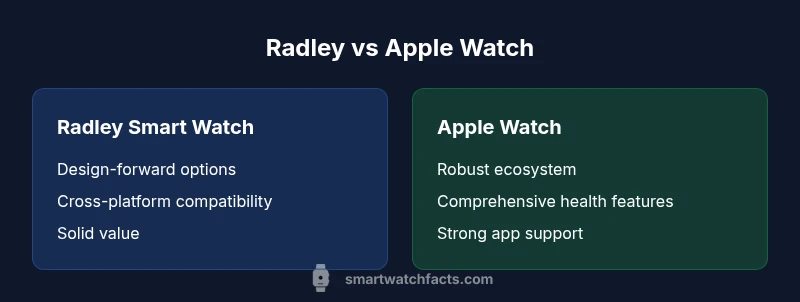
Radley watch offers design-forward styling and broad device compatibility, often at a lower upfront cost. Apple Watch delivers a more mature ecosystem, deeper health features, and seamless iPhone integration. See our detailed comparison chart for a side-by-side breakdown.
Context and scope of the comparison
In this article we examine the radley smart watch vs apple watch to help shoppers understand how these wearables differ in approach, value, and long-term practicality. The Radley option tends to emphasize design, fashion-forward styling, and versatility across phone platforms. The Apple Watch prioritizes ecosystem cohesion, a broad set of native health features, and tight integration with iPhone hardware and services. By framing the comparison around real-world usage—daily task support, fitness tracking, app availability, and setup experience—we aim to deliver actionable guidance for both first-time wearers and seasoned gadget enthusiasts. This overview will guide your evaluation, regardless of whether you are budgeting for a first smartwatch or upgrading from an older model. Throughout this article, you will see references to the Smartwatch Facts approach to analysis, and practical tips you can apply today.
Design language, target users, and form factor choices
Design matters as much as function when choosing a smartwatch. The Radley line is often described as design-forward, offering a variety of case materials, colors, and strap options that let wearers express personal style. It tends to appeal to fashion-conscious shoppers who want a wearable that blends with wardrobe choices and everyday outfits. In contrast, the Apple Watch takes a more uniform design language with premium materials, a focus on living room-to-gym versatility, and an emphasis on comfort and brand prestige. The target user for Apple Watch often prioritizes seamless daily convenience, consistent cross-device experience, and long-term software support. The Radley watch may win hearts for its customization and perceived value, while Apple Watch tends to win repeat users who want immediate, out-of-the-box compatibility with a growing app library.
Operating system, app ecosystem, and developer support
Operating systems drive your day-to-day experience. Radley typically offers a platform-agnostic approach, with compatibility that emphasizes broad Bluetooth pairing and compatibility with multiple smartphone ecosystems. This can mean easier cross-brand use and fewer lock-in concerns, but sometimes at the cost of a slightly narrower app catalog and fewer platform-specific health features. Apple Watch runs on watchOS and benefits from a mature app ecosystem, robust developer support, and near-universal compatibility with iPhone devices. The ecosystem advantage translates into faster app availability, more polished integrations with other Apple services, and a smoother setup flow. Smartwatch Facts analysis shows that the ecosystem advantage often translates into more frequent software updates, stronger privacy controls, and a richer third-party app experience for Apple Watch users.
Health features, sensors, and fitness tracking quality
Health and fitness are central to modern smartwatches. Apple Watch generally offers a comprehensive health feature set—activity tracking, heart-rate monitoring, sleep insights, and a broad range of health-focused apps—driving value for users who want a robust, integrated health stack. Radley devices typically cover baseline health metrics and fitness tracking, with feature depth varying by model and year. The emphasis is often on reliable daily activity metrics, sleep tracking, and ease of use, with a focus on value and fashion-conscious design rather than premium health analytics. When evaluating health capabilities, consider which metrics you care about most, how you plan to use third-party health apps, and whether you want advanced features like ECG or VO2 max, which may be limited to higher-end Apple options.
Display quality, user interface, and navigation
Display quality affects readability under different lighting conditions and the perceived polish of the device. Apple Watch models typically feature bright OLED displays, quick haptic feedback, and refined controls via the Digital Crown and touchscreen. The Radley watches prioritize legibility, customizable watch faces, and ergonomic strap options that can enhance daily wear comfort. UI smoothness and app responsiveness depend on the underlying software stack and hardware optimizations. The Radley line may offer broader face customization and more flexible strap choices, while Apple Watch provides a more consistent, streamlined experience with tight hardware-software integration.
Battery life, charging experience, and power management
Battery life remains a critical decision factor for many shoppers. Apple Watch battery life generally targets multi-day use under typical activity with caution on power-hungry features, and charging experiences are designed for convenience with wireless and magnetic charging options. Radley devices often aim for competitive endurance with lighter software loads or smaller screens, potentially offering longer periods between charges depending on usage. Real-world endurance depends on display brightness, GPS usage, heart-rate monitoring frequency, and app activity. To optimize power, users should manage always-on display settings, notifications, and location services according to daily routines.
Durability, water resistance, and build quality
Durability and build quality influence long-term satisfaction. Apple Watch builds on premium materials, strong water resistance, and tested durability for everyday life and sports. Radley watches typically emphasize fashion-forward aesthetics while maintaining practical levels of durability; however, build quality and water resistance can vary across Radley models. When selecting, consider how you plan to wear the device, whether you engage in water-based activities, and how important impact resistance is to your daily routine. Protecting the screen with a case or protector and choosing appropriate strap materials can extend lifespan for both options.
App ecosystem, third-party support, and customization depth
App ecosystem breadth often determines long-term satisfaction. Apple Watch benefits from a large, mature app store with extensive third-party support, frequent updates, and cross-device utilities. Radley devices may offer solid app support, though the variety and depth can be more model-dependent and region-specific. Customization depth—watch faces, bands, and compatible accessories—also influences perceived value and daily enjoyment. If you crave a wide range of apps and frequent new integrations, Apple Watch generally holds an advantage; if you prioritize fashion-led customization and simpler app use, Radley may be equally compelling.
Smartphone compatibility and cross-device workflows
Radley’s approach typically emphasizes flexibility across smartphone platforms, enabling users to pair with iOS or Android devices with reasonable ease. Apple Watch, by design, relies on iPhone compatibility, delivering a deeply integrated experience across calls, messages, and Apple services. If you live in an Apple-centric ecosystem, the Apple Watch offers immediate efficiencies and a seamless experience. Android-only or mixed-device households may find Radley more versatile in practice, though feature parity may vary. When evaluating your setup, map out your primary smartphone, preferred apps, and the daily tasks you expect your watch to simplify.
Value proposition, ownership costs, and upgrade considerations
Across both options, you should weigh up-front cost against long-term value, software updates, and accessory availability. Apple Watch models typically retain strong resale value and consistent software support, which can translate into favorable total cost of ownership for long-term buyers. Radley watches often deliver competitive price points and fashion-oriented value with ongoing accessory ecosystems that suit budget-conscious shoppers. Consider long-term upgrade plans, compatibility with your existing devices, and the likelihood of continued support from the brand when projecting ownership costs over several years.
Comparison
| Feature | Radley Smart Watch | Apple Watch |
|---|---|---|
| Operating system / platform | Brand-agnostic or proprietary/varies by model, broad cross-brand compatibility | watchOS with tight iPhone integration |
| App ecosystem | Solid app support, model-dependent catalog | Extensive app store with mature third-party ecosystem |
| Health features and sensors | Core health metrics with standard sensors, depth varies by model | Comprehensive health suite and frequent updates |
| Display and UI | Customizable faces, fashion-focused design options | High-quality, consistent UI with Digital Crown input |
| Battery life | Varies by model and usage; power management flexible | Typically optimized for multi-day use depending on settings |
| Durability and water resistance | Brand-varied durability and water resistance by model | Premium materials with robust water resistance specs |
| Smartphone integration | Cross-brand pairing possible; some features vary by OS | Tight iPhone integration across calls, messages, and services |
| Fitness tracking depth | Core metrics and activity tracking | Advanced metrics and ongoing health features |
| Customization and accessories | Wide fashion-forward options and straps | Extensive official and third-party accessories |
| Price/value context | Budget-friendly to mid-range with varying regions | Premium tier with strong resale value and longevity |
Strengths
- Helps buyers compare two distinct ecosystems side by side
- Highlights trade-offs between design-first and feature-rich ecosystems
- Shows how app availability and device compatibility influence value
- Encourages consideration of long-term ownership costs and upgrade cycles
Weaknesses
- Limited to two options may omit other viable wearables
- Apple Watch advantages rely on iPhone integration; non-iPhone users may face limitations
- Radley brand specifics may make some features uncertain or model-dependent
- Pricing ranges can fluctuate across regions and promotions
Apple Watch generally leads for ecosystem, health features, and long-term support; Radley Watch appeals to design-focused buyers and value seekers.
Choose Apple Watch if you want a deeply integrated iPhone experience and robust health tools. Choose Radley Watch if fashion, customization, and broad platform compatibility drive your decision.
People Also Ask
Which watch offers better health features?
Apple Watch generally provides a more mature and extensive health feature set, supported by a wide range of health-focused apps. Radley watches cover core fitness tracking well, with feature depth varying by model. Your choice should hinge on which metrics matter most and how you plan to use health data.
Apple Watch usually has the richer health toolkit, while Radley covers the basics with solid fitness tracking.
Can a Radley watch run iOS-only apps?
Radley watches typically offer cross-platform compatibility via Bluetooth, which means many apps can be used with both iOS and Android phones. However, access to iOS-only apps or deep iPhone integrations will be limited compared with Apple’s own watchOS ecosystem.
Radley can pair with iPhones, but some iOS-only apps won’t be available.
Is the Apple Watch compatible with Android phones?
Apple Watch is optimized for iPhone users and offers limited functionality when paired with Android devices. Some basic notification mirroring may work, but the full feature set requires iPhone pairing.
Apple Watch works best with iPhone; Android support is limited.
Which lasts longer on a single charge?
Battery life depends on model and usage. Apple Watch models generally aim at daily to multi-day use depending on settings, while Radley watches vary more widely by display and sensor activity. Real-world endurance comes down to screen brightness, GPS usage, and whether health tracking is continuous.
Daily to multi-day use depending on settings and model.
Do they support third-party watch faces and bands?
Apple Watch supports a large array of watch faces and a broad spectrum of official and third-party bands. Radley watches typically offer fashion-oriented customization with a diverse range of bands, though the breadth can vary by model and region.
Both offer customization, with Apple Watch having the broadest face ecosystem.
How should I decide between Radley and Apple Watch for travel and everyday tasks?
If you prioritize ecosystem depth and health tools for daily use, Apple Watch is generally favorable. If you seek style flexibility, lower upfront cost, and cross-platform compatibility, Radley may be more suitable for travel scenarios where fashion matters as much as function.
Choose Apple Watch for daily workflows; Radley for style and cross-platform value.
Key Points
- Prioritize ecosystem alignment with your smartphone platform
- Evaluate design preferences alongside health feature needs
- Consider total cost of ownership and upgrade cadence
- App availability and accessory options can swing value