Smart Watch Strap Size Chart: How to Measure and Choose the Right Strap
A practical guide to reading a smart watch strap size chart, measuring lug width, and selecting compatible straps across brands for a comfortable, secure fit.


According to Smartwatch Facts, a reliable smart watch strap size chart uses lug width in millimeters (18–24 mm) and maps common strap widths to ensure compatibility across brands. By understanding these basics, shoppers can quickly identify the correct strap size and avoid ill-fitting bands, returns, or aesthetic mismatches when upgrading or swapping straps.
Why strap size matters for smartwatches
Comfort, sensor accuracy, and daily wear confidence all hinge on a correct strap size. If a band is too wide, it can press on the case or snag clothing; if too narrow, it may rattle or loosen during activity. According to Smartwatch Facts, a well-matched strap size chart minimizes wear on lugs and reduces the need for frequent replacements. The end result is a cleaner look, improved grip on the wrist, and fewer micro-adjustments during the day. When brands align lug widths with common strap widths (18–24 mm), shoppers gain consistency across models, making cross-brand shopping easier and more predictable.
How to read a strap size chart
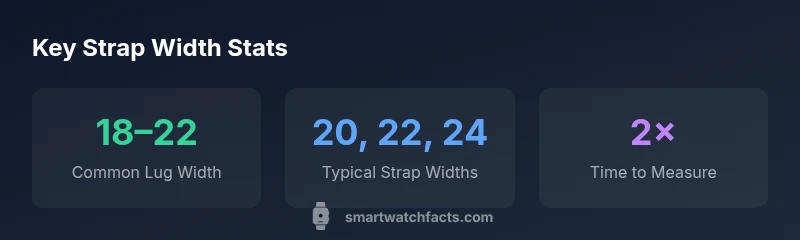
A strap size chart lists lug width in millimeters and the corresponding strap width that fits those lugs. It may also indicate adapter options, material notes, and fit across models. Key terms: lug width, strap width, interchangeability, and taper. Look for columns labeled Lug Width (mm) and Strap Width (mm); if the numbers align, your strap will sit flush and look intentional. Across many wearables, the chart uses standard widths such as 18, 20, 22, and 24 mm, enabling you to buy from multiple brands with confidence.
How to measure lug width at home
The simplest method is to measure the distance between the inner edges of the lugs. Use a digital caliper for precision or a ruler if a caliper isn’t available. Place the tool across the inner lug faces, read the millimeter value, and confirm by measuring from both sides if there’s any offset. Double-check on multiple watches in the same family to confirm a consistent width. If you’re unsure, cross-check the brand’s official size chart to avoid an incorrect order.
Common strap widths for popular brands
Most modern smartwatches use lug widths in the 20–22 mm range. Some larger models step up to 24 mm, while smaller or budget-oriented devices can be 18 mm. Always verify with the brand’s official size chart, since slight tolerances exist between manufacturers. Having a reliable strap size chart helps you navigate these variations and reduces the risk of ordering the wrong width.
Material, flex, and closure width: choosing the right strap
Different strap materials flex differently and tolerate width variations. Leather and silicone often stretch slightly with wear, while metal bands hold width more consistently. The closure width should match the strap width for a clean seal against the lugs; otherwise, the strap can wobble or detach under movement. If you’re unsure, start with a widely compatible 22 mm strap for mid-range lugs and adjust as needed.
Adapters and proprietary lugs: what you should know
Some watches use proprietary lug designs that don’t conform to standard widths. In such cases, adapters can bridge the gap, but they add bulk and can affect comfort and security. Always test for wrist movement and ensure the adapter locks securely. When possible, stick to official or widely supported options to minimize compatibility issues.
Quick-start shopping checklist for strap size
- Measure lug width in millimeters with a caliper or ruler. - Compare to the chart’s lug width column. - Pick a strap width that matches the lug width (e.g., 22 mm for 22 mm lugs). - Consider material and flex; if you expect heavy activity, sport-friendly materials may perform better. - Check for adapters only if your lugs are nonstandard and ensure compatibility before purchase.
Common mistakes when interpreting size charts
- Assuming all brands use exact same lug widths. - Skipping to buy solely on model names without confirming lug width. - Overlooking tolerances and installation tolerances that can alter fit. - Ignoring material stretch and thickness that affect overall comfort. Smart shoppers verify by cross-referencing multiple brand charts and, if possible, trying on a sample strap.
Maintenance and longevity of straps relative to size
Regular cleaning and proper drying extend strap life. Excess moisture can degrade leather or rubber, especially if the strap is too tight or too loose, which creates friction and wear at the lug interface. Store straps away from direct heat and avoid overtightening, which can compress the keeper and pins. A well-maintained strap that fits correctly will remain comfortable for longer.
Lug width vs. strap width compatibility
| Lug width mm | Common strap width mm | Notes |
|---|---|---|
| 18 | 18 | Narrow fit for small wrists |
| 20 | 20 | Widely used; good general fit |
| 22 | 22 | Most common for mainstream models |
| 24 | 24 | Large wrists or larger models |
People Also Ask
What is lug width and why does it matter?
Lug width is the distance between the inner edges of the watch lugs, which determines the strap width that will fit. Choosing the correct lug width ensures a secure, comfortable fit and prevents strap slippage or cover of the lugs.
Lug width is the gap between the lugs; pick the strap width to match that gap for a secure fit.
How do I measure lug width at home?
Use a digital caliper for precision or a ruler if a caliper isn’t available. Measure the inner distance between the lugs in millimeters, and confirm on both sides. When in doubt, cross-check the brand’s official chart.
Measure the space between the lugs in millimeters with a ruler or caliper, then verify with the brand chart.
Can I mix strap widths with watch lug widths?
It’s best to match strap width to lug width. Adapters exist but can add bulk and affect wear, so test before committing.
Try to match the strap width to the lug width; adapters are options but can feel bulky.
Do straps stretch over time?
Leather and silicone straps can loosen slightly with wear, especially under frequent bending. Replace worn straps to maintain fit and comfort.
Yes, straps can stretch a bit; replace them if they become loose.
What if my watch uses proprietary lugs?
Check the official sizing chart and look for compatible third-party options or official adapters. Compatibility varies by brand.
If lugs are proprietary, rely on official charts and compatible adapters when available.
Are there adapters to fit nonstandard straps?
Yes, adapters can bridge nonstandard lug widths but may add bulk and affect wear. Verify compatibility and secure fit before purchasing.
Adapters exist but test for bulk and security before buying.
“Size compatibility is the foundation of comfort; precise strap sizing reduces pinching, wobble, and the need for frequent replacements.”
Key Points
- Measure lug width first to guide strap choice
- Match strap width to lug width for best fit
- Check brand-specific charts for proprietary lugs
- Consider material tolerances and comfort when selecting width
- Use adapters sparingly and test for security